San Diego Mosque Attack: Expert says there is a global connection driving these attacks
More than 2,000 people gathered in San Diego this week for funeral prayers honouring three men killed while trying to stop an attack at the Islamic...
President Donald Trump’s special envoy, Steve Witkoff, announced on Wednesday the launch of phase two of the Gaza plan, which includes the establishment of a technocratic Palestinian administration in the enclave.
Witkoff said the U.S. expects Hamas to comply fully with its obligations, including the immediate return of the final deceased hostage. He warned that failure to meet these obligations would carry “serious consequences.”
The phase two move follows the first stage of the plan, which included a ceasefire and partial hostage release, though it faced delays and continued tensions in the region.
Under the plan, a 14-member Palestinian committee will temporarily govern Gaza. The body will be led by Ali Shaath, a former deputy minister in the Palestinian Authority, and will include figures from the private sector, NGOs and security officials. Hamas will not be represented.
The committee was approved by former U.N. envoy Nickolay Mladenov, who is expected to represent the international “Board of Peace” overseeing the transitional governance.
Egyptian officials confirmed the committee, emphasising that Gaza should remain linked with the West Bank under a single legal and institutional framework.
The first phase of the plan, which included a ceasefire and hostage release agreement, faced setbacks including Israeli airstrikes, Hamas’s refusal to disarm, and delays in reopening the Rafah crossing with Egypt. Despite these issues, Trump’s envoy is pressing ahead with phase two.
Hamas and Fatah leaders are meeting in Cairo to discuss the next steps, including the group’s disarmament. Members of the new technocratic committee were scheduled to meet Mladenov in Cairo on Wednesday, with Hamas and Fatah reportedly endorsing the selection.
The Palestinian Authority in the West Bank expressed support for the plan, saying Gaza institutions should remain aligned with the West Bank and uphold “one system, one law, and one legitimate weapon.”
Officials also said the plan will include the deployment of international peacekeeping forces, though details remain under negotiation.
And, Palestinian President Mahmoud Abbas is expected to make a visit to Moscow on 21–22 January, TASS said on Thursday (15 January), referencing the Palestinian embassy.

Asian stocks surged on Thursday as some vessels resumed passage through the Strait of Hormuz, while forecast-beating results at Nvidia and a suspended workers' strike at Samsung Electronics lifted shares of chipmakers.
Belarusian President Alexander Lukashenko has said Belarus will not be dragged into the war in Ukraine, while also stressing that Minsk and Moscow would jointly respond to any aggression against them.
The penultimate day of the World Urban Forum 13 in Baku will see Azerbaijan's Pavilion highlight post-construction efforts in Garabagh and East Zangezur, as well as host events on the future of Baku and architectural education.
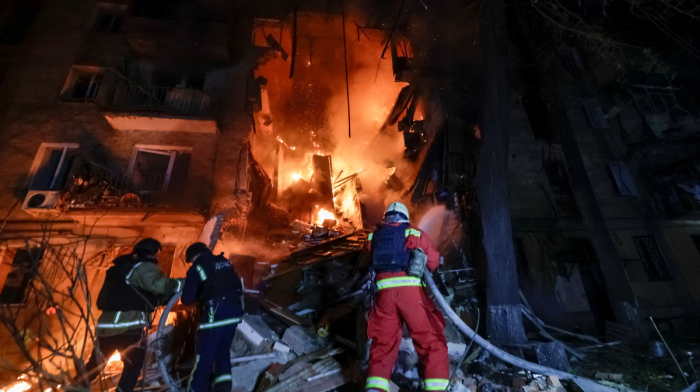
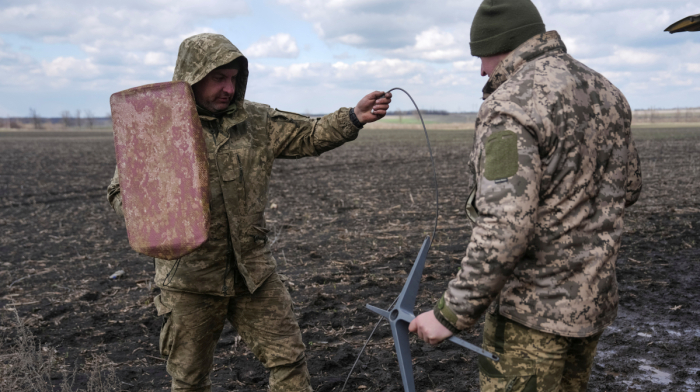
Fighting in the Russia–Ukraine war has intensified sharply, with both sides launching significant strikes far beyond the front lines as the conflict enters its 1,549th day.
As the 13th edition of the World Urban Forum ended, Azerbaijan's Pavilion showcased reconstruction efforts in its liberated territories and foregrounded the importance of mine removal in resettlement efforts.
China already dominates the global rare earth supply chain. Now, scientists have discovered new deposits in northeastern China that could prove cheaper and cleaner to extract than those mined elsewhere in the country.
More than 2,000 people gathered in San Diego this week for funeral prayers honouring three men killed while trying to stop an attack at the Islamic Centre of San Diego, in what authorities are investigating as a suspected hate crime.
U.S. Secretary of State Marco Rubio said negotiations with Iran remain deadlocked over uranium enrichment and the Strait of Hormuz, despite what he described as modest progress in recent talks.
Fighting in the Russia–Ukraine war has intensified sharply, with both sides launching significant strikes far beyond the front lines as the conflict enters its 1,549th day.
Serbian President Aleksandar Vučić said he was pessimistic that an agreement would be reached before Friday’s deadline regarding Hungarian oil company MOL group's bid to acquire a majority stake in Naftna Industrija Srbije (NIS), the operator of Serbia’s only oil refinery.
You can download the AnewZ application from Play Store and the App Store.
What is your opinion on this topic?
Leave the first comment