Shares of major U.S. oil and energy companies surged on Monday even as crude prices showed little movement, revealing a growing divergence between energy equities and the underlying commodities market.
Chevron, Exxon Mobil, SLB and Halliburton were among the strongest performers in premarket trading, pushing the energy sector to the top of the S&P 500 leaderboard. The rally followed a surprise U.S. operation in Venezuela and remarks by President Donald Trump indicating that American oil companies could play a key role in rebuilding the country’s dilapidated energy infrastructure after years of sanctions, mismanagement and underinvestment.
Crude prices, by contrast, remained largely unchanged. Brent crude and West Texas Intermediate futures edged up by only around 0.1% to 0.4%, signalling that traders in the oil market were unconvinced that developments in Venezuela would materially affect near-term supply. This disconnect suggests investors are looking beyond immediate oil price dynamics and focusing instead on longer-term strategic opportunities that could emerge if Venezuela’s oil sector is gradually reopened to U.S. firms.
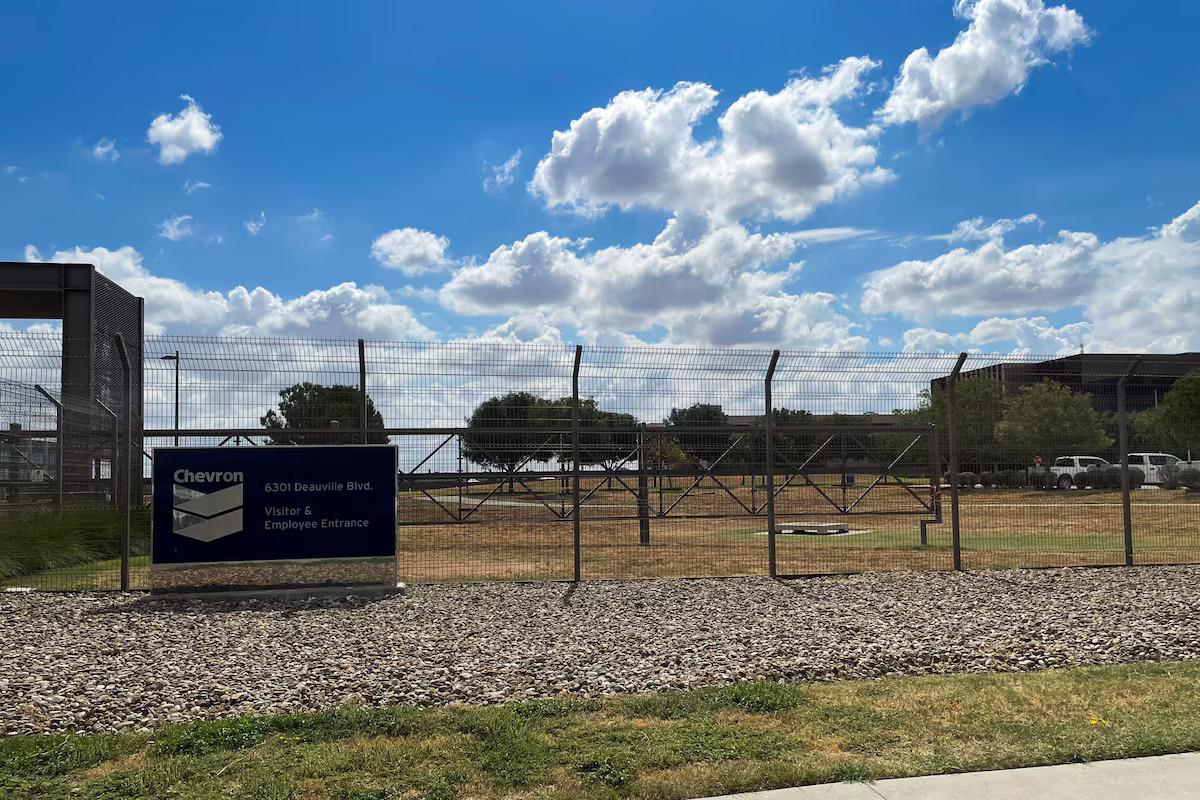
Chevron stood out with gains of around 8%, reflecting its status as the last major U.S. oil company still operating in Venezuela under special licences. Oilfield services companies SLB and Halliburton rose more than 9%, while refiners and producers such as Valero Energy, ConocoPhillips and Exxon Mobil also posted strong gains. Together, the moves underline how expectations of future access, contracts and investment opportunities can drive stock prices even when oil markets themselves remain calm.
Venezuela opportunity fuels long-term investor optimism
The enthusiasm surrounding U.S. energy stocks is rooted less in immediate changes to oil flows and more in the prospect of long-term engagement in Venezuela’s vast but degraded oil industry. Venezuela holds the world’s largest proven oil reserves, yet its production has collapsed over the past decade due to sanctions, lack of investment and deteriorating infrastructure. For investors, any sign that U.S. companies could help repair and operate parts of the sector represents a potentially significant opportunity, even if tangible benefits are still far off.
President Trump’s comments over the weekend added to that optimism, as he suggested U.S. oil companies would invest billions of dollars to fix Venezuela’s “broken” oil infrastructure and unlock substantial energy wealth. Analysts say such rhetoric has encouraged investors to price in future reconstruction work, particularly for oilfield services firms that would likely be involved in drilling, maintenance and technical upgrades. This helps explain why companies such as SLB and Halliburton outperformed even the major producers.
Chevron’s continued presence in Venezuela is also seen as a strategic advantage. Analysts argue that its existing operations, relationships and knowledge of local conditions could position it at the front of the queue should broader access be granted. Meanwhile, investors are watching to see whether Exxon Mobil and ConocoPhillips, whose assets were nationalised in 2007, might eventually have a chance to return under a revised political and regulatory framework.
Despite the optimism, analysts caution that the path forward remains uncertain. Any expansion of U.S. involvement would depend on political developments, sanctions policy and stability within Venezuela itself. For now, the rally reflects expectations rather than concrete change, highlighting how markets often move in anticipation of opportunity long before it materialises.
Why oil prices remain subdued
While energy stocks surged, oil prices barely reacted, underscoring the market’s scepticism about near-term supply impacts. Analysts note that Venezuela currently accounts for only about 1% of global oil supply, meaning even a modest increase in output would have limited effect on global prices in the short run. As a result, traders remain focused on broader supply and demand dynamics rather than political developments in a single producer.
Another factor weighing on oil prices is the outlook for global supply later in 2025. OPEC+ recently agreed to keep production steady, easing fears of immediate supply disruptions and reinforcing expectations of ample availability in the months ahead. At the same time, concerns about slowing global demand growth and rising non-OPEC production continue to cap price gains.
Market participants also point out that rebuilding Venezuela’s oil infrastructure would take years, not months. Even under favourable political conditions, restoring production to meaningful levels would require extensive investment, technical expertise and time. As a result, crude traders see little reason to adjust prices now for developments whose impact remains speculative and distant.
The contrast between surging energy stocks and flat oil prices highlights a familiar market pattern: equities often respond to narrative and future potential, while commodities tend to reflect immediate physical realities. For now, oil markets are signalling caution, even as investors in energy shares place long-term bets on geopolitical change and eventual reconstruction in Venezuela.






















What is your opinion on this topic?
Leave the first comment