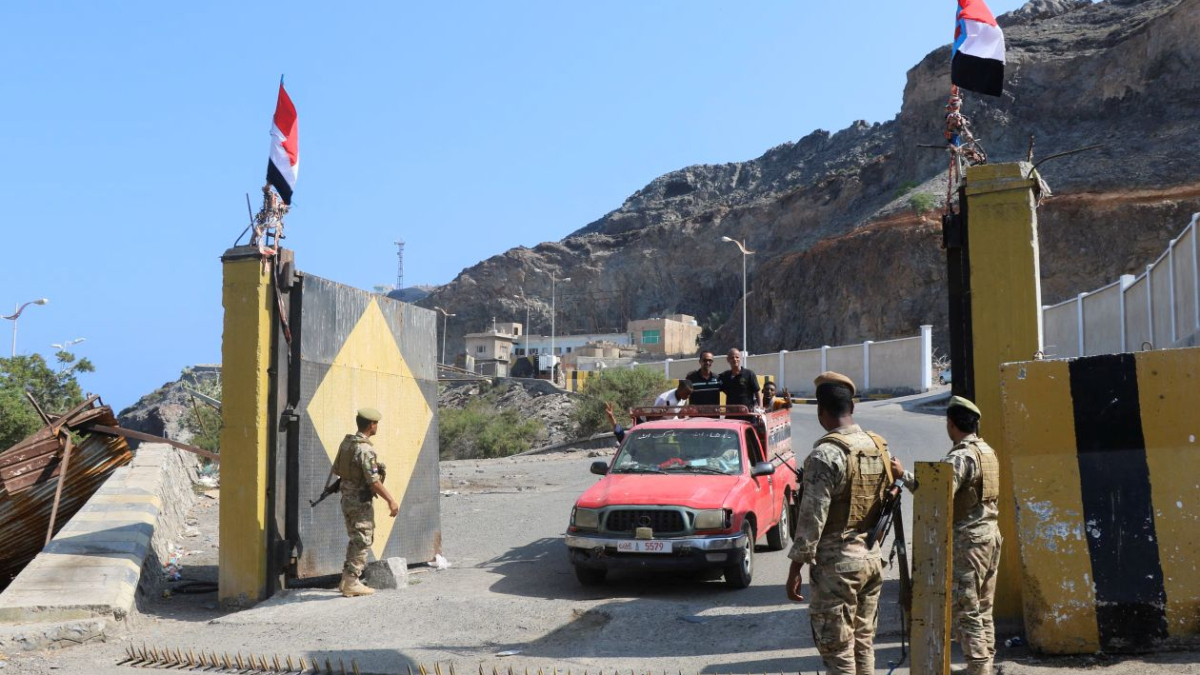
Yemen’s southern separatists have announced plans to hold a referendum on independence from the north within two years, a move likely to further escalate tensions as Saudi-backed government forces seek to retake territory seized by the group last month.
The statement by the UAE-backed Southern Transitional Council (STC) is its clearest indication yet of an intention to secede. It comes at a sensitive moment for Yemen’s internationally recognised government and its main ally, Saudi Arabia, who view the move as a direct challenge to the country’s territorial integrity.
Earlier on Friday, government officials said an operation had been launched to reassert control over Hadramout province, one of the key areas captured by the STC in December. Authorities later said their forces had retaken a major military base. Local sources and separatist officials said the advance was backed by Saudi-supported air strikes.
STC spokesperson Mohammed al-Naqeeb said separatist forces had been placed on full alert across the region, warning that any further advances would be met with a forceful response.
The surprise gains made by the separatists in early December have reshaped the balance of power in Yemen’s long-running conflict, which has raged for more than a decade. The developments have fractured the coalition fighting the Iran-backed Houthi movement and exposed widening rifts between Gulf allies Saudi Arabia and the United Arab Emirates.
Yemen has for years been divided between the northern highlands controlled by the Houthis and areas in the south held by forces aligned with the internationally recognised government, including the southern separatists backed by Gulf states.
Once close pillars of regional security and both members of OPEC, Saudi Arabia and the UAE have in recent years seen their strategic interests diverge, from oil policy to wider geopolitical priorities.
Oil-rich Hadramout borders Saudi Arabia and holds cultural and historical significance for the kingdom, with many prominent Saudis tracing their roots to the province. Its capture by the STC last month was widely viewed in Riyadh as a security threat.
The UAE, without directly addressing Friday’s developments, said it had approached the recent escalation with restraint, coordination and a commitment to de-escalation. Saudi Arabia did not immediately comment on the reported air strikes.
The announcement comes a week after the UAE said it was withdrawing its remaining forces from Yemen, following Saudi backing for a call for all foreign troops to leave within 24 hours. While the move briefly eased tensions between the two Gulf powers, divisions among rival groups on the ground in Yemen persist.
Flights remain suspended at Aden International Airport, the main gateway for areas outside Houthi control, with the STC and Saudi Arabia trading blame over the shutdown. The disruption has been linked to new restrictions imposed by the internationally recognised government on flights between Aden and the UAE, though accounts differ over who ordered a complete halt to air traffic.













What is your opinion on this topic?
Leave the first comment