live Iran and Israel escalate military action following Iran’s Supreme Leader Ali Khamenei’s death
Follow the latest developments and global reaction after the U.S. and Israel launched “major combat operations” in Iran, prompting reta...
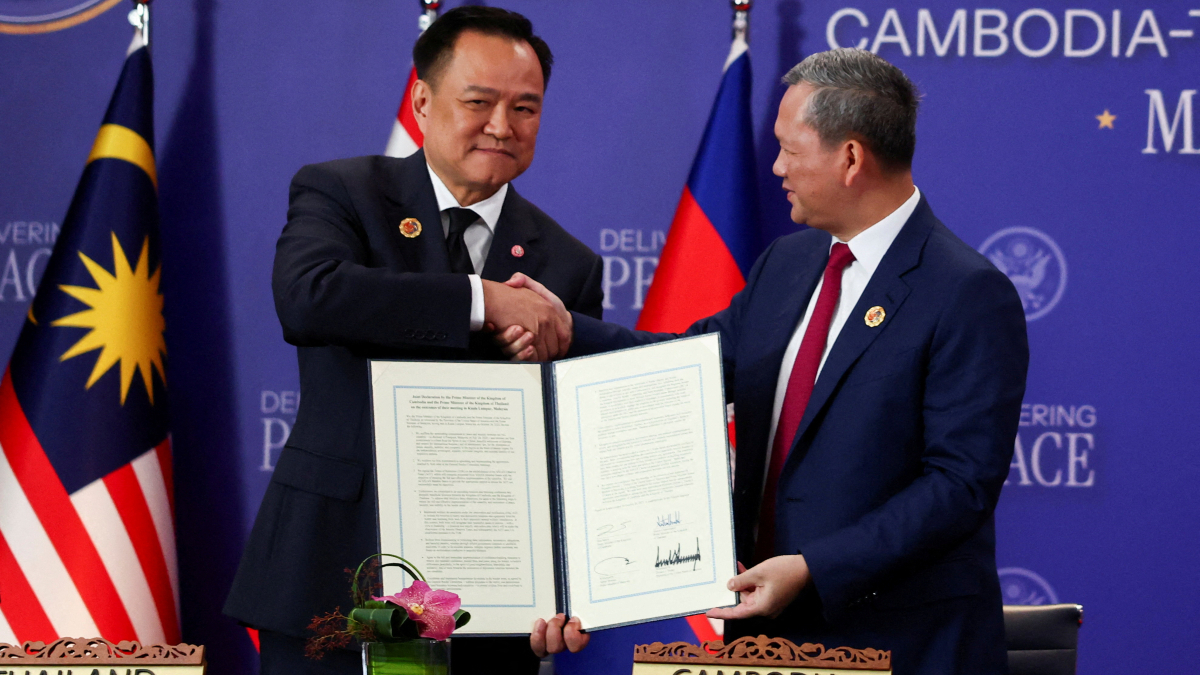
The U.S. on Saturday welcomed the ceasefire between Cambodia and Thailand, which ended weeks of deadly border clashes, and called on both countries to fully implement the Kuala Lumpur Peace Agreement.
Secretary of State Marco Rubio urged Cambodia and Thailand “to immediately honour this commitment and fully implement the terms of the Kuala Lumpur Peace Accords,” according to a statement.
The truce, reached earlier on Saturday, halted 20 days of fighting along the two countries’ disputed 800-kilometre (500-mile) border, which left 99 people dead and displaced nearly a million civilians.
The peace agreement was originally signed in October in Kuala Lumpur in the presence of U.S. President Donald Trump and Malaysian Prime Minister Anwar Ibrahim, but implementation stalled after Thai soldiers were seriously injured in a landmine explosion. The accord followed earlier clashes in July, when five days of fighting killed dozens.
UN Secretary-General António Guterres described the ceasefire as “a positive step towards alleviating the suffering of civilians, ending current hostilities, and creating an environment conducive to achieving lasting peace.” He commended ASEAN chair Malaysia, China, and the U.S. for supporting the resolution and said the UN “stands ready to support efforts aimed at sustaining peace and stability in the region.”
China also welcomed the truce, noting that “dialogue and consultation is a viable and effective way to resolve complex disputes.” A Foreign Ministry spokesperson said Foreign Minister Wang Yi will meet his Cambodian and Thai counterparts in Yunnan this week alongside military representatives to facilitate further communication and consolidation of the ceasefire.
Japan similarly expressed support for the agreement, with Press Secretary Toshihiro Kitamura saying Tokyo “strongly hopes the ceasefire will be steadily implemented.”
The Cambodia-Thailand border dispute centres on territorial claims, including ancient temples, and has periodically escalated into armed clashes despite previous diplomatic efforts.

Follow the latest developments and global reaction after the U.S. and Israel launched “major combat operations” in Iran, prompting retaliation from Tehran.
Tensions between the U.S. and Iran are escalating, with Washington ordering a significant military build-up in the region and multiple countries evacuating diplomatic staff amid fears of further instability.
Governments across the region responded swiftly to Israel’s strikes on Iran, closing airspace, issuing travel advisories and activating contingency plans amid fears of escalation.
Two people were killed and around 40 injured when a tram derailed in central Milan on Friday (27 February), a spokesperson for the local fire service said.
Pakistani air strikes hit a weapons depot on the western outskirts of Kabul overnight, triggering hours of secondary explosions that rattled homes across the Afghan capital and left residents fearing further violence.
Protests broke out in Pakistan and Iraq on Sunday after Iranian state media confirmed that Supreme Leader Ayatollah Ali Khamenei had been killed in joint U.S.–Israeli strikes. At least nine people were reported dead in clashes near the U.S. consulate in Karachi.
Afghanistan said it had fired at Pakistani aircraft over Kabul after explosions and gunfire rocked the capital early on Sunday, marking a sharp escalation in fighting between the two neighbours.
A senior Iranian official has warned Israel to “prepare for what is coming”, insisting that Tehran’s response to the latest escalation in the Middle East will be made openly and without limits.
Cuba has released extensive details of a deadly midweek shootout at sea, showing rifles, pistols and nearly 13,000 rounds of ammunition that it says were carried by a group of exiles who attempted to enter the island by speedboat.
Afghanistan’s Taliban rulers said on Friday (27 February) they were ready to negotiate after Pakistan bombed their forces in several Afghan cities, including Kabul and Kandahar, and Islamabad declared the neighbours were now in "open war".
You can download the AnewZ application from Play Store and the App Store.
What is your opinion on this topic?
Leave the first comment