The year 2025 was marked by a series of devastating natural disasters worldwide, from wildfires and storms to floods. North America, Europe, Asia and the Middle East faced severe challenges as extreme weather destroyed homes, claimed lives and disrupted daily life.
The year began with a major wildfire outbreak in Southern California on 7 January.
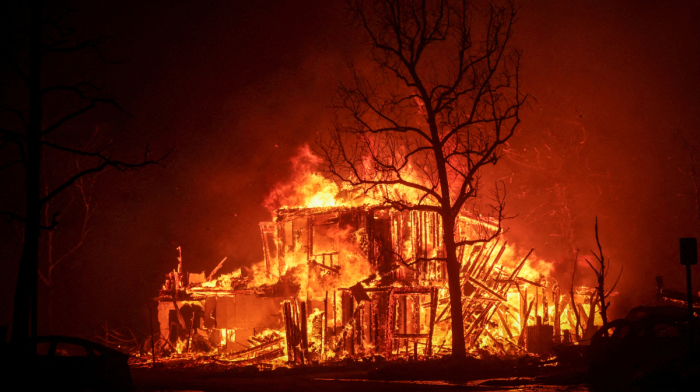
The Eaton Fire ignited in Eaton Canyon in the San Gabriel Mountains north of Pasadena amid powerful Santa Ana winds and exceptionally dry conditions.
The blaze spread rapidly into surrounding foothill communities, burning more than 14,000 acres and destroying thousands of homes and other structures.
At least 19 people were killed, several others were injured and tens of thousands of residents were forced to evacuate, making it one of the deadliest and most destructive wildfires in California’s history.
Later in January, Storm Herminia struck western France, bringing heavy rain, strong winds and widespread flooding.
Meteorological services placed several departments under orange and red alerts, with wind gusts exceeding 130 km/h along exposed coasts and intense rainfall across Brittany, Normandy and the Loire-Atlantique region.
Rivers including the Vilaine and the Orne rose sharply, forcing hundreds of residents to evacuate and inundating towns such as Rennes, where authorities described the flooding as the worst in more than 40 years.
In early March, torrential rain caused flooding across parts of Spain’s Canary Islands, leading to road closures, inundated streets and travel disruption as authorities warned residents to stay off the roads.
On 14 March, wildfires erupted across Oklahoma, fuelled by strong winds and dry vegetation. The fires destroyed hundreds of structures, prompted a state of emergency and resulted in dozens of injuries.
Later that month, South Korea experienced some of the deadliest wildfires in its modern history, particularly in the southeastern region. Multiple blazes broke out across North and South Gyeongsang provinces, driven by dry conditions and strong winds.
At least 26 people, including firefighters and a helicopter pilot, were killed, and tens of thousands were forced to evacuate. Hundreds of buildings and large areas of forest were destroyed, making it the country’s worst wildfire disaster in terms of both loss of life and area burned.
Wildfires also affected the Mediterranean during the summer.
On 22 June, the Greek island of Chios was engulfed by flames, prompting the evacuation of several villages. In early July, fires in western Turkiye’s İzmir province, including around Çeşme, spread from forested areas into residential districts.
Tens of thousands of people were evacuated as homes and infrastructure were damaged. Firefighting operations, involving ground crews and aerial support, continued for days. At least two people were killed.
In mid-August, heavy monsoon rains and cloudbursts triggered severe flooding in northern Pakistan, particularly in parts of Khyber Pakhtunkhwa, including Buner district.
Authorities declared flood emergencies and launched large-scale rescue operations as homes were destroyed and lives were lost.
Towards the end of the year, flooding again hit parts of the United States. In December, persistent rainfall caused the Green River to overflow in parts of King County, Washington State, forcing evacuations and road closures.
Over the Christmas period, Southern California was struck by a powerful atmospheric river storm that brought intense rainfall, flash flooding, mudslides and debris flows.
Some areas recorded near-record rainfall totals, prompting evacuation orders, travel disruption and emergency declarations.
Across the year, these disasters highlighted the growing impact of extreme weather and climate-related hazards.
Scientists and emergency agencies repeatedly stressed the need for stronger preparedness, resilient infrastructure and effective emergency planning to reduce the human and economic toll of future disasters.


















What is your opinion on this topic?
Leave the first comment