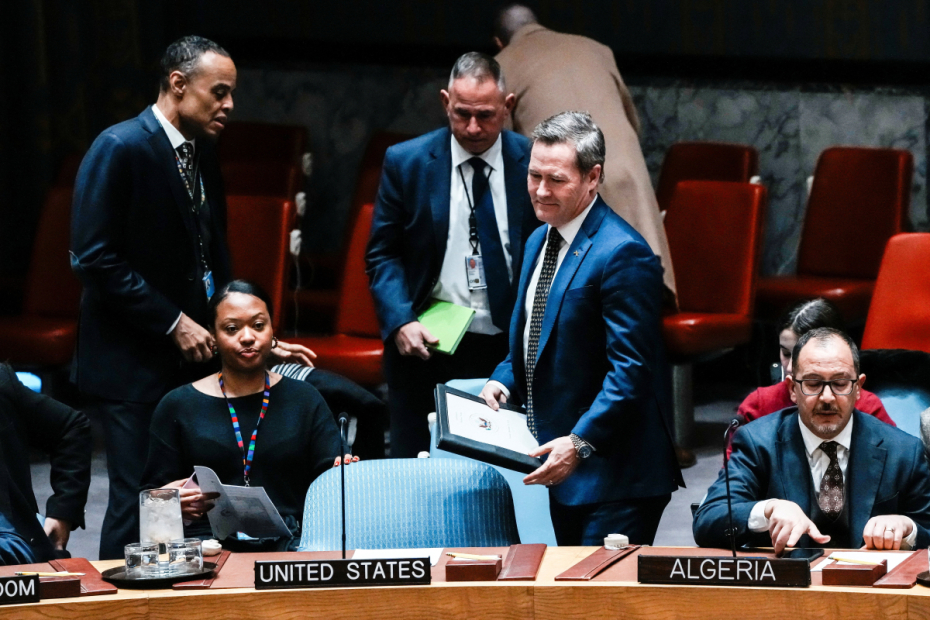
The United States will impose and enforce sanctions "to the maximum extent" to deprive Venezuelan President Nicolas Maduro of resources as Russia warned other Latin American countries could be next, the U.S. told the United Nations on Tuesday.
Addressing the UN Security Council, U.S. ambassador Mike Waltz said transnational criminal and terrorist groups posed the most serious threat to the region and to the United States.
“The single most serious threat to this hemisphere, our very own neighbourhood and the United States, is from transnational terrorist and criminal groups,” he said.
Washington has increased its military presence in the region, while President Donald Trump has announced a blockade of vessels subject to U.S. sanctions.
The U.S. Coast Guard has intercepted two tankers in the Caribbean Sea this month, both carrying Venezuelan crude, and is pursuing a third empty vessel that was approaching Venezuela’s coastline.
Waltz said sanctioned oil tankers represented the primary economic lifeline for what he described as Maduro’s “illegitimate regime”, and alleged that the proceeds also funded the Cartel de los Soles.
The United States last month designated Cartel de los Soles, also known as the Cartel of the Suns, as a foreign terrorist organisation, citing its alleged involvement in drug trafficking into the U.S. Washington accuses Maduro of leading the group.
Venezuela’s government has rejected the designation, calling it “ridiculous” and insisting the group does not exist.
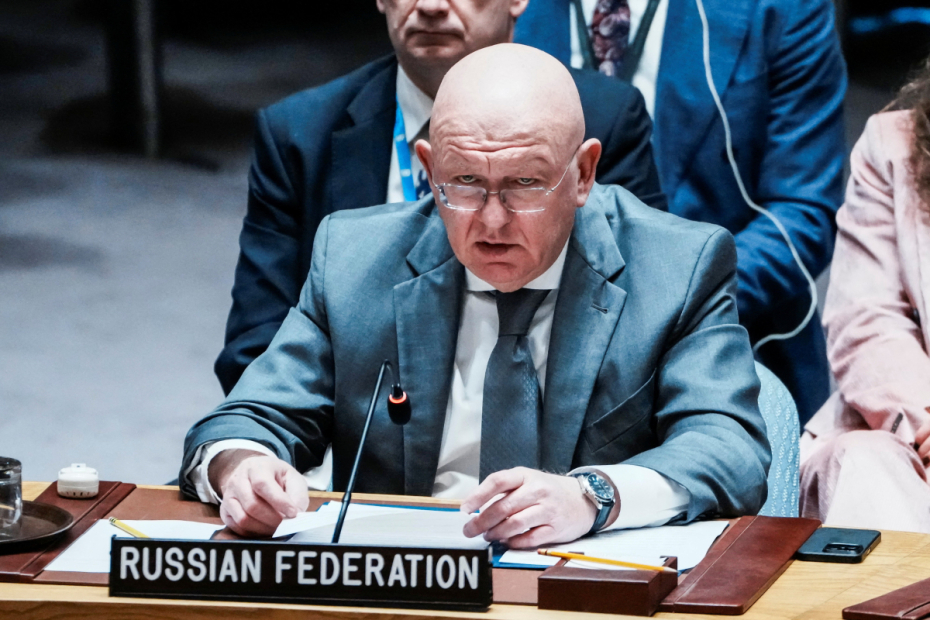
Russia’s ambassador to the UN, Vassily Nebenzia, warned that U.S. actions against Venezuela could set a precedent for the use of force against other Latin American states.
“This intervention which is unfolding can become a template for future acts of force against Latin American states,” he told the council, citing a recent U.S. strategy document on reasserting influence in the Western Hemisphere.
China also urged restraint, with deputy UN ambassador Sun Lei calling on the United States to “immediately halt relevant actions and avoid further escalation of tensions”.
Venezuela, backed by Russia and China, requested Tuesday’s meeting, the second held by the Security Council on the issue. A previous meeting in October saw Washington argue its actions were consistent with Article 51 of the UN Charter, which allows self-defence against armed attack.
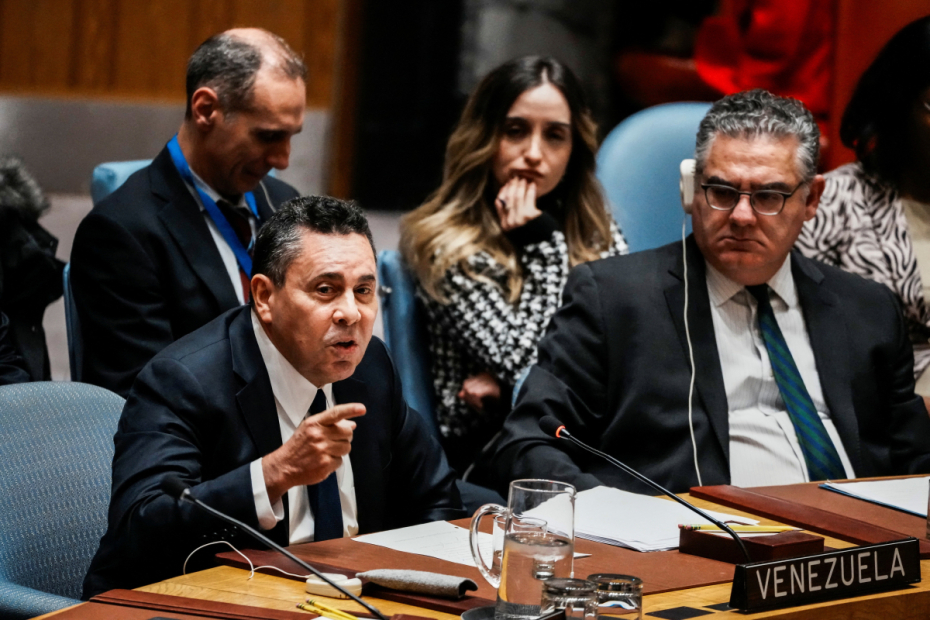
Venezuela’s UN ambassador, Samuel Moncada, rejected that justification.
“Let it be clear once and for all that there is no war in the Caribbean,” he told the council, adding that it was “absurd” for the U.S. to invoke the rules of war.









What is your opinion on this topic?
Leave the first comment