The United Nations children’s agency UNICEF said on Thursday (25 February) it was deeply concerned by reports that Myanmar military air strikes this week had killed at least five children and dozens of civilians, as fighting intensified across the country.
Powered paragliders reportedly dropped bombs on a village in the central Sagaing region on Monday.
A day later, a fighter jet struck a busy village market in Ponnagyun Township in Rakhine State, about 320 km to the west, according to the Arakan Army rebel group and local media.
The attacks reportedly killed at least 24 people and injured dozens more.
“Children and civilians are once again bearing the brunt of escalating hostilities, with the strikes in Rakhine State reported to have hit homes and a busy local market in a village hosting displaced families,” UNICEF said in a statement.
“Ongoing clashes continue to displace children and upend their access to vital services, including health care, education and protection,” the agency added.
The military government has not responded to requests for comment.
Khaing Thu Kha, a spokesperson for the Arakan Army, said: “Targeting and bombing civilian sites by the military is no longer an isolated occurrence ... We have seen a high frequency of deliberate attacks on civilians.”
UNICEF urged all parties to uphold international humanitarian law, adding, “Children must be protected at all times. UNICEF is responding to the needs of conflict-affected children and their families across Myanmar.”
Origins of the conflict
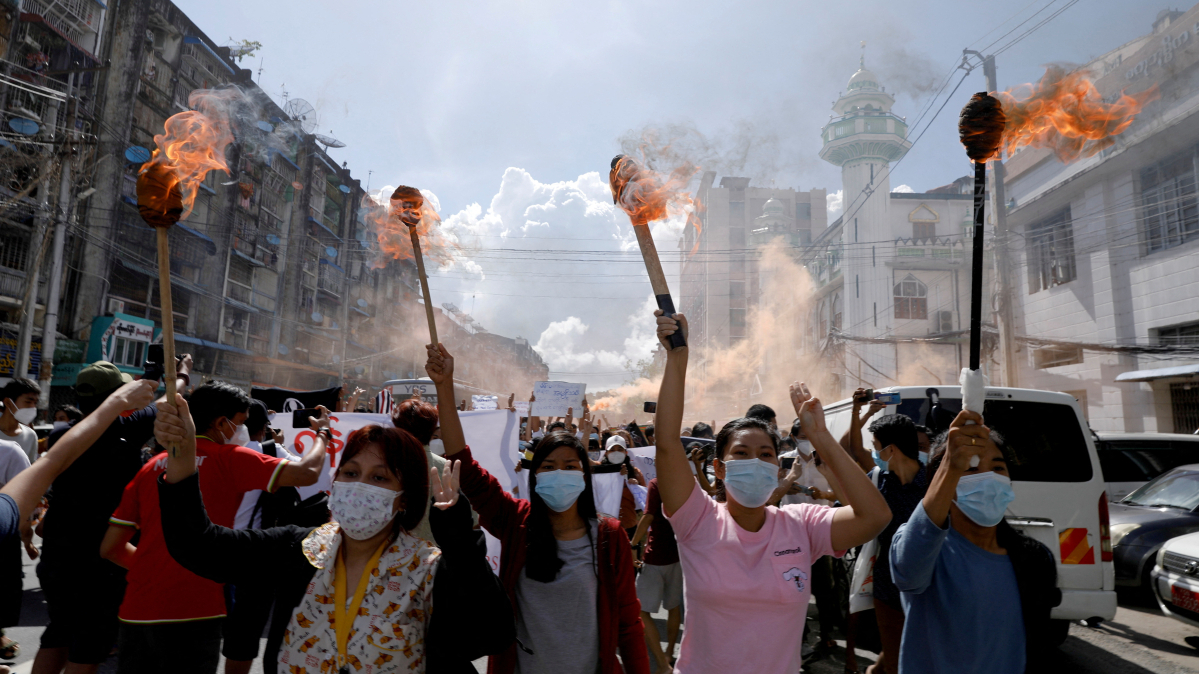
While Myanmar has experienced decades of conflict between the military and ethnic armed groups, the current nationwide crisis intensified after the military coup in February 2021, when the armed forces overthrew the elected government, triggering mass protests and armed resistance.
Ethnic armed groups and pro-democracy militias are fighting government forces in multiple regions.
Since the coup, the crisis has escalated into one of Asia’s largest humanitarian emergencies, with thousands of civilians killed, widespread displacement, and severe disruption to basic services such as healthcare and education.
Air strikes, including on villages and markets, have become increasingly frequent, and children and other non-combatants are repeatedly caught up in the violence. Rights groups and the UN have repeatedly accused the junta of targeting civilian areas - allegations the military denies.











What is your opinion on this topic?
Leave the first comment