Chinese President Xi Jinping and German Chancellor Friedrich Merz agreed on Wednesday in Beijing to strengthen economic cooperation while addressing trade imbalances, market access concerns, and the war in Ukraine, during Merz’s first official visit to China since taking office.
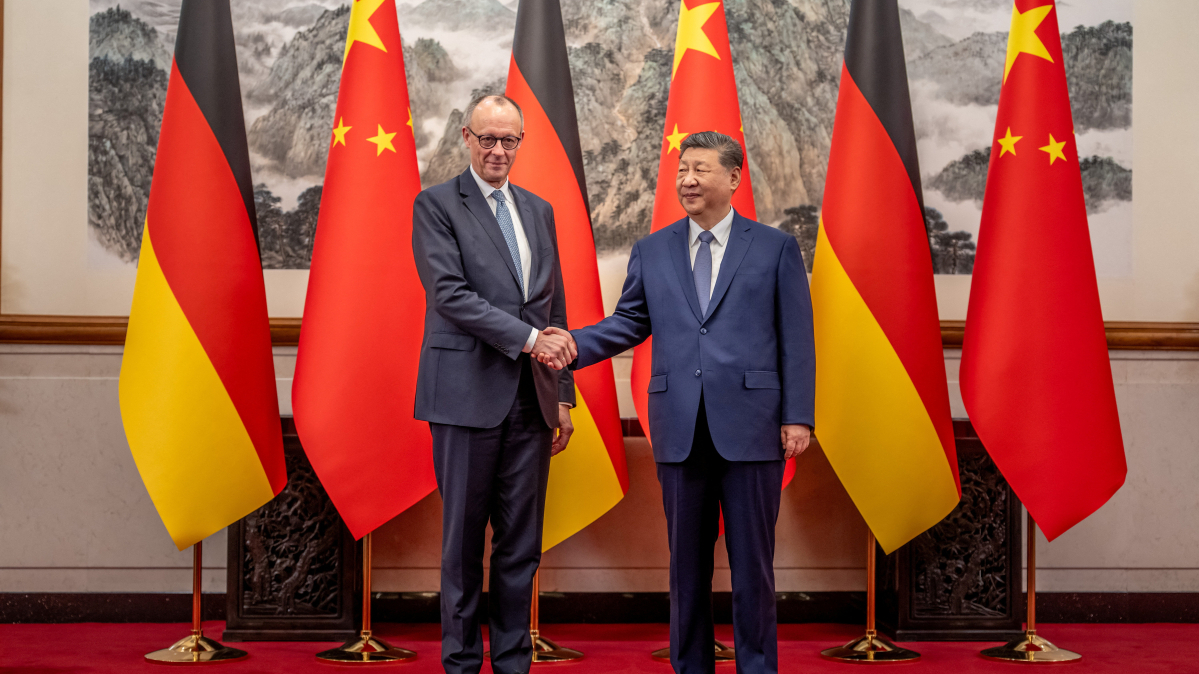
Merz, who is on a three-day visit, held talks with Xi at the Diaoyutai State Guesthouse, where the Chinese president said China and Germany should be “reliable partners” and defenders of free trade, urging stronger strategic communication between the two of the world’s largest economies.
He added that China supports Europe’s self-reliance and hopes Europe will work with Beijing in the same direction to uphold their strategic partnership.
Merz said he wanted to deepen Germany’s decades-long economic relationship with China, its largest trading partner last year, while acknowledging challenges. “There are challenges, which we should talk about today, but the framework in which we operate is exceptionally good,” he said.
Discussions on Ukraine
Ukraine featured prominently in the discussions. Merz called on Beijing to use its influence to help bring an end to the war, noting that signals from China are taken seriously in Moscow. Xi said China supports a political solution through dialogue and negotiation, stressing that any process must address the legitimate concerns of all parties and ensure equal participation.
In a joint statement, both countries expressed support for efforts toward a ceasefire and lasting peace in line with the United Nations Charter. Merz also raised Taiwan, emphasizing that any reunification must be achieved peacefully.
Trade imbalance and market access
Economic tensions were central to the visit. Germany recorded a trade deficit of 90 billion euros with China last year, a figure that has increased fourfold since 2020. German imports from China rose 8.8 percent to 170.6 billion euros, while exports to China fell 9.7 percent to 81.3 billion euros.
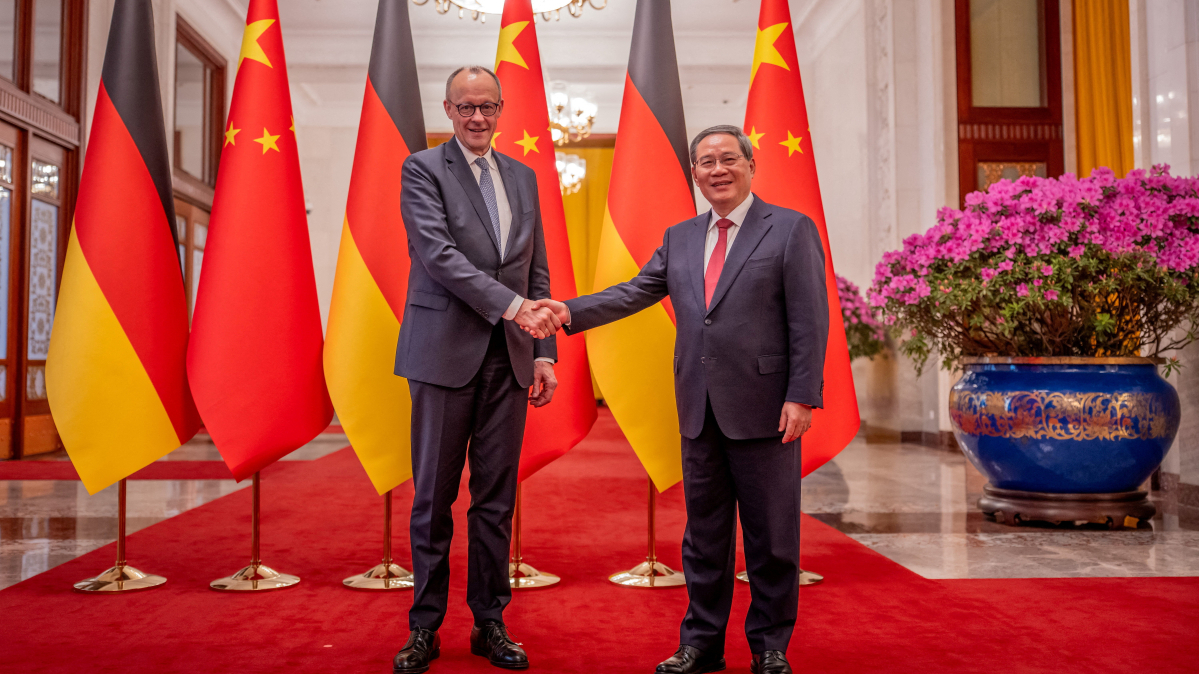
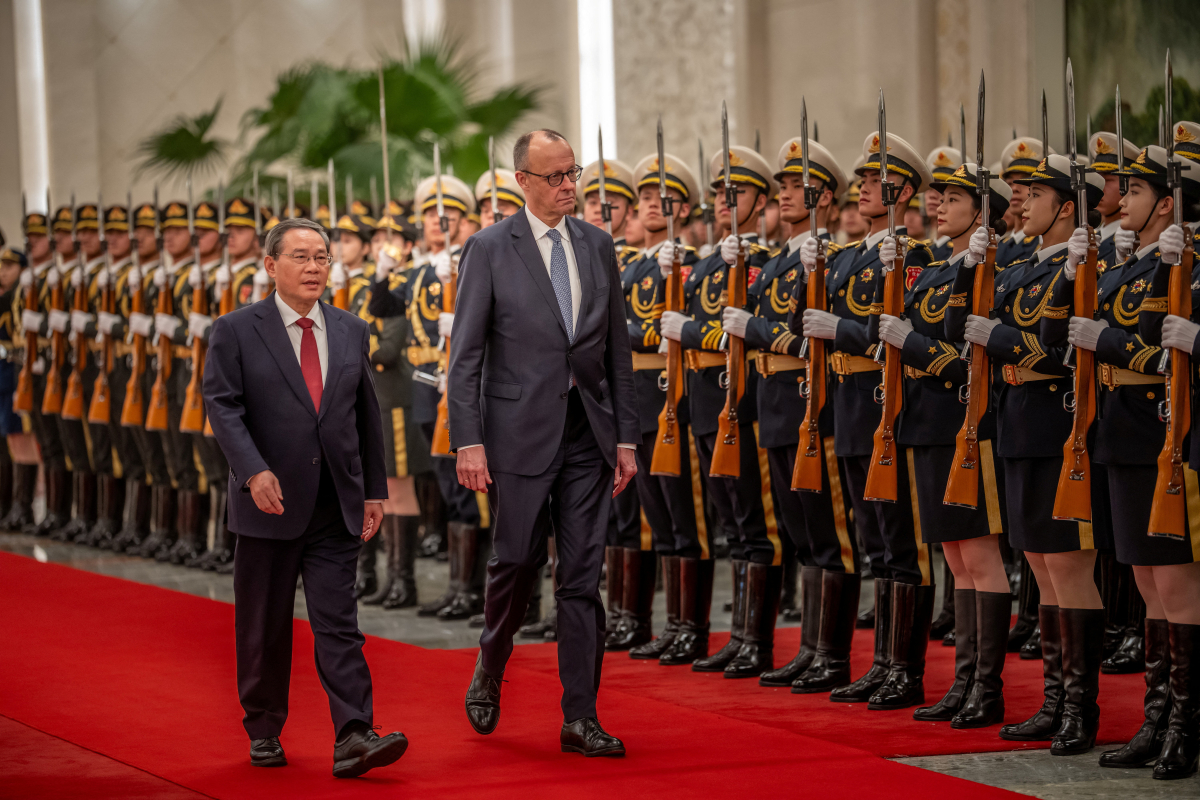
Merz described the imbalance as unhealthy and called for fair competition, improved market access, and reduced market distortions. Earlier, in talks with Chinese Premier Li Qiang at the Great Hall of the People, Merz emphasised the need to maintain intensive economic exchanges while ensuring fair cooperation and open communication. “We have very specific concerns regarding our cooperation, which we want to improve and make fair,” he said.
Li called on both sides to safeguard multilateralism and free trade, in remarks widely seen as referencing tariff disruptions introduced by U.S. President Donald Trump. “China and Germany, as two of the world’s largest economies and major countries with important influence, should strengthen our confidence in cooperation, jointly safeguard multilateralism and free trade, and strive to build a more just and fair global governance system,” Li said.
Competition in trade
The German chancellor was accompanied by a delegation of 30 firms, including major automakers such as Volkswagen and BMW, which have felt increasing pressure from Chinese competition. The delegation’s visit underscores Berlin’s priority of addressing the trade imbalance and ensuring fair economic practices while maintaining engagement with China’s vast consumer market and advanced manufacturing base.
Several agreements and memorandums were signed during the visit, including on climate change and food security. Merz highlighted that China had agreed to purchase up to 120 aircraft from Airbus, describing the deal as evidence that engagement can deliver concrete economic results.
China’s state media framed the visit as an opportunity to strengthen European Union-China cooperation and stabilise global trade amid U.S. tariffs. Xinhua cited a German chamber of commerce survey suggesting innovation gains in China benefit German headquarters, while the Global Times noted that concerns over competition could be outweighed by access to China’s market.
Merz stressed that systemic differences should not prevent collaboration on trade, technology, or global challenges, reaffirming Germany’s preference for dialogue over public criticism. “This visit is about ensuring fair cooperation, managing risks, and exploring shared opportunities,” he said, signalling Berlin’s intent to engage pragmatically with China while safeguarding German economic interests.


















What is your opinion on this topic?
Leave the first comment