Japan is moving to revive nuclear power nearly 15 years after the Fukushima disaster, with a regional assembly clearing the way for the restart of one of the world’s largest nuclear power plants.
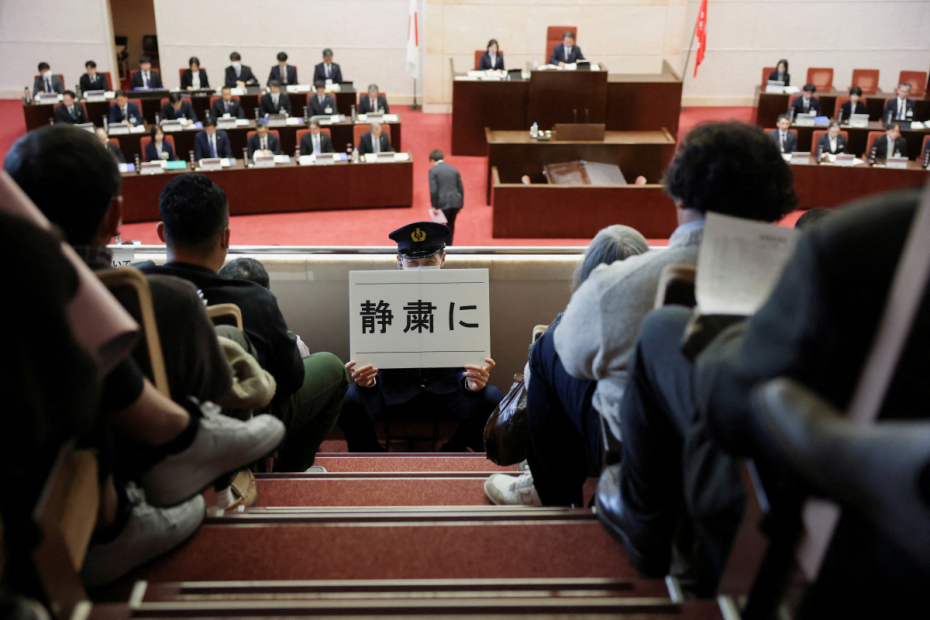
Lawmakers in Niigata voted on Monday, 22 December, to back Governor Hideyo Hanazumi, who last month endorsed the restart of the Kashiwazaki-Kariwa nuclear power station, about 220km north-west of Tokyo.
The vote was widely seen as the final political hurdle before operations can resume.
The Kashiwazaki-Kariwa plant, operated by Tokyo Electric Power Company (TEPCO), was among 54 reactors shut down nationwide after the 2011 earthquake and tsunami triggered the Fukushima Daiichi disaster, the world’s worst nuclear accident since Chernobyl.
Japan has since restarted 14 of the 33 reactors that remain technically operable, as it seeks to cut its reliance on imported fossil fuels.
Japan’s public broadcaster NHK reported that TEPCO is considering reactivating the first of the plant’s seven reactors on 20 January.
A single reactor could increase electricity supply to the Tokyo metropolitan area by about 2%, according to Japan’s trade ministry.
The government has strongly backed nuclear restarts to bolster energy security and curb the cost of imported fuels.
Despite a shrinking population, electricity demand is expected to rise over the next decade, driven by the rapid expansion of energy-intensive artificial intelligence data centres. The government aims to double the share of nuclear power in Japan’s electricity mix to 20% by 2040 to meet demand and achieve its decarbonisation targets.
Joshua Ngu, vice chairman for Asia Pacific at consultancy Wood Mackenzie, said public acceptance of the Kashiwazaki-Kariwa restart would mark “a critical milestone” towards achieving those targets.
However, Governor Hanazumi has voiced longer-term reservations, saying he hopes Japan can eventually reduce its reliance on energy sources "that cause anxiety".
Public's reaction
The decision has exposed deep divisions in Niigata, where opposition to the restart remains strong.
During the assembly session, an opposition lawmaker described the vote as "a political settlement that does not take into account the will of Niigata residents".
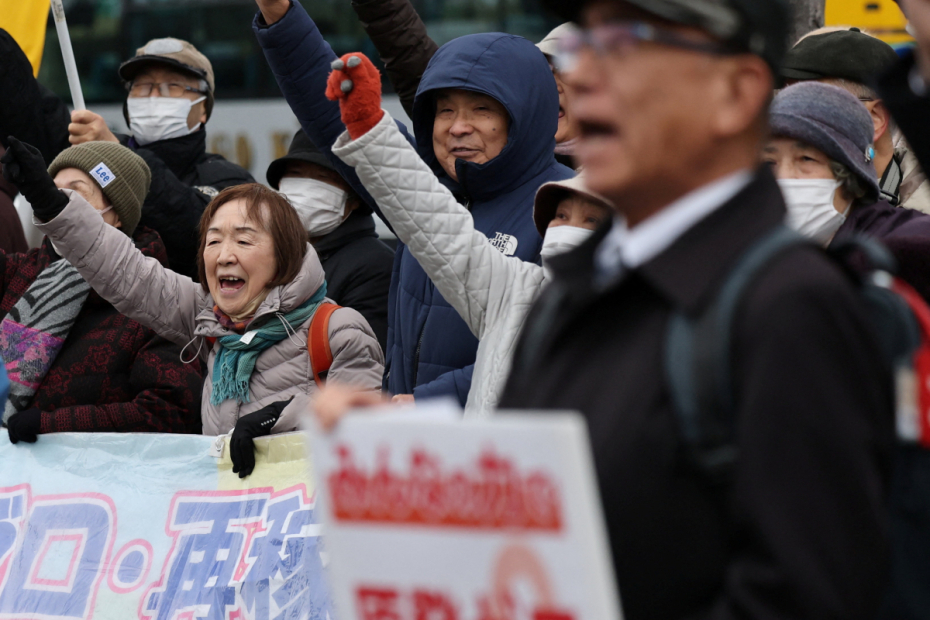
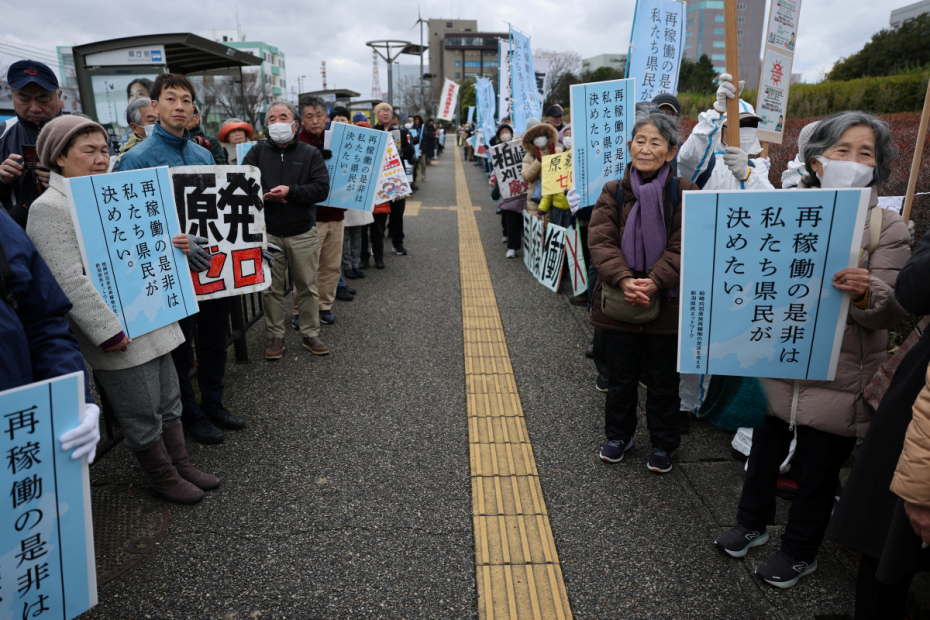
Outside the assembly building, about 300 protesters gathered in freezing conditions, holding banners reading "No Nukes", "We oppose the restart of Kashiwazaki-Kariwa" and "Support Fukushima".
"Is TEPCO qualified to run Kashiwazaki-Kariwa?" one protester asked through a loudspeaker, prompting chants of "No!" from the crowd.
Public unease has also been reflected in surveys. A prefectural poll published in October found that 60% of residents did not believe conditions for a restart had been met, while nearly 70% said they were concerned about TEPCO operating the plant.
Earlier this year, TEPCO pledged to invest $641m (100bn yen) in Niigata over the next decade in an effort to secure local support.
Among the protesters was Ayako Oga, a 52-year-old farmer and anti-nuclear activist who fled the Fukushima exclusion zone in 2011.
"We know first-hand the risks of a nuclear accident and cannot dismiss them," she said, adding that she still struggles with trauma from the disaster.
“As a victim of the Fukushima nuclear accident, I wish that no one, whether in Japan or anywhere in the world, ever again suffers the damage of a nuclear accident.”
TEPCO said it remained committed to safety. "We are firmly committed to never repeating such an accident and to ensuring Niigata residents never experience anything similar," spokesperson Masakatsu Takata said, declining to comment on the restart timeline.
TEPCO shares rose 1.7% in afternoon trade, broadly in line with gains in the Nikkei index.
For many residents in Niigata, the revival of nuclear power remains a painful reminder of Fukushima’s legacy, highlighting the enduring tension between energy security and public trust in Japan’s post-disaster nuclear policy.














What is your opinion on this topic?
Leave the first comment