Power supply resumes in Berlin after longest blackout in decades
Power has been fully restored to a neighbourhood in Berlin after an arson attack triggered a blackout that lasted more than four days — the second s...
The European Union faces a critical decision on how to finance Ukraine’s war effort, divided over whether to use frozen Russian assets or jointly borrow funds through 2027.
Political analyst Enrique Cocero explains the stakes, the EU’s internal divisions, and the potential role of the U.S.
As EU leaders meet in Brussels, the bloc must decide how to sustain Ukraine financially during the ongoing war.
Speaking to AnewZ, political analyst Enrique Cocero said, “The main issue here is not funding Ukraine as much as Europe assuming the conscience of self-defence.”
He emphasised that the conflict is no longer just a Russia–Ukraine war, but a direct threat to Europe.
On the table are two options: Plan A, using immobilised Russian assets as reparations, and Plan B, joint EU borrowing to support Kyiv.
Cocero noted that while France supports using Russian assets, countries like Italy, Bulgaria, Malta, Czechia, and Belgium have resisted, creating political complications.
Regarding joint borrowing, he explained, “Europe can give Ukraine 90 billion euros as a loan, but Russia does not want Ukraine to recover too quickly, which could affect repayment.”
Cocero suggested that the most likely outcome is a mix of both plans, allowing loans to Ukraine while using Russian assets as a cautionary measure.
He also highlighted the U.S. role, pointing out that Washington provides intelligence support but is prioritising the Pacific over Europe.
“The United States is collaborating, but not putting boots on the field,” he said. He added that Russia’s reaction will determine how far the U.S. is willing to engage diplomatically.
On potential delays, Cocero warned that EU member states could slow decisions: “Italy, Bulgaria, Belgium and others can take time, which is challenging given Ukraine’s critical situation.”
The analyst stressed the need for agile EU decision-making, noting that slow responses could mean missed opportunities to influence the war’s outcome.

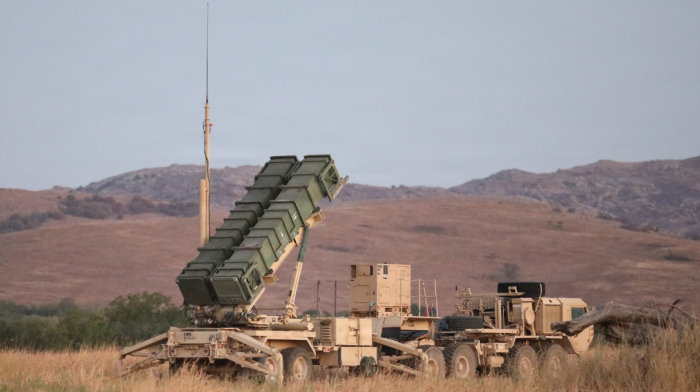
Open-source intelligence (OSINT) sources reported a significant movement of U.S. military aircraft towards the Middle East in recent hours. Dozens of U.S. Air Force aerial refuelling tankers and heavy transport aircraft were observed heading eastwards, presumably to staging points in the region.
Diplomatic tensions between Tokyo and Beijing escalated as Japan slams China's export ban on dual-use goods. Markets have wobbled as fears grow over a potential rare earth embargo affecting global supply chains.
Two people have been killed after a private helicopter crashed at a recreation centre in Russia’s Perm region, Russian authorities and local media have said.
Iran’s chief justice has warned protesters there will be “no leniency for those who help the enemy against the Islamic Republic”, as rights groups reported a rising death toll during what observers describe as the country’s biggest wave of unrest in three years.
"Change is coming to Iran" according to U.S. Senator Lindsey Graham during an interview with Fox News on Tuesday (6 January). He warned Iran that "if you keep killing your people for wanting a better life, Donald Trump is going to kill you."
Power has been fully restored to a neighbourhood in Berlin after an arson attack triggered a blackout that lasted more than four days — the second such incident in the city since September.
A U.S. immigration agent shot and killed a 37-year-old woman in her car in Minneapolis on Wednesday, local and federal officials said, amid an expanded immigration enforcement operation ordered by President Donald Trump.
Ukrainian President Volodymyr Zelenskyy has called on the United States to target Ramzan Kadyrov, the leader of Russia’s Chechnya region, with an operation similar to the recent U.S. action that captured Venezuelan President Nicolás Maduro.
U.S. President Donald Trump said he will stop defence contractors from paying dividends or buying back shares until weapons production speeds up, criticising the industry for delays and high costs.
U.S. Secretary of State Marco Rubio said he will meet Danish leaders next week, signalling that Washington is not retreating from President Donald Trump’s stated goal of acquiring Greenland, despite mounting concern among European allies.
You can download the AnewZ application from Play Store and the App Store.
What is your opinion on this topic?
Leave the first comment