Twin quakes strike China's Qinghai province, no damage reported
Two shallow earthquakes hit a remote area of China's Qinghai province on Tuesday, with authorities reporting no casualties or collapsed buildings so f...
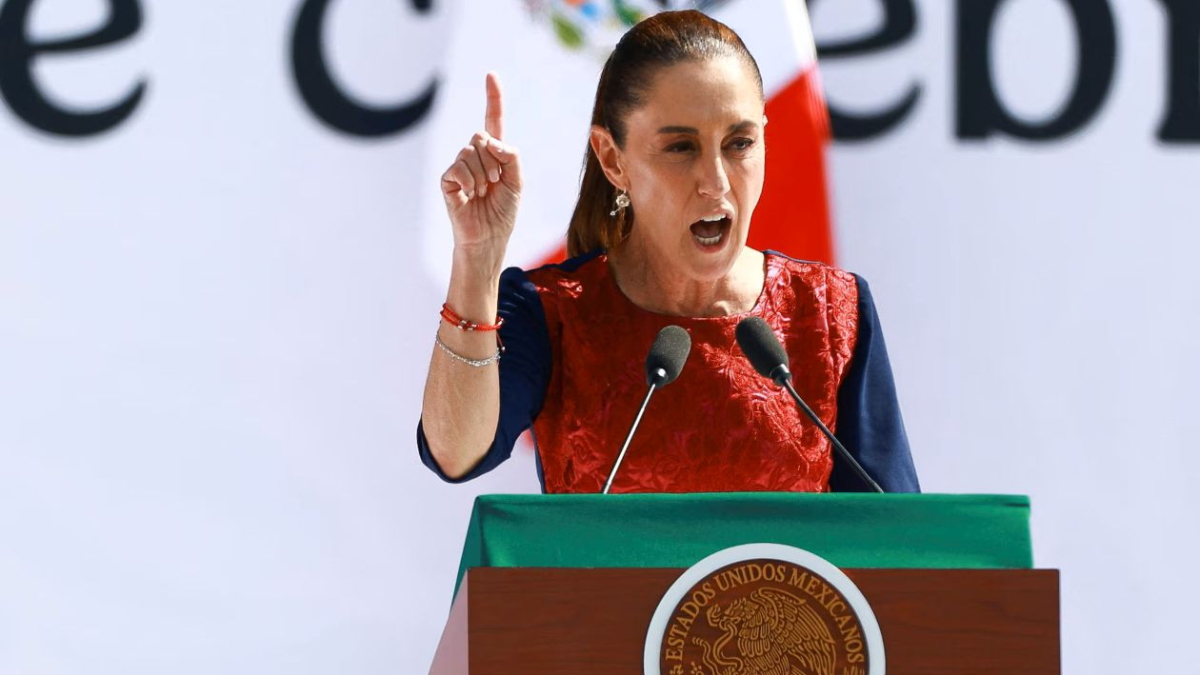
Mexican President Claudia Sheinbaum has expressed confidence that an agreement can be reached with the United States over ongoing water delivery commitments. She made the remarks during a press briefing on Tuesday.
Sheinbaum said that an initial technical meeting between the two sides has already taken place, with a follow-up meeting scheduled for later today. Discussions are expected to focus on how Mexico will deliver water to the Rio Grande, in line with existing treaty obligations.
The president noted that Mexico has prepared several proposals aimed at meeting its outstanding commitments. Under the plan, part of the water would be supplied before December, with the remainder to be delivered over the coming years. Sheinbaum stressed that any arrangement must ensure that Mexico’s own water supply and agricultural production are not put at risk.
She also referred to technical limitations, stating that the capacity of the pipeline carrying water to the Rio Grande makes it impossible to deliver large volumes in a short period. She added that U.S. officials are aware of these constraints.
A day earlier, U.S. President Donald Trump accused Mexico of failing to comply with a water-sharing treaty and warned that he could impose an additional 5% tariff on Mexican goods if water is not released by 31 December. Washington has asked Mexico to supply 200,000 acre-feet before the deadline.
Under a 1944 agreement, Mexico is required to deliver 1.75 million acre-feet of water to the U.S. every five years. The current demand includes volumes outstanding from previous years.
Mexican officials say negotiations are ongoing and are hopeful that a resolution can be reached.

U.S. President Donald Trump said on Monday that there is a good chance” of reaching a deal with Iran, but warned that Washington would resume military operation if negotiations fail.
Iran will halt its own attacks as long as the United States maintains its pause on strikes, but Tehran remains sceptical of U.S. intentions, a senior Iranian source told on Sunday.
The Russia-Ukraine war is increasingly reshaping the Caspian region. From threats to energy infrastructure to renewed diplomatic efforts, countries across the region are adapting to the wider consequences of a conflict that continues to disrupt trade, transport and security.
A New York school district has put plans to introduce a humanoid robot into classrooms on hold after fierce criticism from teachers, Indigenous community members and state education officials over the use of artificial intelligence in schools.
A known Islamist suspected of driving a minivan into a crowd near a major LGBTQ Pride gathering in Berlin was shot dead during a police operation at an allotment garden complex, broadcaster RBB reported on Sunday.
Two shallow earthquakes hit a remote area of China's Qinghai province on Tuesday, with authorities reporting no casualties or collapsed buildings so far.
Australia is considering building its first new oil refinery in more than six decades as conflict in the Middle East exposes the country's heavy reliance on imported fuel.
Start your day informed with AnewZ Morning Brief. Here are the top news stories for the 28th of July, covering the latest developments.
The Trump administration has told Congress it does not expect to complete delivery of the remaining $400 million in military aid for Ukraine until 2029, despite Kyiv facing weapons shortage needed to defend against Russian missile attacks.
The lawyer representing social media influencers Andrew and Tristan Tate has accused U.S. authorities of "weaponising" the legal process against the brothers as they fight extradition to the UK.
You can download the AnewZ application from Play Store and the App Store.
What is your opinion on this topic?
Leave the first comment