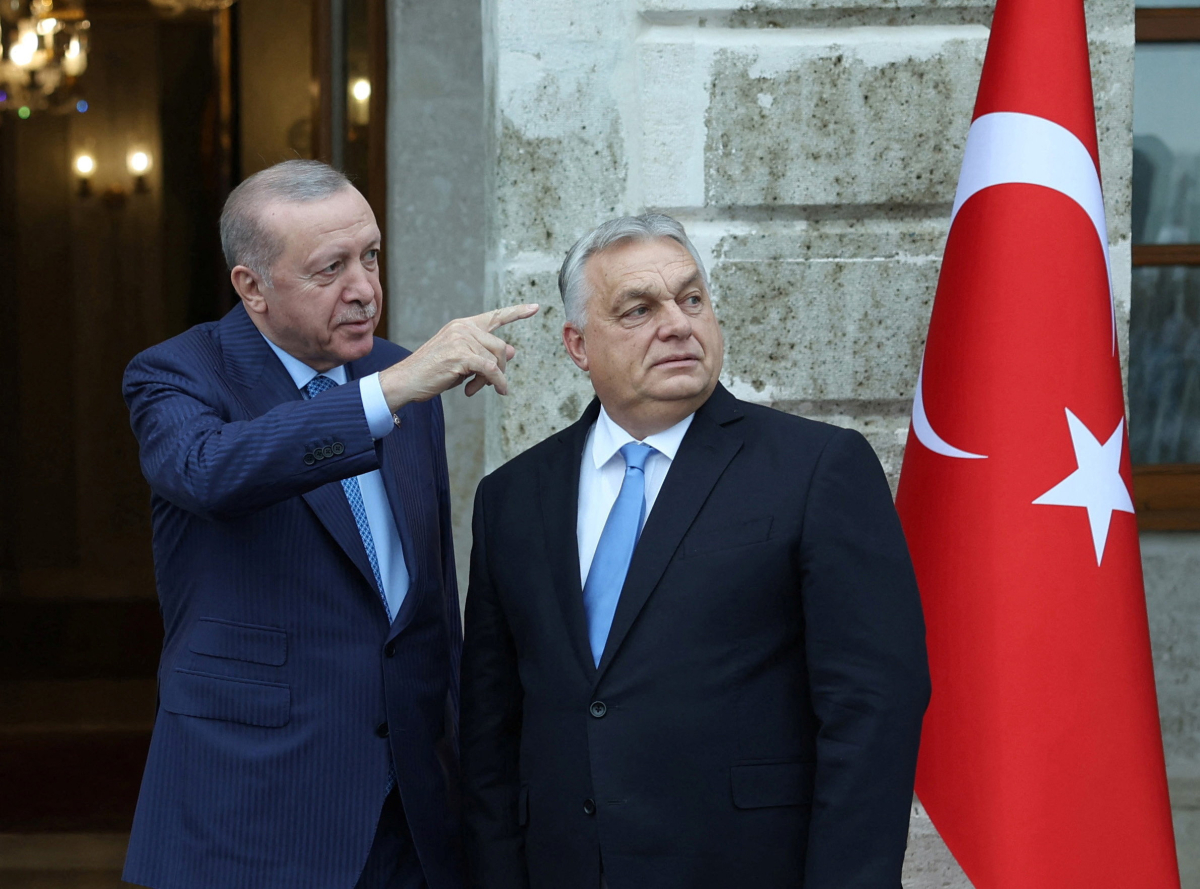
Türkiye has reinforced its strategic partnership with Hungary, expanding cooperation in trade, energy, defence, and innovation following high-level talks between President Recep Tayyip Erdoğan and Hungarian Prime Minister Viktor Orbán in İstanbul.
The two leaders met at the Dolmabahçe Presidential Office, where they emphasised strengthened bilateral relations and set new targets for the coming years. Erdoğan noted that the countries are close to meeting their existing goal of $6 billion in trade and said both sides now aim to raise this to $10 billion.
Agreements were signed across defence, energy, transportation, culture, education, and technology, bolstering the institutional framework that underpins the partnership. Viktor Orban said that Türkiye also confirmed its continued facilitation of Russian oil and natural gas supplies to Hungary, transferring 7.5 billion cubic metres of natural gas in 2025 — a role that has become central to Europe’s wider energy security.
Speaking to AnewZ, political analyst Zoltan Egeresi said Hungary’s strategic alignment with Türkiye reflects changing geopolitical realities. “From Hungary’s perspective, Türkiye is a key country in terms of security,” he said, noting that Ankara’s position between Europe and Asia gives it a unique influence. He added that the experience of the 2015–2016 migrant crisis demonstrated how developments in the Middle East and North Africa “somehow affect the Balkans and Central Europe”, making cooperation with Türkiye essential.
The meeting also marked 2025 as the Türkiye-Hungary Science and Innovation Year, during which 28 joint initiatives in research, digitalisation, artificial intelligence, and entrepreneurship have been launched.
Egeresi told AnewZ that deeper defence and energy cooperation will continue to shape the partnership. “Our trade is booming,” he said, pointing to the new $10 billion target. From his perspective, the close political dialogue “will open the way for further trade agreements and investment opportunities”, as Turkish companies expand in Hungary and Hungarian firms enter the Turkish market.
Erdoğan also underscored Türkiye’s diplomatic efforts towards peace in Ukraine and acknowledged Hungary’s support for Türkiye’s EU accession ambitions. The two sides agreed to establish a joint planning group led by their foreign ministers to coordinate on bilateral and global issues.
Both governments signalled that the expanding cooperation — particularly in defence production — reflects a growing alignment on regional security. Egeresi said that, since 2016, Budapest has been “one of the loudest supporters of Türkiye”, adding that Hungarian policymakers view Türkiye’s stability as “not just important for Hungary itself, but generally for the region”.
The discussions highlighted Türkiye’s role as a stabilising regional actor and set the stage for deeper economic, energy, and technological collaboration in the years ahead.










What is your opinion on this topic?
Leave the first comment