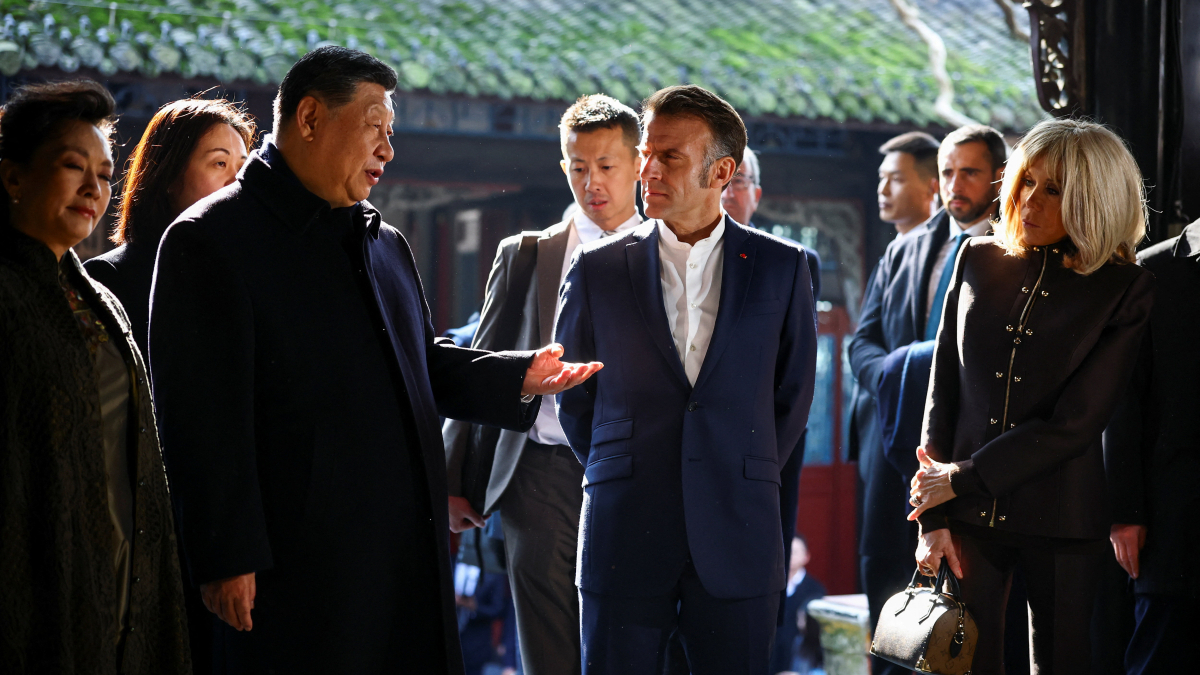
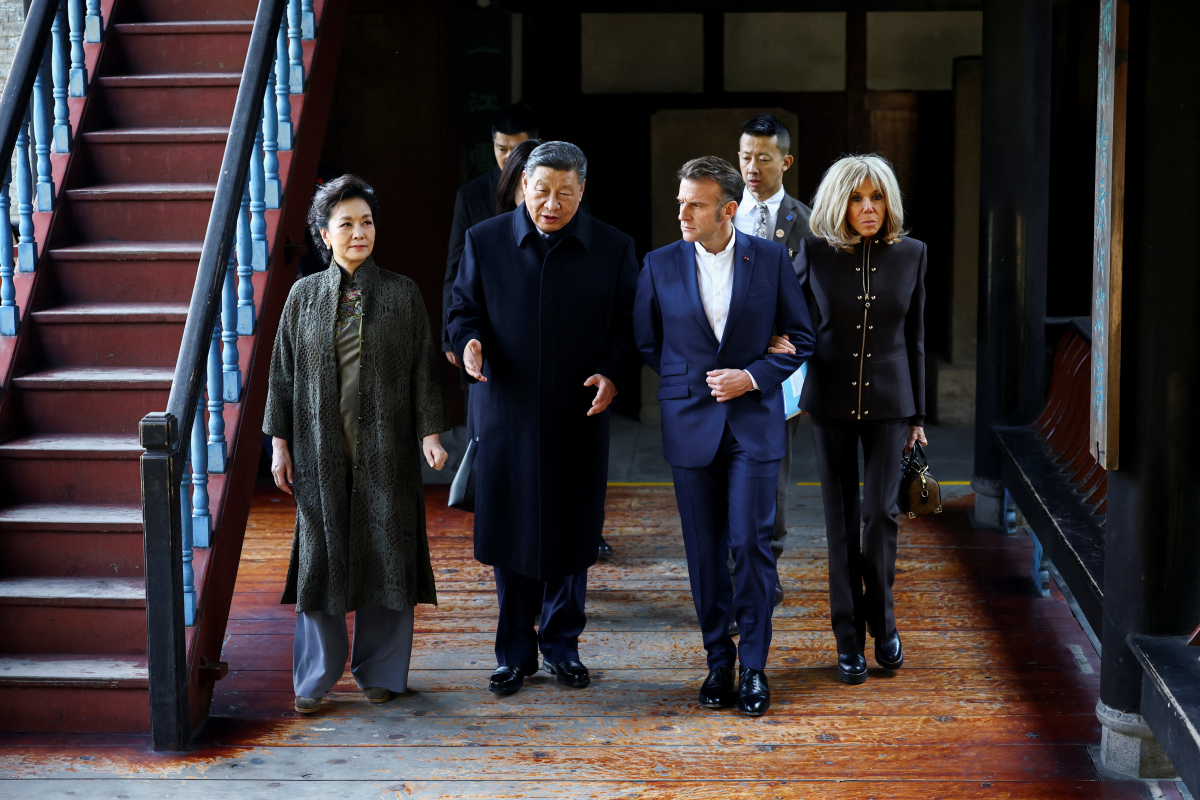
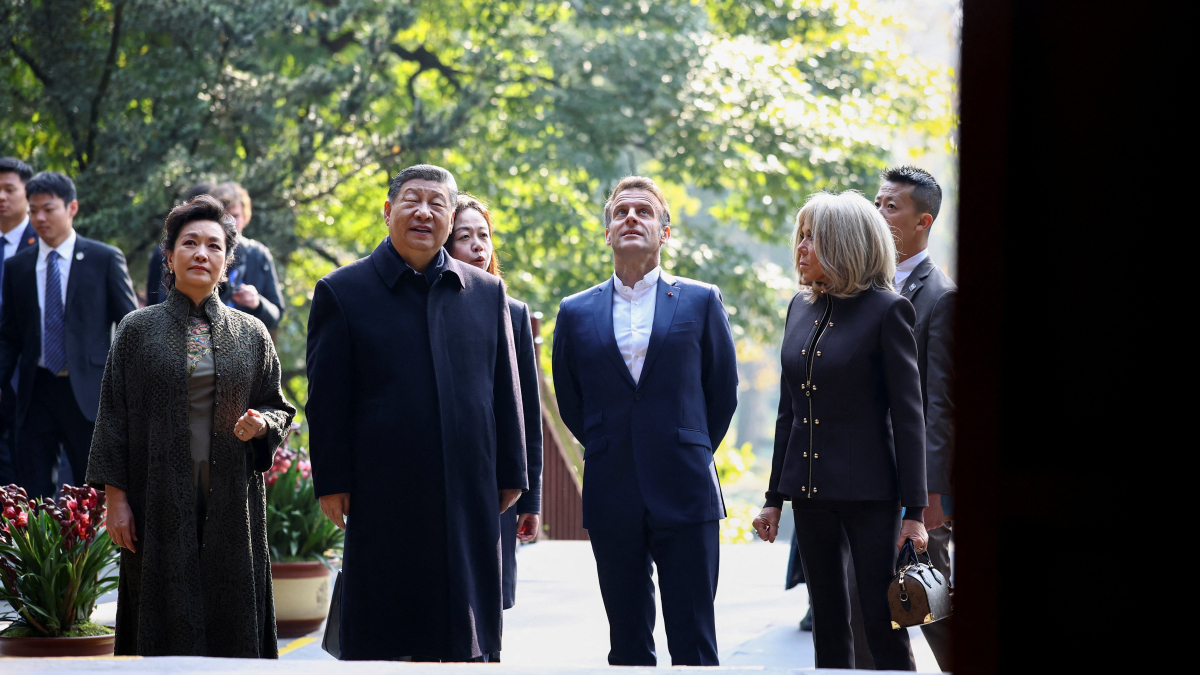
Chinese leader Xi Jinping accompanied French President Emmanuel Macron to Chengdu on Friday, a rare gesture seemingly reserved for the head of Europe's second-largest economy that highlights Beijing's focus on Paris in its ties with the European Union.
Despite U.S. President Donald Trump’s landmark visit to China in 2017, which included a private dinner at Beijing’s Forbidden City, Macron's trip remained confined to the Chinese capital.
However, Macron’s visit has taken a more expansive route, with Xi Jinping accompanying him to Chengdu, emphasising China’s focus on France within the European Union.
While Xi and Macron appear to have a cordial relationship, analysts say the visit so far has mainly bolstered Beijing’s diplomatic standing, especially as world leaders seek economic reassurances amid Trump’s tariffs.
For Macron, it offers an opportunity to showcase statesmanship following a difficult summer in domestic politics.
Investors are closely watching whether Macron’s visit, which began with a surprise jog in Chengdu's Jincheng Lake Park and a tour of an historic dam site with Xi, will result in significant commercial deals or ease EU-China trade tensions.
Macron is accompanied by top executives from France’s largest firms on his fourth state visit to China.
A meeting in Beijing on Thursday (4 December) led to 12 cooperation agreements, covering areas like population aging, nuclear energy, and panda conservation, but no financial figures were disclosed.
“I think France hoped Xi would offer significant concessions, especially as Europe is shaping its economic security doctrine,” said Alicia Garcia-Herrero, senior fellow at Bruegel think tank.
“Macron probably felt that with his influence, and France’s push on economic security, a deal was in reach. But nothing materialised.”
Unity with the U.S. on Ukraine
Amid discussions on economic relations, Macron also emphasized the importance of unity between Europe and the United States in the context of supporting Ukraine.
"Unity between Americans and Europeans on the Ukrainian issue is essential," Macron told reporters.
"We welcome and support the peace efforts being made by the United States of America. The United States of America needs Europeans to lead these peace efforts," he added.
Despite recent skepticism from French and German leadership over U.S.-led peace negotiations, Macron reaffirmed Europe's commitment to working together with the U.S. to find a peaceful resolution to the conflict.
Limited Gains from the Visit
While Beijing may view strong ties with France as a way to expand influence within the European Union, its ability to offer Paris major concessions is constrained. Xi was not expected to approve a long-awaited 500-jet Airbus order, as this could undermine China’s leverage in ongoing trade talks with the U.S., which is pressing for commitments to Boeing.
Similarly, Xi is unlikely to ease restrictions for French cognac makers or pork producers, as doing so would weaken Beijing’s bargaining position with Brussels over tariffs on Chinese electric vehicles (EVs).
Additionally, Xi is unlikely to offer Macron any breakthroughs on the Ukraine conflict, as China has reaffirmed its support for Russia.
Recent visits by Spain’s King Felipe VI and German Finance Minister Lars Klingbeil also yielded few tangible results.
Chinese government advisers suggest Beijing believes it holds the upper hand and is waiting for Brussels to accept a minimum price plan for EVs rather than continuing the current tariffs.
“The EU now recognises the complexity of the issue. After Trump’s return to the presidency, they realised they’re too dependent on the U.S.,” one advisor said. “Europe is now in need of more reciprocal trade with China.”
Tensions in EU-China relations
Xi did not raise the prospect of a trade deal with the EU during his meeting with Macron, despite Chinese officials discussing such an agreement with other EU member states. Talks over a landmark EU-China investment pact have been stalled since 2021.
The vote on the European Commission’s EV tariffs revealed deep divisions within the EU, with France in favour and Germany, Europe’s largest economy, against. China may seek to exploit such divisions.
“It’s interesting that China continues to raise the issue of a trade deal with individual member states,” a European Commission official said.
“But we have no plans to pursue any trade agreement with China,” they added, requesting anonymity.














What is your opinion on this topic?
Leave the first comment