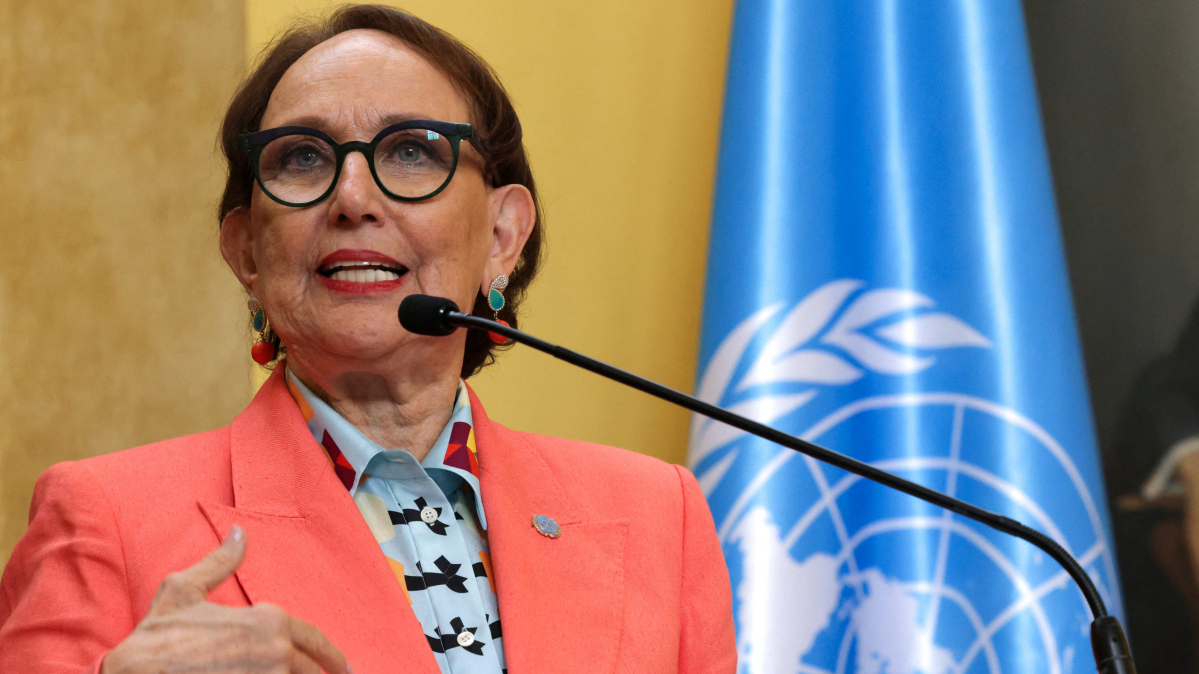
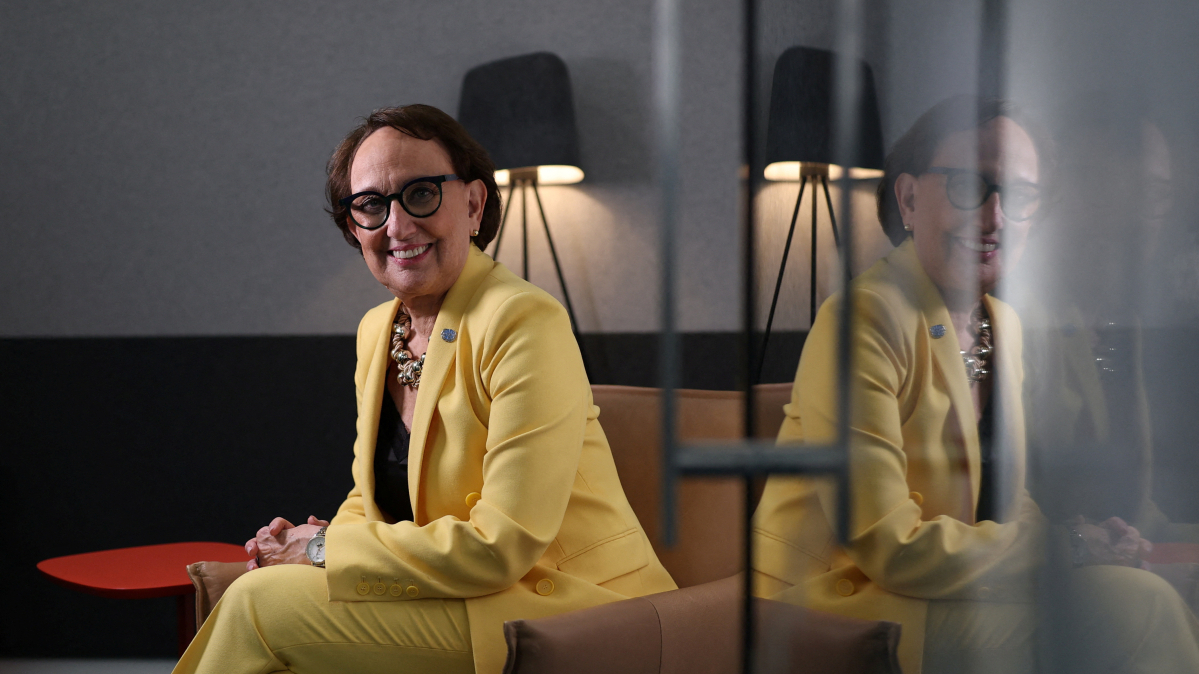
As the race to succeed António Guterres gathers pace, former Vice President of Costa Rica and Secretary-General of UN Trade and Development (UNCTAD) Rebeca Grynspan has issued a stark challenge to the United Nations: end eight decades of male exclusivity and finally elect a woman on merit.
Grynspan, a frontrunner for the Secretary-Generalship, insists that the only barrier preventing a female leader is the organisation's own internal biases.
Speaking from London on Tuesday (2 December), she argued that if the selection process is truly based on competence rather than tradition, the UN will see a historic shift when the post changes hands in January 2027.
The formal selection process commenced last week, inviting member states to nominate candidates. Despite the UN’s 80-year history as the global guardian of peace and human rights, the role of Secretary-General has been held exclusively by men.
This reality, Grynspan contends, defies explanation given the depth of female talent available on the world stage.
"We don't need special treatment. What we are really asking for is no discrimination," Grynspan, 69, told Reuters.
"If equality will prevail, we will be able to get there. That's the only thing that we are asking: equal treatment."
The pressure to appoint a female Secretary-General has intensified significantly in recent years. During the last contested selection process in 2016, there were high hopes for a female leader, with seven women among the 13 candidates. However, the Security Council ultimately coalesced around Guterres, a former Portuguese Prime Minister, leading to criticism from civil society groups like the ‘Campaign to Elect a Woman UN Secretary-General.
Grynspan, who currently serves as Secretary-General of the UN Conference on Trade and Development (UNCTAD), is well-positioned within the UN system. However, she faces stiff competition.
By convention, the Secretary-Generalship rotates regionally. With Europe (Guterres) and Asia (Ban Ki-moon) having held the seat recently, the 2026 election is widely viewed as Latin America and the Caribbean's "turn".
Alongside Grynspan, declared candidates include Chile's former President Michelle Bachelet—a heavyweight in international human rights—and Argentine diplomat Rafael Grossi, the current head of the International Atomic Energy Agency (IAEA).
Navigating the Trump Era
Should Grynspan be elected, her tenure would begin during the second presidency of U.S. President Donald Trump. This presents a complex diplomatic landscape for any incoming UN chief.
The U.S. remains the UN's largest financial contributor, covering roughly 22% of the regular budget. During his first term (2017–2021) and throughout his current tenure, President Trump has maintained a transactional and sceptical view of multilateralism, often threatening funding cuts and accusing the body of inefficiency.
While current UN leadership has often found itself defending the institution against White House critiques, Grynspan appears to be adopting a pragmatic strategy. Rather than rejecting Trump’s criticism, she suggests using it as a catalyst.
Grynspan argued that Trump's critiques could be "constructive" rather than "destructive," emphasising that the UN must strive for improvement.
"The UN has to embrace reform, not be defensive about reform," she said.
Acknowledging a "weakening of trust" in the organisation, she noted that institutions must be brave enough to "admit that they don't do everything right."
1945 Relic in a 2025 World
Beyond the gender of its leader, Grynspan is campaigning on the necessity of structural modernisation. She highlighted that the UN’s architecture reflects the geopolitical reality of 1945, when it had just 51 member states. Today, there are 193 members, yet the power dynamics—specifically within the Security Council—remain largely frozen in the post-World War II era.
"Those voices have to have wider space to be heard," Grynspan said, throwing her support behind the long-stalled proposal to grant permanent Security Council seats to African and Latin American nations.
Reform of the Security Council has been a topic of debate for decades, but it requires the agreement of the five permanent members (U.S., UK, France, Russia, and China)—a consensus that has proven nearly impossible to achieve in the current polarised global environment.
Nevertheless, Grynspan maintains that the UN remains indispensable, citing its success in reducing global poverty and infant mortality. Her pitch to the electorate is that the UN works, but to survive the next century, it must look like the world it represents—both in its council chambers and in the Secretary-General’s office.















What is your opinion on this topic?
Leave the first comment