French President Emmanuel Macron addressed critical issues surrounding Ukraine’s ongoing conflict, the role of American mediation, and European involvement during a press conference on Monday, reaffirming France’s commitment to supporting Ukraine's sovereignty and ensuring peace in the region.
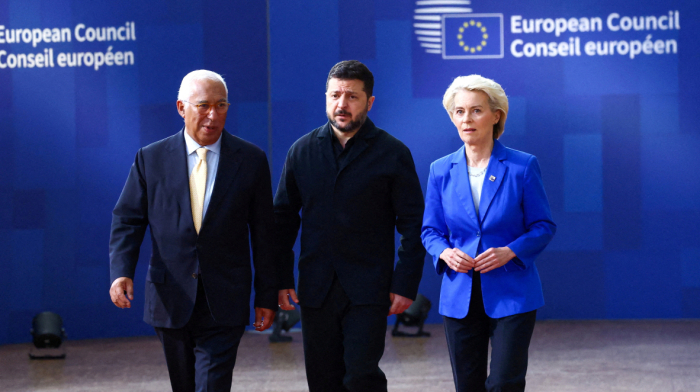
Macron emphasized that peace talks can only progress if all key stakeholders are involved, stating, “When we talk about peace, each one of us has a role to play. For Russia, it's to stop the aggression. Ukraine is the only one that can talk about territories—it’s about its own territories, recognized by international law and sovereignty.” He stressed that security guarantees could only be discussed with Ukraine at the table, alongside European allies and the Coalition of the Willing, highlighting the importance of European security in the negotiations.
Regarding the ongoing peace process, Macron outlined the next steps, including crucial discussions between U.S. leaders and the Coalition of the Willing to clarify America's role in providing security guarantees. He noted that these talks would be conducted in line with decisions made the previous week. “I am sure we will all remain united by the side of Ukraine, in respect of international law, peace, and security for our Europe,” he affirmed.
Macron also addressed the issue of frozen Russian assets, which have been a point of contention. “We will find an option that will technically allow us to respond to all the legitimate questions that are being asked,” he said. Macron expressed his respect for Belgium’s Prime Minister Bart de Wever, who has raised specific concerns regarding these assets. Macron indicated that the goal is to finalize a resolution on the issue by the next European Council, expected before Christmas.
During the conference, Macron clarified the role of U.S. mediation in the peace process, noting that while the U.S. has consulted closely with Ukraine and France, a comprehensive peace plan requires the participation of all parties involved, including Ukraine, Russia, and European leaders. “This is not a complete peace plan. For a complete peace plan, we need Ukraine at the table, Russia at the table, and the Europeans at the table. So it is not yet right now, but it will come,” he explained.
Macron also addressed concerns about corruption within Ukraine, stating that it is not France’s role to lecture Ukraine. He acknowledged the challenges but emphasized that a democracy must be able to address such issues through an independent legal system. “A democracy should pride itself in knowing how to solve that, through an independent legal system and while knowing how to put to justice any decider, whoever they are,” he said.
Despite criticisms, Macron praised Ukraine’s ongoing fight against corruption, citing the country’s political decisions and legal actions. However, he contrasted Ukraine's efforts with the situation in Russia, where, according to Macron, there is a lack of accountability. “What is worrying is you’ll never have this type of decision on the Russian side, because there is true dictatorship there,” he stated.
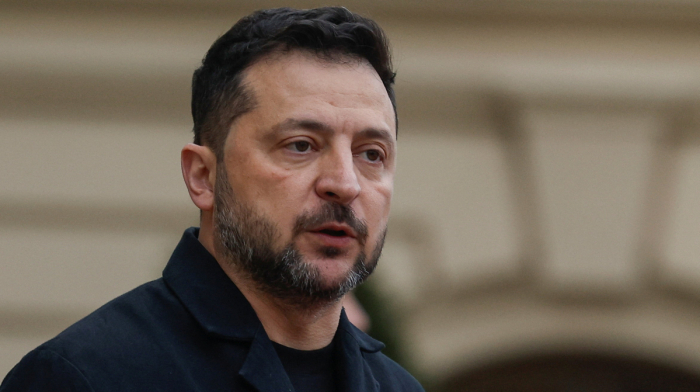
The press conference concluded with Macron and Ukrainian President Volodymyr Zelenskyy shaking hands, signaling continued collaboration between the two nations in the quest for peace and stability in the region.








What is your opinion on this topic?
Leave the first comment