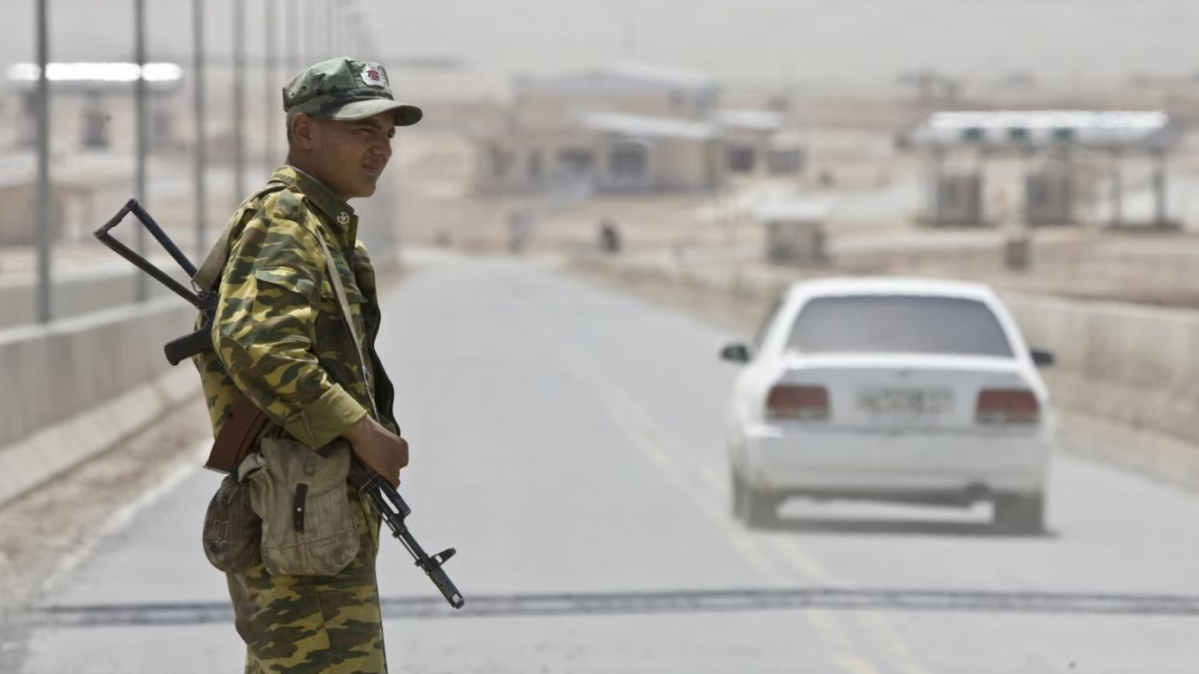
Security concerns across Central Asia have intensified rapidly after officials in Dushanbe reported a series of lethal incursions originating from Afghan soil, marking a significant escalation in border violence.
According to a statement released by Tajikistan’s presidential press service on Monday, five people have been killed and a further five injured in two separate attacks launched from neighbouring Afghanistan over the past week.
The incidents represent a sharp deterioration in stability along the porous, 1,357-kilometre frontier that separates the former Soviet republic from Taliban-controlled Afghanistan.
While the region has long been plagued by heroin trafficking and sporadic skirmishes, the involvement of sophisticated weaponry and the targeting of foreign nationals suggests a shift in the security dynamic.
Tajik authorities clarified that the casualty figures include an incident reported last week in which three Chinese citizens were killed. Dushanbe stated that the Chinese nationals, who were reportedly involved in mining operations along the remote, mineral-rich border region, were struck by a drone attack launched from Afghan territory.
China has become a dominant economic player in Tajikistan, holding the majority of the country's external debt and operating several gold mines.
Beijing has previously expressed deep concern regarding the potential for Islamist militancy to spill over from Afghanistan into Central Asia and China's western Xinjiang region.
Tajikistan, a mountainous nation of approximately 11 million people led by a secular government, remains the only Central Asian state that has refused to normalise relations with the Taliban since the group seized power in Kabul in August 2021.
President Emomali Rahmon has frequently accused the Taliban of failing to form an inclusive government and of harbouring terrorist groups.
Dushanbe is particularly concerned about the presence of Jamaat Ansarullah—often referred to as the "Tajik Taliban"—and the Islamic State Khorasan Province (IS-KP) in the northern Afghan provinces bordering Tajikistan.
Conversely, the Taliban administration has accused Tajikistan of sheltering leaders of the National Resistance Front, the primary anti-Taliban opposition force.
Presidential Response
Following the attacks, President Rahmon convened an emergency meeting with the heads of his security agencies to discuss immediate measures to fortify the border.
The presidential press service stated that Mr Rahmon "strongly condemned the illegal and provocative actions of Afghan citizens and ordered that effective measures be taken to resolve the problem and prevent a recurrence of such incidents."
While Tajikistan hosts a significant Russian military base and remains a member of the Moscow-led Collective Security Treaty Organisation (CSTO), it has increasingly looked to bolster its own border defence capabilities, often with Chinese assistance, in recent years.
There was no immediate response from the authorities in Afghanistan to a request for comment regarding the Tajik statement. However, Kabul has historically denied allowing its territory to be used for attacks against neighbouring countries.












What is your opinion on this topic?
Leave the first comment