Tunisian President Kais Saied summoned the European Union’s ambassador on Wednesday to express a “firmly toned protest” regarding a perceived breach of diplomatic protocol, the presidency said.
The incident marks the latest sign of friction between Tunisia’s leadership and international partners over the country’s handling of civil society or opposition groups.
The ambassador, Giuseppe Perrone, recently met with the leaders of Tunisia’s prominent UGTT labour union and the UTICA employers’ union, both co-winners of the 2015 Nobel Peace Prize for their role in supporting Tunisia’s democratic transition.
Saied’s office stated that the president reminded the ambassador that accredited envoys must respect Tunisia’s sovereignty and follow official channels when engaging with domestic organisations. The statement did not provide specific details on what prompted the protest.
"Saied conveyed a strongly worded protest over the failure to adhere to diplomatic protocols and acting outside the official channels," the presidency said in a statement on Wednesday.
His government has launched a crackdown on civil society, leading to the suspension of many groups including Democratic Women, Nawaat Journalists, and the Economic and Social Forum.
A European Commission spokesperson, Anouar el-Anouni, said the EU “takes note of the messages transmitted by President Saied” and emphasised that diplomatic dialogue with civil society is a normal and constructive part of international relations.
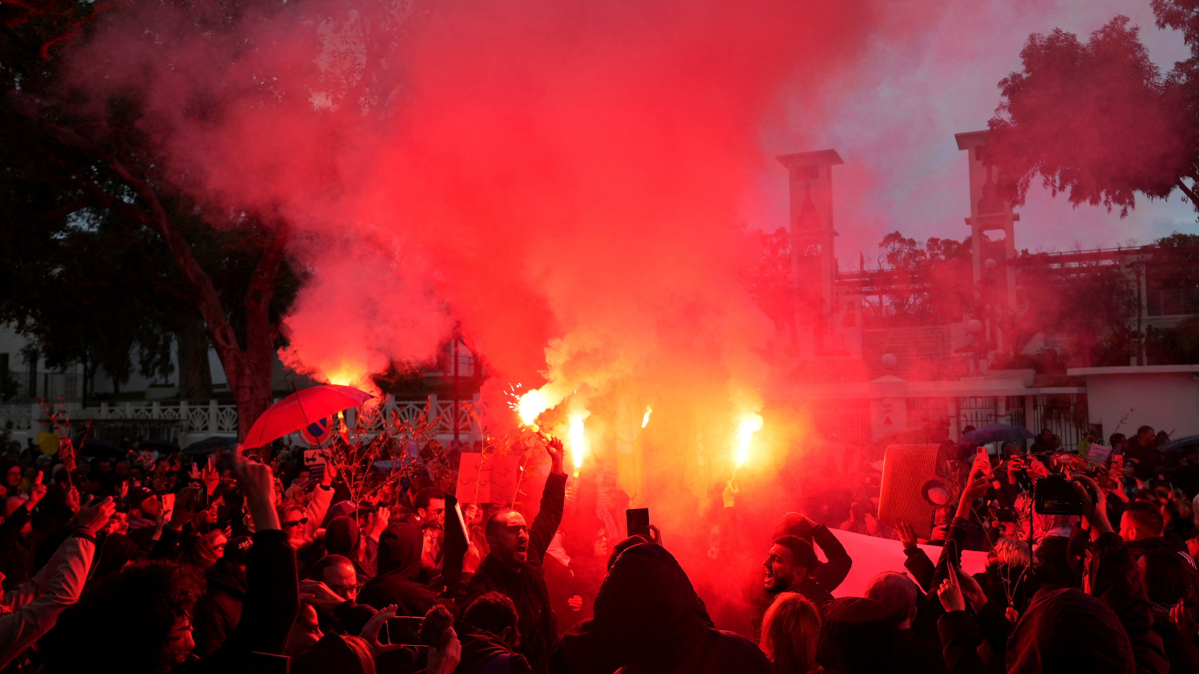
Tunisia has faced growing public protests in recent weeks, with doctors, activists, and citizens demanding greater social justice. Saied’s government has tightened control over rights and freedoms, framing its actions as necessary to combat corruption and national security threats.
The EU envoy’s meetings this week included a session with UGTT leader Noureddine Taboubi to mark three decades of EU-Tunisia cooperation, where discussions focused on employment, vocational training, and economic reforms. Perrone also met with UTICA head Samir Majoul to discuss economic challenges facing Tunisian industries.
Both UGTT and UTICA remain central actors in Tunisia’s civil society and have been pivotal in national dialogue efforts since the 2011 Arab Spring.
Amnesty International has said the crackdown on rights groups has reached critical levels with arbitrary arrests, detentions, asset freezes, banking restrictions and suspensions targeting 14 NGOs.
While the UGTT, with its one million members, has not yet faced any official decisions, it has voiced complaints about restrictions on trade union rights and the unilateral suspension of agreements with the authorities.
This month, the union also threatened to launch a nationwide strike “in defence of trade union rights,” amid a crippling economic and political crisis that has sparked protests from opposition groups, unions, journalists, banks, and doctors.
The EU, Tunisia’s largest trading partner and a key ally for decades, has seen relations sour since Saied seized almost all power in 2021 and began ruling by decrees, a move the opposition calls a coup.











What is your opinion on this topic?
Leave the first comment