Germany’s Foreign Minister Johann Wadephul arrived in Bosnia and Herzegovina on Sunday, marking the start of a multi-day diplomatic tour across all six Western Balkan states focused on accelerating their long-stalled European Union accession process.
The visit comes at a tense geopolitical moment, as frustration grows in the region over the length of accession talks, some now ongoing for more than a decade, while global powers including Russia and China attempt to expand their influence.
Call for Stability and Commitment to EU Values
After landing in Sarajevo, Wadephul held talks with Christian Schmidt, the High Representative for Bosnia and Herzegovina and fellow German diplomat tasked with safeguarding implementation of the 1995 Dayton Peace Agreement, which ended the Bosnian War.
“Peace and stability in the heart of Europe remain obligatory for us,” Wadephul stressed, urging leaders in Bosnia and Herzegovina to stay committed to the European path.
He added that maintaining the core elements of the Dayton Agreement — particularly sovereignty and territorial integrity, is non-negotiable.
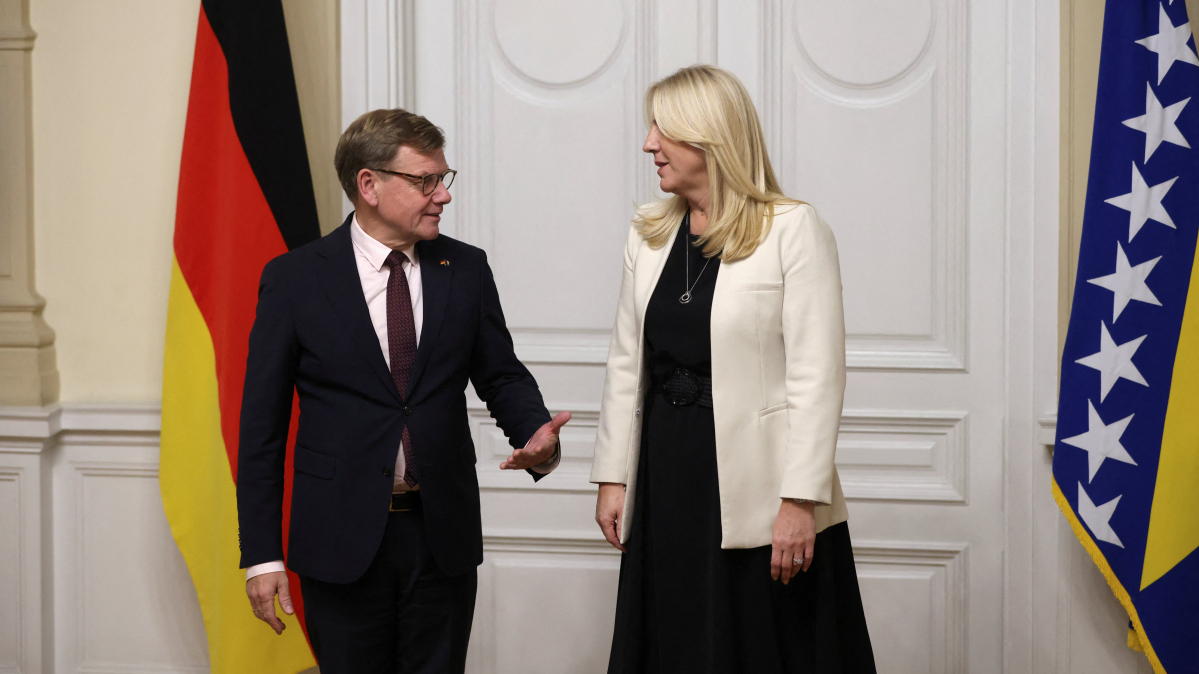
Wadephul is also scheduled to meet Željka Cvijanović, the Serb member of Bosnia and Herzegovina’s tripartite presidency, amid ongoing political tensions between Bosnia’s federal institutions and Republika Srpska leadership.
Wadephul’s regional itinerary underscores Germany’s renewed diplomatic push in Southeast Europe.
His schedule includes: Monday - Montenegro and Albania; Monday evening - Serbia; Tuesday - Kosovo; and on Tuesday evening - North Macedonia.
The tour aims to reinforce the EU’s long-standing commitment to enlargement — and to signal to regional leaders that reforms must accelerate.
Slow EU Accession Raises Frustration — and Geopolitical Risks
The EU first agreed in 2003 that Western Balkan states would be eligible for membership pending reforms. Two decades later, progress varies significantly:
Country EU Status
Montenegro Negotiations since 2012 — most advanced, but no entry date
Serbia Negotiations since 2014
Albania & North Macedonia Negotiations opened in 2022
Bosnia and Herzegovina Candidate status — negotiations not yet started
Kosovo Potential candidate
Wadephul warned that political stagnation could push some states toward rival global powers:
“The rule of law, the fight against corruption and the protection of fundamental rights are non-negotiable,” he said, noting these reforms are essential both for EU entry and to counter Russian and Chinese influence.
Region Still Committed to Europe — but Impatient
Public support for EU membership remains high across much of the Western Balkans, but citizens and governments increasingly express frustration with delays and shifting criteria.
Wadephul attempted to counter the perception that enlargement is fading from Brussels’ agenda:
“The six Western Balkan countries are an integral part of the European family,” he said.
“The EU is not a distant promise, but a concrete prospect.”
For now, that prospect remains without timelines — but Germany’s renewed engagement signals that enlargement diplomacy is once again gathering momentum.












What is your opinion on this topic?
Leave the first comment