Uzbekistan expands uranium projects to boost exports and future nuclear cooperation
Uzbekistan is accelerating plans to expand uranium production and deepen international nuclear cooperation, positioning the sector as a pillar of long...
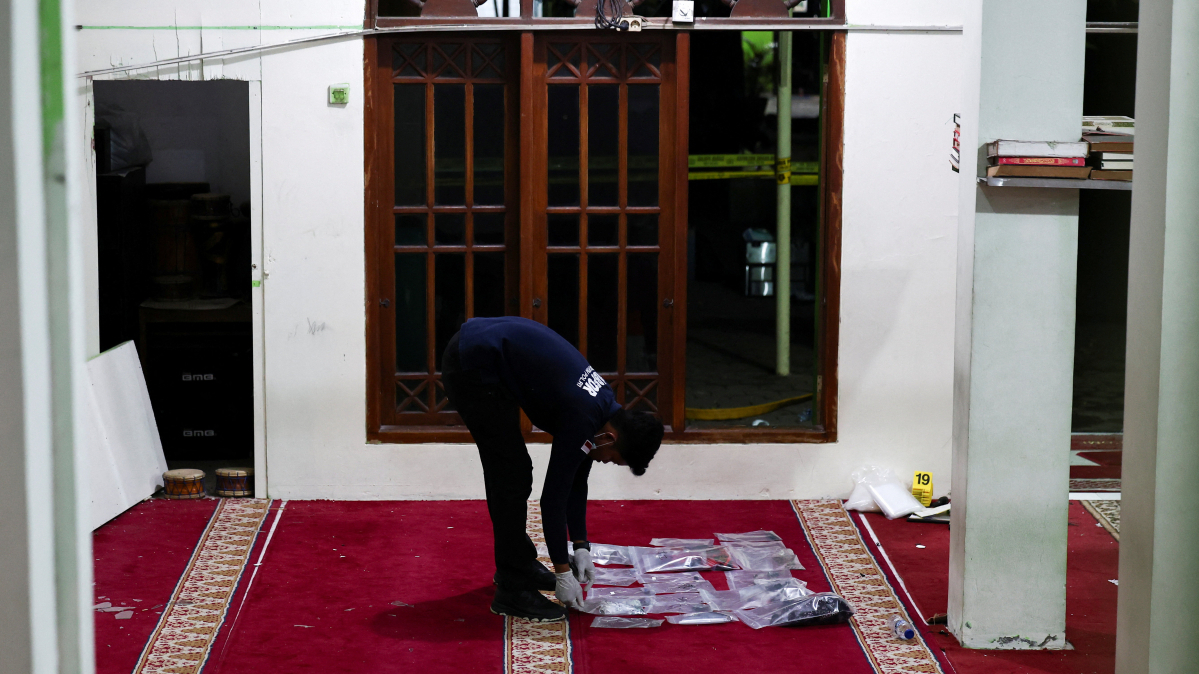
Indonesian police say seven homemade explosive devices were planted inside a mosque in Jakarta last week, four of which went off during Friday prayers, injuring nearly 100 people.
Police said on Tuesday that the attack was carried out by a 17-year-old student who acted alone and was not part of any “terror network.” Jakarta police chief Asep Edi Suheri described the suspect as a “child facing the law” and said the devices were detonated using a remote control.
The blasts occurred at a mosque inside a school complex in the capital’s Kelapa Gading area. Ninety-six people were injured, three of them seriously, Suheri said.
Police found seven homemade bombs in total, four of which exploded, along with suspected explosive powder, written material, and a toy weapon with inscriptions. The suspect was described as “closed” and “reclusive.”
On Monday, Jakarta police spokesperson Budi Hermanto told the Antara state news agency that investigators believe the motive was personal rather than religious. “The perpetrator is not anti any specific religion,” he said, suggesting that the suspect felt neglected by his family and that “it piled up.”
The student underwent surgery after the blast, police said, as investigations continue into his background and motive.

Talks with the U.S. should be pursued to secure national interests as long as "threats and unreasonable expectations" are avoided, President Masoud Pezeshkian posted on X on Tuesday (3 February).
Cuba’s Deputy Foreign Minister Carlos Fernández de Cossío has denied that Havana and Washington have entered formal negotiations, countering recent assertions by U.S. President Donald Trump, while saying the island is open to dialogue under certain conditions.
Mexico said it will stop sending oil to Cuba as U.S. President Donald Trump ramped up pressure on the Caribbean nation.
Web Summit Qatar 2026 opened in Doha on Sunday, drawing tens of thousands of founders, investors, policymakers and technology leaders to what organisers describe as one of the region’s largest digital economy gatherings.
Any U.S. military strike on Iran would almost certainly trigger cross-border retaliation and could ignite a wider regional war, according to political analyst James M. Dorsey.
Thousands of documents linked to the late sex offender Jeffrey Epstein have been taken down from the U.S. Justice Department’s (DOJ) website after victims and their lawyers warned that sensitive personal information had been exposed.
Start your day informed with AnewZ Morning Brief: here are the top news stories for the 4rd of February, covering the latest developments you need to know.
U.S. Secretary of State Marco Rubio met with Indian Foreign Minister Subrahmanyam Jaishankar on Tuesday (February 3) one day after the U.S. and India signed a trade deal.
British Prime Minister Keir Starmer spoke to U.S. President Donald Trump on Tuesday and discussed the situation in Ukraine, including the overnight Russian attacks on the country, the UK government said.
U.S. President Donald Trump on Tuesday (3 February) signed a spending deal into law that ends a partial U.S. government shutdown and gives lawmakers time to negotiate potential limits on his immigration crackdown.
You can download the AnewZ application from Play Store and the App Store.
What is your opinion on this topic?
Leave the first comment