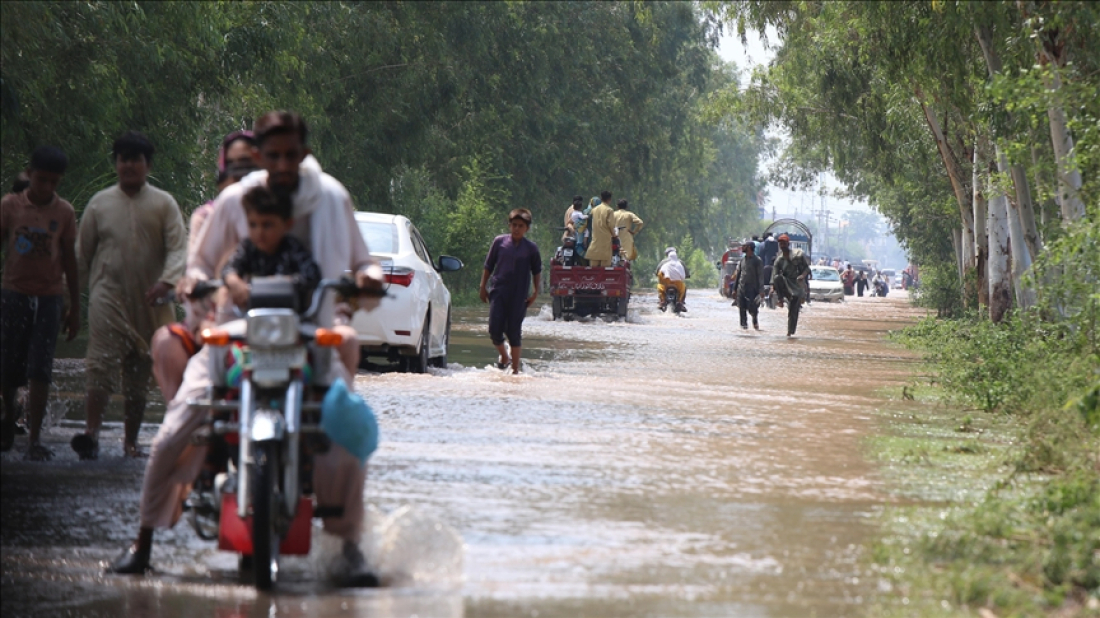
Over 100,000 people have been evacuated in Pakistan’s southern Sindh province as floodwaters continue to rise, officials said on Friday.
Sindh’s Senior Minister Sharjeel Inam Memon confirmed that 109,320 residents have so far been relocated to safer areas near rivers. “Most people have been evacuated from Katcha areas as a precautionary measure,” Memon added.
The Provincial Disaster Management Authority (PDMA) issued flood warnings in several districts as water levels in the Sutlej and Chenab rivers continue to rise. The PDMA also warned that the Indus River at Guddu is expected to reach high to very high flood levels from 7–8 September.
Heavy rain is forecast in Sindh, Punjab, Gilgit-Baltistan, Kashmir, and Khyber Pakhtunkhwa from Saturday onwards, according to the meteorological department.
The Sindh government has established relief camps for displaced people and deployed rescue and medical teams across flood-prone districts to ensure timely evacuation and care.
Floodwaters reached Sindh after causing devastation in northern regions and northeastern Punjab. On Friday, Pakistan’s National Disaster Management Authority (NDMA) issued a fresh flood warning for Punjab following additional water releases from India’s Sutlej dams.
New Delhi has recently issued warnings to Islamabad after putting the Indus Waters Treaty on hold in April. Indian External Affairs Ministry spokesman Randhir Jaiswal said flood data is being shared with Pakistan for humanitarian purposes.
Meanwhile, Punjab authorities have evacuated around 900,000 people and 600,000 animals from flood-affected areas. For the first time in Pakistan’s 78-year history, the three eastern rivers—Chenab, Ravi, and Sutlej—overflowed simultaneously, affecting nearly 4,000 villages and over 2 million people.
In the last 24 hours, eight more people died in Punjab due to rain- and flood-related incidents, bringing the provincial death toll to 66 since 25 August.
Since the monsoon began on 26 June, at least 892 people have died across Pakistan, with more than 580 deaths reported since 14 August, including over 400 in Khyber Pakhtunkhwa.
Authorities say the current floods are the worst since the catastrophic deluge of 2022, which submerged a third of the country, killed over 1,700 people, and caused $32 billion in damage.
In India, recent monsoon rains have triggered cloudbursts, flash floods, and landslides in northern states, claiming 43 lives in Punjab since 1 August and over 350 deaths in Himachal Pradesh since June.

















What is your opinion on this topic?
Leave the first comment