Armenians set to vote in elections that puts Pashinyan's peace promise to the test
Armenians will vote on Sunday in a parliamentary election that will determine whether Prime Minister Nikol Pashinyan secures a new mandate to pursue ...
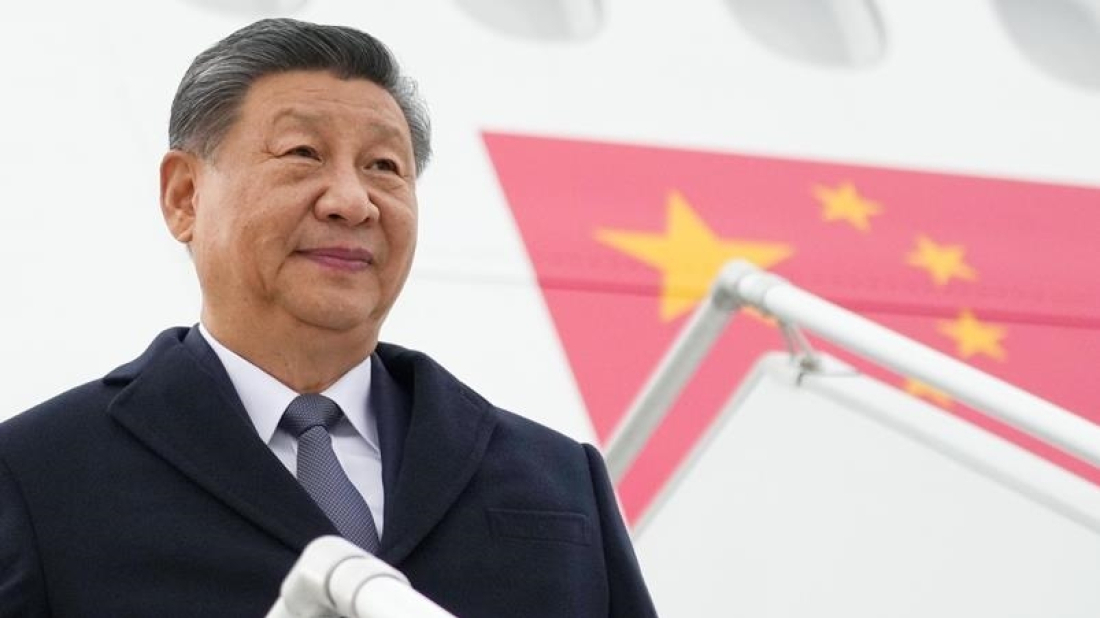
At a major Beijing forum, President Xi Jinping highlighted the need to bridge cultural divides through dialogue, promoting a global network that supports peaceful coexistence and sustainable development amid worldwide uncertainty.
Chinese President Xi Jinping on Thursday called for greater dialogue and cooperation among world civilizations, pledging that Beijing will work with other countries to build a global network focused on peace and development.
In a written address to the Global Civilizations Dialogue Ministerial Meeting in Beijing, Xi emphasized the need to embrace diversity and promote cultural exchanges to foster mutual understanding and stability, according to state media Xinhua.
“The world is, in nature, a place of diverse civilizations,” Xi said. “Exchanges and mutual learning among civilizations are essential for their flourishing and human progress.”
He stressed that dialogue must bridge cultural divides and replace conflict with learning in today’s turbulent world.
Xi reaffirmed China’s commitment to equality, inclusiveness, and mutual learning, aiming to create a global platform for peaceful cooperation.
The two-day event, themed Safeguarding Diversity of Human Civilizations for World Peace and Development, drew over 600 participants from nearly 140 countries and regions.

Iran’s Revolutionary Guards (IRGC) said in a statement that its Aerospace Force did not strike the Kuwait Airport passenger terminal on Wednesday, and that the destruction was instead caused by a failed U.S. Patriot missile.
Israel and Lebanon have agreed to implement a ceasefire after U.S.-backed talks in Washington. The deal requires Hezbollah to halt attacks and withdraw from southern Lebanon, while both sides will resume direct talks later this month aimed at reaching a broader agreement.
As Armenia heads toward parliamentary elections on 7 June, the country's relationship with Azerbaijan is emerging as one of the defining issues of the campaign, with analysts and international observers highlighting the role of regional politics in shaping voters’ mindsets.
The United Kingdom has begun using SpaceX's Starshield satellite network for military operations, according to people familiar with the matter, marking one of the first known deployments of the secure government-focused system outside the U.S.
The U.S. House of Representatives has approved legislation that would provide new aid to Ukraine and impose additional sanctions on Russia, marking the latest instance of Republican lawmakers breaking ranks with President Donald Trump and party leaders.
Germany has failed to secure a rotating seat on the United Nations Security Council, ending decades of successful bids and prompting fresh debate about the country's diplomatic standing on the global stage.
Chinese President Xi Jinping will visit North Korea on 8-9 June, marking his first trip to the country in nearly seven years as Beijing seeks to strengthen relations with its long-time ally.
A blaze at a popular market in northeast Thailand sent vendors fleeing and left five people in hospital, with police investigating a suspected electrical short circuit.
Ukrainian President Volodymyr Zelenskyy has publicly invited Russian President Vladimir Putin to meet for direct talks aimed at ending the war between their countries, saying Ukraine remains ready for peace but will continue fighting if no agreement can be reached.
Start your day informed with the AnewZ Morning Brief. Here are the top stories for the 5 June, covering the latest developments you need to know.
You can download the AnewZ application from Play Store and the App Store.
What is your opinion on this topic?
Leave the first comment