U.S. counterterrorism head Kent resigns, says 'cannot in good conscience support' Iran war
Joseph Kent, head of the U.S. National Counterterrorism Center, resigned on Tuesday (17 March), becoming the most senior official in President Dona...
India has launched its heaviest-ever communications satellite, GSAT-7R, designed to boost the Indian Navy’s maritime operations and secure space-based communications.
The Indian Space Research Organisation (ISRO) announced that the GSAT-7R, also known as CMS-03, lifted off from the Satish Dhawan Space Centre in Sriharikota on Sunday evening.
“CMS-03 separated successfully. Perfect injection,” ISRO wrote on social media platform X, confirming the satellite’s successful deployment.
According to India’s Defence Ministry, the new satellite represents “the most advanced communication satellite thus far for the Indian Navy.”
It will strengthen the Navy’s space-based communications and maritime domain awareness across the Indian Ocean Region.
Described as the country’s “heaviest” communications satellite to date, GSAT-7R incorporates several indigenous components developed specifically for naval operations.
The satellite will provide enhanced and secure telecommunication links to naval forces, further integrating India’s growing space capabilities with its defence infrastructure.
The other evening, I was fuelling my car at a petrol station in Kenya’s capital. It was one of those small moments most motorists barely notice. The attendant filled the tank, I glanced at the pump price, paid, and drove off.
President Trump called on countries to assist in reopening the Strait of Hormuz, while Starmer said the UK is working with allies to restore navigation and stabilise oil markets. It comes as a strike near Iraq’s western border killed several Hashed al-Shaabi fighters, raising regional tensions.
President Donald Trump said NATO is making a “very foolish mistake” by refusing to help the U.S. as Israel Katz confirmed Ali Larijani was killed in Israeli strikes.
Kazakhstan has adopted a new constitution that could allow President Kassym-Jomart Tokayev to stay in power beyond 2029. The Central Election Commission confirmed that 87.15% of voters backed the constitution in a referendum held on Sunday (17 March).
The World Health Organization (WHO) has released $2m in emergency funding to support health responses in Lebanon, Iraq and Syria as escalating regional conflict strains hospitals, raises displacement and increases pressure on already fragile health systems.
Chinese electric vehicle giant BYD is pushing to make charging an electric car almost as quick and convenient as filling up a traditional petrol vehicle - a move that could help remove one of the biggest barriers to wider electric vehicle adoption.
South Korea will soon cease to be one of the few countries where Google Maps does not function fully, after its security-conscious government reversed a two-decade-old policy and approved the export of high-precision map data to overseas servers.
New research suggests 40,000-year-old carved objects from south-western Germany bear repeated marks arranged in organised sign sequences similar to early proto-cuneiform, although they are not regarded as a form of writing.
The chief executive of Google DeepMind, Demis Hassabis, has called for more urgent research into the risks posed by artificial intelligence, warning that stronger safeguards are needed as systems become more advanced.
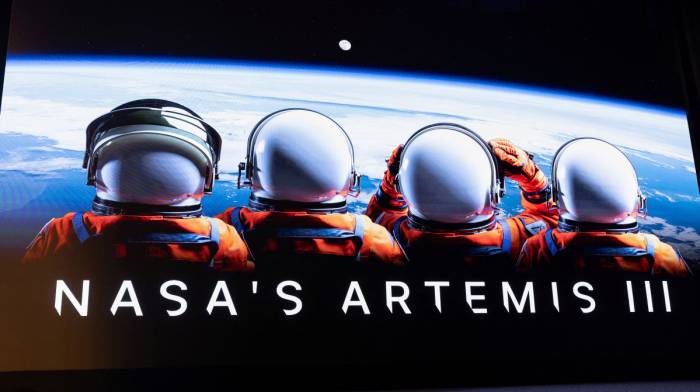
NASA successfully completed a critical fueling rehearsal on Thursday (19 February) for its giant moon rocket, Artemis II, after earlier hydrogen leaks disrupted preparations for the next crewed lunar mission. The launch is scheduled for 6 March, according to the latest information from NASA.
You can download the AnewZ application from Play Store and the App Store.
What is your opinion on this topic?
Leave the first comment