live Russia threatens UK military targets over Ukraine’s use of British missiles
Kremlin Spokesperson Dmitry Peskov has dismissed media reports that CIA Director John Ratcliffe visited Moscow ear...
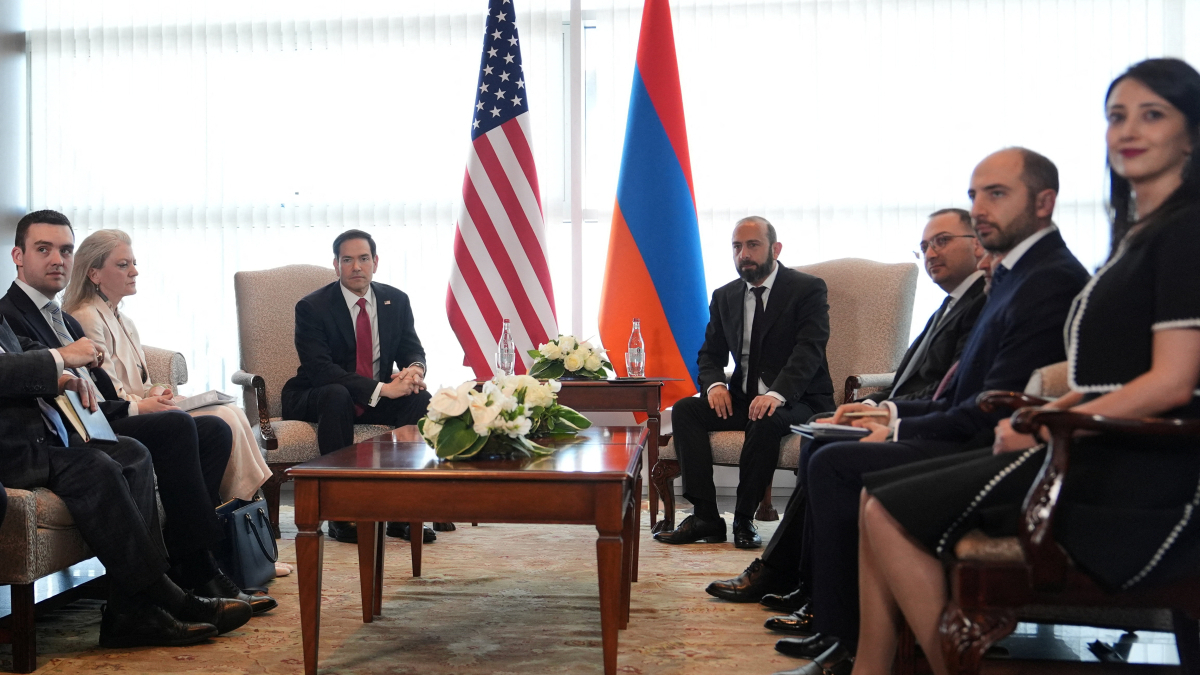
The Armenian government has advanced the ratification process for the Framework Agreement on Strategic Cooperation with the United States on the Trump Route for International Peace and Prosperity (TRIPP) project, taking the next formal step towards its entry into force.
Under a draft decision, the government approved a draft law on the ratification of the agreement, which was signed in Washington on 1 June 2026 and in Yerevan on 4 June 2026.
The document will first be referred to Armenia's Constitutional Court to determine whether the obligations set out in the agreement comply with the country's Constitution.
If the court issues a favourable opinion, the ratification bill will be submitted to the National Assembly for consideration.
Armenian Deputy Foreign Minister Vahan Kostanyan will represent the government before the Constitutional Court.
According to the explanatory note, adopting the draft law will complete the procedures required for the agreement to enter into force and further strengthen Armenia–U.S. relations.
TRIPP, also known as the Zangezur Corridor, is a proposed U.S.-backed transit project intended to connect mainland Azerbaijan with the Nakhchivan Autonomous Republic through Armenia's southern territory.
The route is expected to include rail and road links, along with related infrastructure such as pipelines and digital systems, with the aim of improving regional connectivity, trade and transport.
The initiative was launched following the trilateral summit in Washington on 8 August 2025, where Azerbaijan, Armenia and the U.S. signed a Joint Declaration.
Oil prices fell after the U.S. expanded economic sanctions on Iran, as Tehran vowed to retaliate and warned it had tools to respond, raising concerns over potential disruption to regional oil supplies.
Rescuers in Nepal used helicopters on Thursday to scour for hundreds still missing after a wall of mud and rock collapsed into a river on the Himalayan border with China's Tibet, sending catastrophic floods through towns and valleys, killing 162 people.
Secretary of State Marco Rubio told allied foreign ministers Washington will focus on sanctions and other pressure on Iran “for the time being”, Axios reports. Meanwhile, Iran and Oman have resumed talks on a temporary shipping route through the Strait of Hormuz.
Iranian President Masoud Pezeshkian has called for greater economic cooperation among Muslim countries, saying their combined economic weight remains disproportionately small compared with their population, strategic location and resources.
Russia and Ukraine have exchanged 10 prisoners of war each in Belarus, Moscow's Human Rights Commissioner, Yana Lantratova, has said.
The inaugural Silk Road Finance & Technology Forum brought together policymakers, investors and technology companies as Central Asia looks to build a more connected financial system and compete for a bigger share of global fintech investment.
Kazakhstan is discussing support for the Trans-Caspian green energy corridor with the European Commission, as work continues on a project to transmit electricity from Central Asia towards European markets, Kazakhstan's Energy Ministry said.
Uzbekistan's region of Karakalpakstan is developing three cryptocurrency mining facilities and three data centers with a combined investment of $5.1 billion, as the region seeks to attract larger and higher-quality investments.
A restaurant payment with a Visa card in Damascus has become a symbol of Syria’s reconnection with the global financial system.
The Silk Road Finance & Technology Forum will bring more than 6,000 policymakers, investors and technology leaders from 74 countries to Tashkent, as Central Asia seeks a bigger role in the global fintech landscape.
You can download the AnewZ application from Play Store and the App Store.
What is your opinion on this topic?
Leave the first comment