The Trump Route for International Peace and Prosperity (TRIPP), the ambitious multimodal transit corridor designed to connect mainland Azerbaijan with its Nakhchivan exclave through southern Armenia, has moved rapidly from political declaration to practical implementation.
However, as Armenia heads towards parliamentary elections on 7 June, the project faces its most significant political test yet.
From declaration to implementation
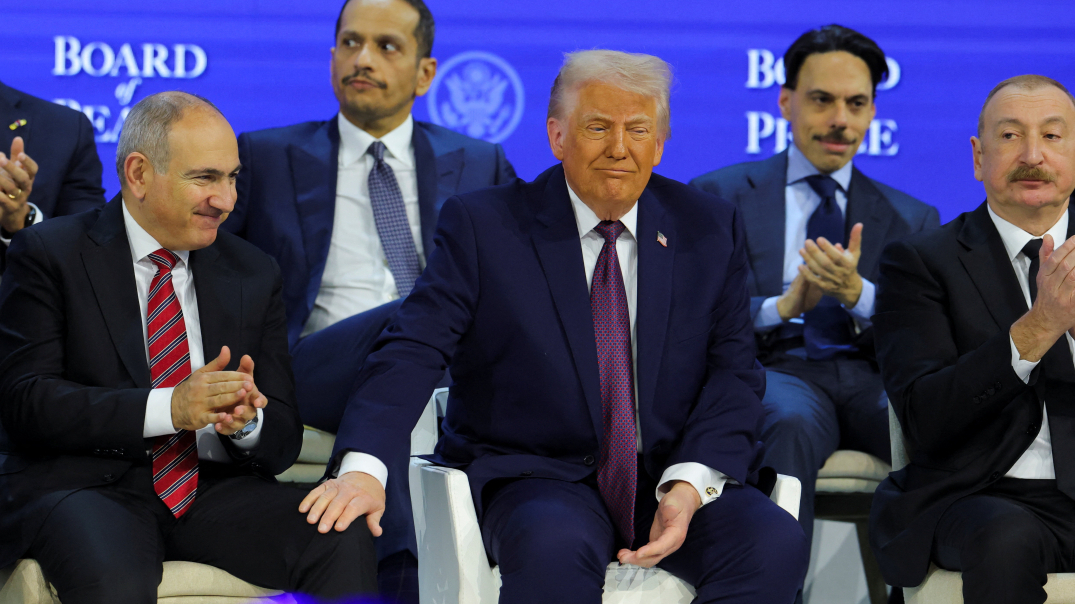
The origins of TRIPP lie in the trilateral summit held in Washington on 8 August 2025, where U.S. President Donald Trump witnessed Armenian Prime Minister Nikol Pashinyan and Azerbaijani President Ilham Aliyev sign a Joint Declaration committing Armenia to guaranteeing unimpeded connectivity through its territory. The declaration was followed by the initialling of a peace treaty by the two countries’ foreign ministers.
The pace of implementation since then has been striking. On 14 January, U.S. Secretary of State Marco Rubio and Armenian Foreign Minister Ararat Mirzoyan signed the TRIPP Implementation Framework, a detailed legal and operational blueprint for the project. Under the framework, a U.S.-managed TRIPP Development Company will hold exclusive rights to plan, construct, operate and maintain multimodal infrastructure, including railways, roads, energy networks and digital systems, along the designated route for an initial term of 49 years.
The United States holds a 74 per cent controlling stake, while Armenia holds 26 per cent, a share set to rise to 49 per cent should the agreement be extended.
The framework affirms that Armenia’s sovereignty and jurisdiction over border and customs operations are “absolute and nonnegotiable,” a provision designed to address longstanding Armenian concerns about losing control over its territory.
Fuad Abdullayev, an expert at the Centre of Analysis of International Relations, notes that the arrangement is not without precedent.
“In various regions of the world, the management of ports, airports, logistics centres, and transit zones is entrusted to private and foreign companies, provided that territorial sovereignty remains in the hands of the state,” he said.
He added that the high U.S. controlling stake “indicates that operational management has been heavily entrusted to a foreign operator,” but argued that “the separation of operational management from sovereignty serves once again as a feasible model in practice, both from a theoretical and legal standpoint.”
Pashinyan has framed the project as a key element of his electoral platform, pointing to Rubio’s unscheduled visit to Yerevan on 26 May to sign the implementation agreement as evidence of its strategic significance.
“This unscheduled visit proves the importance of the project,” the prime minister said during his campaign.
He has also outlined plans for railway expansion not only along the southern TRIPP corridor but also in northern Armenia, combining the Ijevan–Hrazdan and Vanadzor–Gyumri lines into what he described as the country’s shortest railway route.
Opposition challenge
The election poses a direct question: will the political coalition that negotiated and signed TRIPP retain the mandate to implement it?
According to Abdullayev, several opposition forces likely to enter the new parliament have adopted a critical stance towards the project. Most notably, he notes that “Robert Kocharyan, the leader of the Armenia Alliance, has stated in various speeches that the project does not fully align with Armenia’s national interests and could pose risks to the country’s sovereignty.”
The implications of a stronger opposition presence are significant.
“If the opposition secures stronger representation in parliament after the elections, there is solid ground to expect that political debates and protests surrounding the project will increase,” Abdullayev said.
“Additionally, a change in the balance of power in parliament could prolong the project’s timeline and lead to the introduction of additional conditions regarding the adoption, discussion, and technical aspects of certain issues.”
He described the election results as “a significant factor for the future of TRIPP, particularly against the backdrop of increased parliamentary influence for political forces that are sceptical of the project.”
The constitutional dimension
Woven into this electoral moment is a deeper structural issue: Armenia’s constitution still contains territorial claims against Azerbaijan, and Baku has made clear that the removal of those claims is a prerequisite for the formal signing and ratification of a peace treaty. Constitutional reform is expected to be pursued through a referendum following the June elections.
If Pashinyan wins but is unable to deliver the constitutional changes, the peace process could stall. Abdullayev is careful to draw a distinction, however.
“If the current government led by Nikol Pashinyan remains in power after the elections but fails to implement changes to the Armenian constitution, this will not mean that Azerbaijan-Armenia relations and the regional cooperation agenda will grind to a complete halt.”
Fuad Abdullayev
Centre of Analysis of International Relations
“Azerbaijan’s position is that constitutional amendments are an essential prerequisite for signing a peace treaty. This position remains, and will remain, unchanged. Therefore, in such a scenario, the signing of the peace treaty may be delayed until amendments are made to the Armenian constitution. Nevertheless, I believe that contacts and practical communication mechanisms between the parties across various directions can and will continue,” he said.
Crucially, Abdullayev also notes that Azerbaijan has structurally insulated TRIPP from this risk.
“Azerbaijan has decoupled the Zangezur corridor from the peace talks and is considering it within a separate framework,” he said.
This means, in his assessment, that “the process can move forward in a standalone format, entirely independent of whether the peace treaty is signed.”
At the same time, he cautioned that the project’s broader potential has limits.
“Despite the TRIPP project advancing to some extent as an independent platform, its full-capacity and sustainable implementation will ultimately depend entirely on the results of the broader political normalisation process in the region.”
The Russia factor
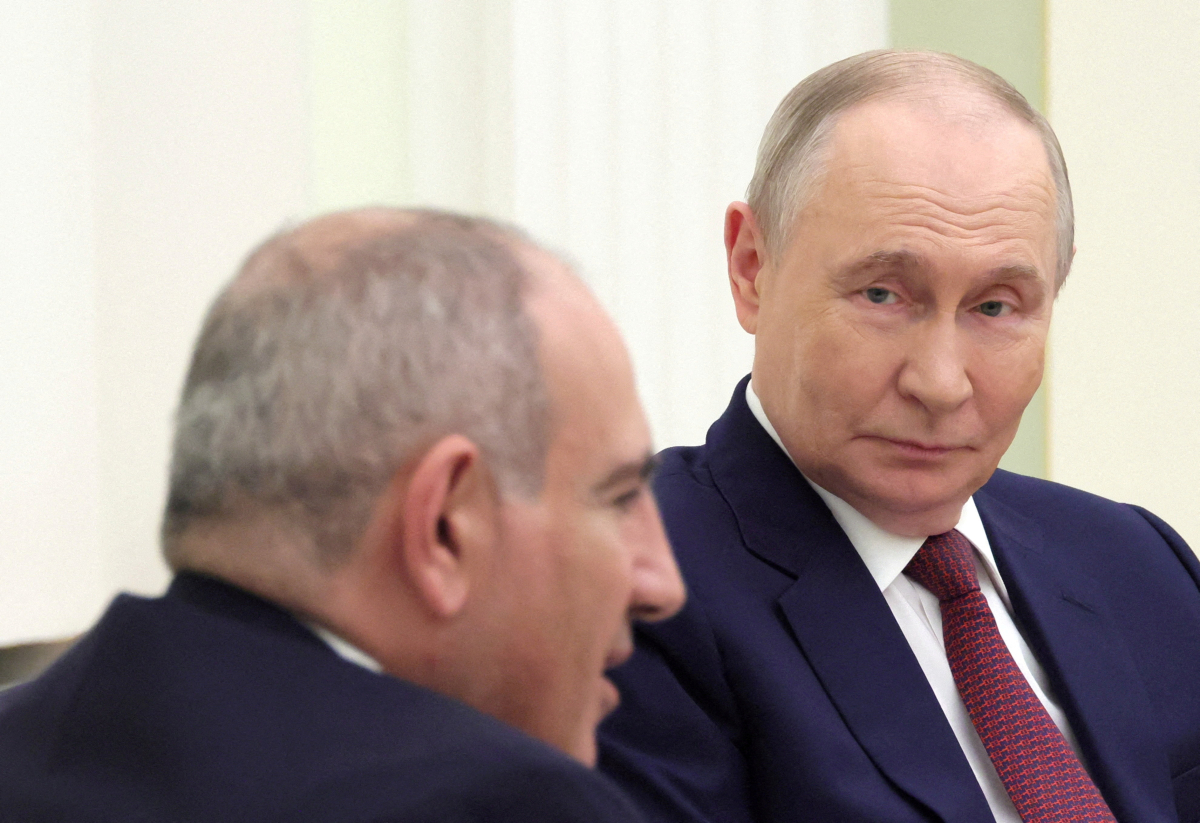
The election also carries a wider geopolitical dimension. Abdullayev believes that “a strengthening of forces favouring closer ties with Russia as a result of the Armenian elections would further solidify Russia’s geopolitical position in the South Caucasus.”
Moscow’s approach to regional connectivity is strategic rather than openly hostile.
“Looking at the official rhetoric coming from the Russian side, one can conclude that Moscow views regional transport and communication projects through its own strategic lens,” Abdullayev said.
“However, this does not mean Russia will openly and directly oppose the project. Especially given the current international climate, Russia does not seem interested in further escalating tensions with the United States and may pursue a more cautious policy in this context.”
The risk, he argues, is more subtle.
“One cannot entirely rule out Russian attempts to exert influence on the TRIPP project through various channels,” he warned, noting that such influence “could manifest as efforts to align the opening of regional transport lines with Russian mediation and existing control mechanisms.”
Abdullayev pointed to two specific pressure points.
“The Armenian railway infrastructure, where Russia possesses control or leverage, could be noted in this regard.”
He also highlighted that “in recent days, certain agreements on border protection have been reached between Armenia and Russia,” which “could serve as additional leverage tools” in any effort to keep TRIPP under a degree of Russian influence.
What comes next
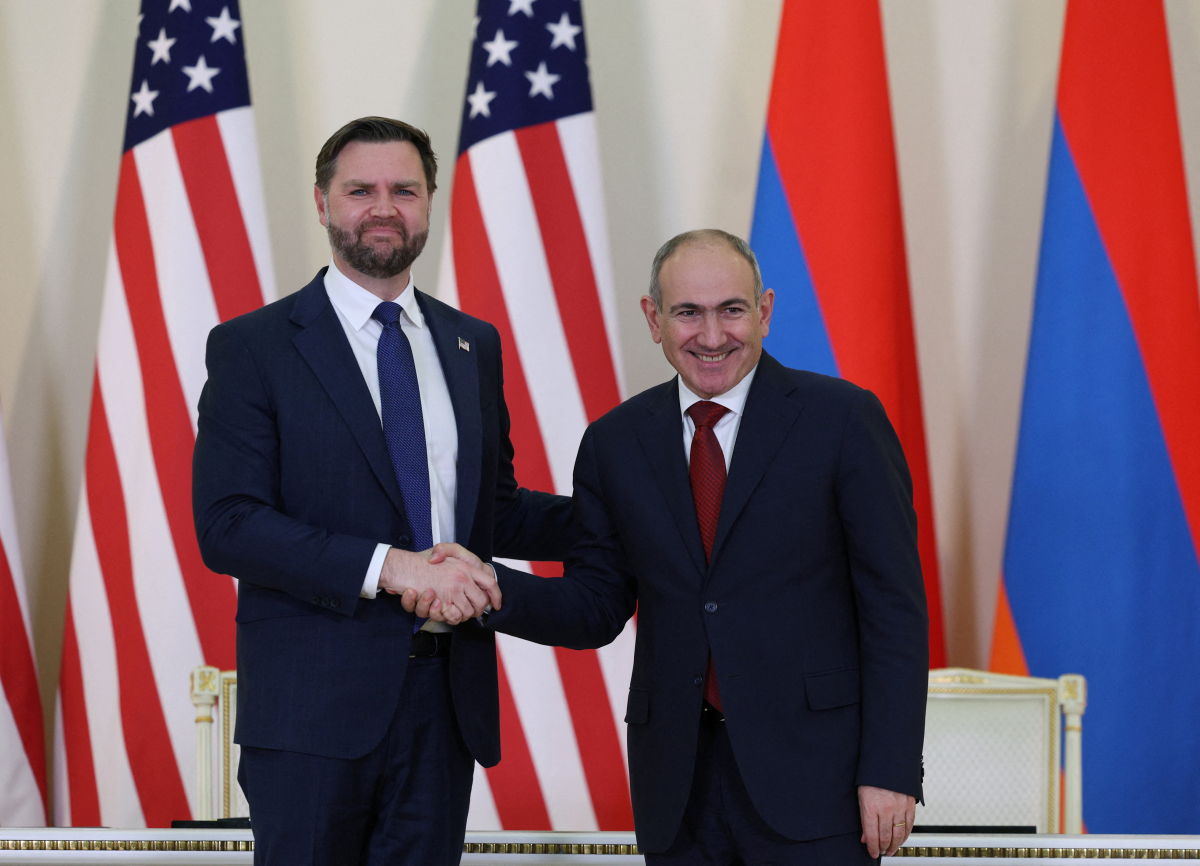
The coming weeks will determine whether TRIPP’s legal framework translates into lasting momentum. The project has already produced tangible results. Azerbaijan has lifted restrictions on cargo transit to Armenia, fuel shipments are moving by rail in both directions, and trade negotiations are underway. U.S. Vice President JD Vance’s visits to both Baku and Yerevan in February 2026 reinforced Washington’s commitment to the implementation phase.
The 7 June vote will shape the political conditions under which that implementation unfolds. A Pashinyan victory with a strong majority and a path towards constitutional reform would strengthen TRIPP’s trajectory. A more fragmented outcome, or one that increases pro-Russian representation, could slow implementation, generate new conditions and complicate a process that has, until now, advanced with unusual speed.















What is your opinion on this topic?
Leave the first comment