Azerbaijan and Russia have announced a formal settlement over the 2024 crash of an Azerbaijan Airlines (AZAL) Embraer 190 near Aktau, confirming that all outstanding issues, including compensation, have been resolved.
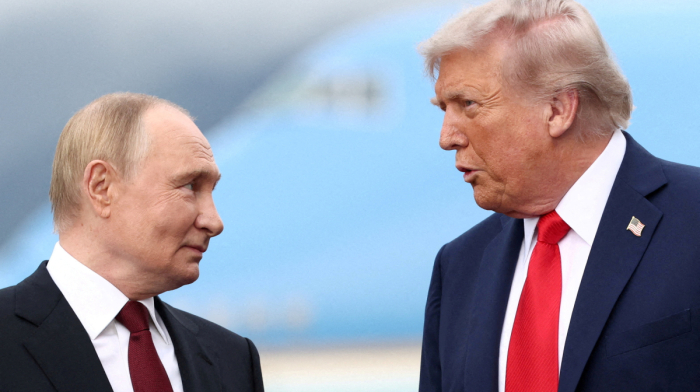
In a joint statement issued by the foreign ministries of Azerbaijan and Russia, both sides said the agreement follows understandings reached between President Ilham Aliyev and President Vladimir Putin during their meeting in Dushanbe on 9 October 2025.
The ministries said the settlement covers “all outstanding issues,” including compensation for the victims.
The outcome was described as reflecting a mutual commitment to strengthening “allied interaction” and “mutually beneficial co-operation” based on trust and respect.
The crash occurred on 25 December 2024, when the AZAL-operated Embraer 190 was en route from Baku to Grozny. The aircraft came down near Aktau after attempting an emergency landing at Aktau Airport.
Of the 67 people on board, 38 were killed and 29 survived.
Azerbaijan's firm stance
Speaking shortly after the incident, President of Azerbaijan Ilham Aliyev said preliminary findings indicated the aircraft had been damaged by external factors while flying over Russian territory.
“The facts indicate that the Azerbaijani civilian plane was damaged from the outside over Russian territory, near the city of Grozny, and almost lost control,” he said, adding that electronic warfare systems had disrupted the aircraft before further damage was inflicted.
He dismissed alternative explanations such as a bird strike as “completely removed from the agenda.”
The Azerbaijani leader also criticised initial responses from Moscow, saying that for several days Azerbaijan had heard only “absurd theories”, including claims of an onboard explosion. While stressing that the incident was not deliberate, he said accountability was required.
“Our plane was hit by accident… there can be no talk of a deliberate act of terror here,” he said.
“But admitting guilt, apologising in a timely manner to Azerbaijan… and informing the public - these were steps that should have been taken.”
The president said Azerbaijan had insisted on an international investigation rather than one led solely by the Interstate Aviation Committee, citing concerns over impartiality, and outlined Baku’s formal demands to Moscow.
“We have clearly expressed our demands to the Russian side… First of all, the Russian side must apologise to Azerbaijan. Secondly, it must acknowledge its guilt. Thirdly, those responsible must be punished… and compensation must be paid,” President Aliyev said.
“These are our conditions… all of this is based on international experience and normal human conduct.”
Investigation
Authorities have previously attributed the incident to the “unintentional action” of a Russian air defence system, with missile fragments striking the aircraft while it was still within Russian airspace.
The joint communiqué also renewed condolences to the families of the victims, referring to the “irreparable loss” caused by the tragedy.
The settlement comes as Kazakhstan continues its investigation into the disaster, with officials saying the process is being expedited while maintaining “objectivity” and reliance on verified technical evidence.
Kazakhstan’s Transport Minister, Nurlan Sauranbayev, has said the final report will not be published until data from two foreign laboratories is received. A particle recovered from the aircraft has also been sent to U.S. manufacturer Honeywell International for analysis.
Deputy Prime Minister of Kazakhstan Kanat Bozumbayev, who chairs the investigative commission, has emphasised the complexity of the inquiry and its international scope.
The case has carried significant geopolitical weight since President Putin acknowledged in October 2025 that the aircraft was within range of Russian air defence systems, stating that missiles detonated near the aircraft during an interception of Ukrainian drones.









What is your opinion on this topic?
Leave the first comment