The Trump Route for International Peace and Prosperity (TRIPP) has emerged as a landmark U.S.-backed connectivity project in the South Caucasus, linking Azerbaijan and Armenia through a proposed transit corridor seen as both an economic lifeline and a key test of long-term regional peace.
What is the TRIPP?
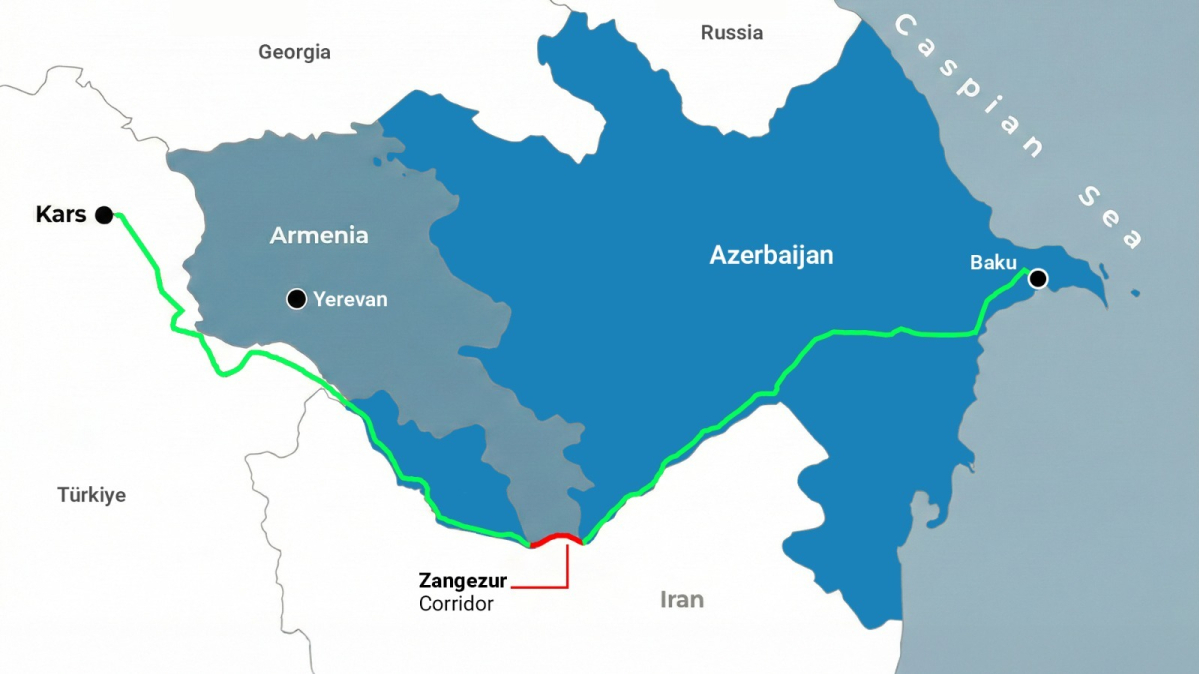
TRIPP, also known as the Zangezur Corridor, is a proposed transit route comprising highways and railways designed to connect mainland Azerbaijan with its Nakhchivan exclave via southern Armenia.
The route spans approximately 43 kilometres (27 miles) across Armenian territory.
The project also includes pipelines and digital infrastructure aimed at transforming regional logistics and trade flows.
When did the project begin?
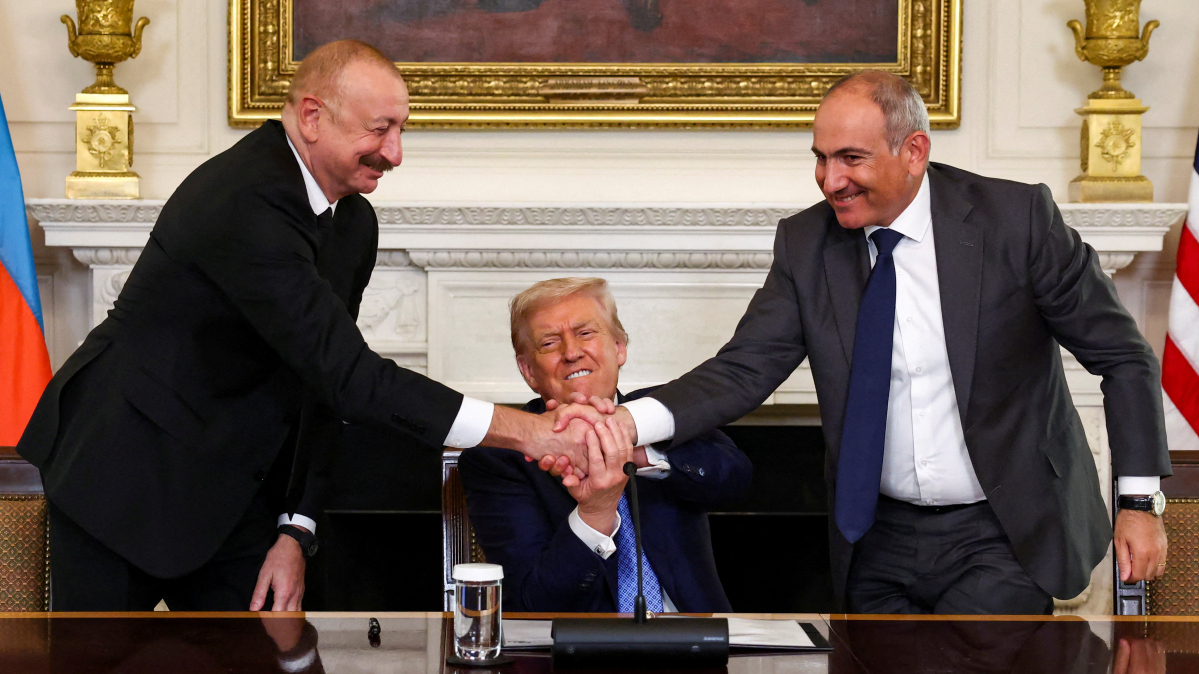
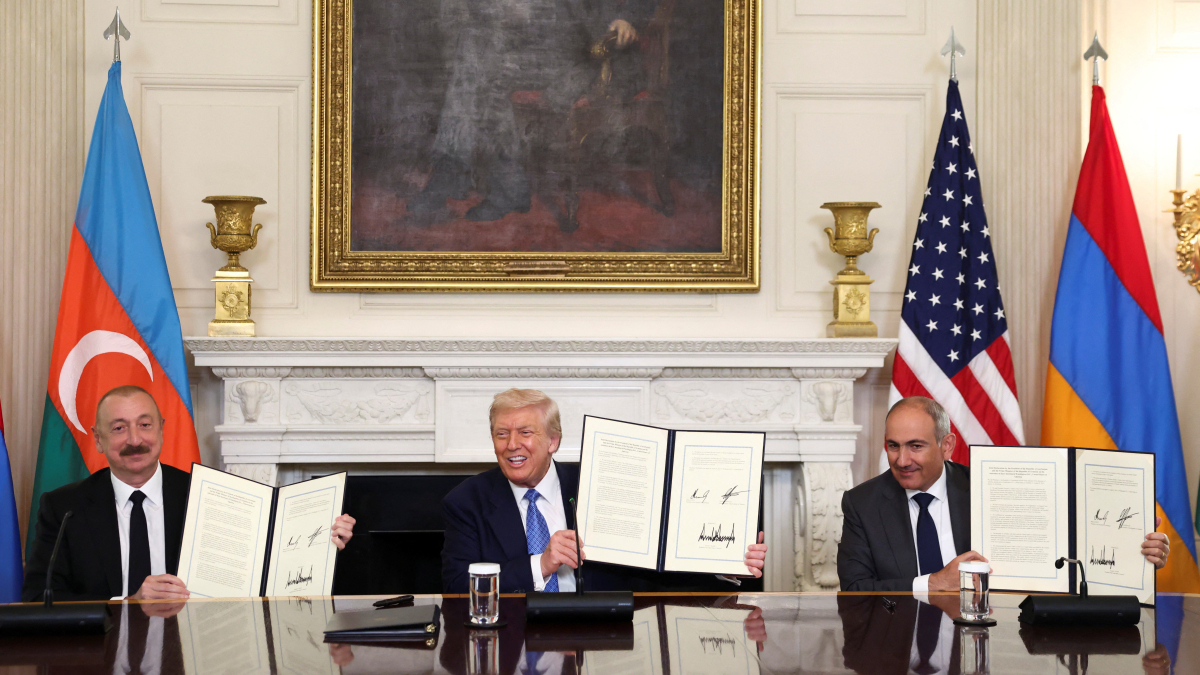
The initiative was introduced following the 8 August 2025 trilateral summit in Washington between Azerbaijan, Armenia and the United States, where leaders signed a Joint Declaration witnessed by U.S. President Donald Trump.
U.S. President, Azerbaijan's President, and Armenia's Prime Minister pose with their documents during a trilateral signing event in Washington, D.C., 8 August, 2025.
The Washington meeting marked a turning point in the peace process between Azerbaijan and Armenia, producing a framework for both political normalisation and connectivity.
Azerbaijani President Ilham Aliyev described the agreement as historic during a joint press conference..
“The Trump Route for International Peace and Prosperity will create new connectivity lines, lift the walls, and open opportunities for many countries through investments, prosperity, and stability,” he said.
Armenian Prime Minister Nikol Pashinyan also framed the outcome as a milestone. “It is a success for our countries, our region and the world, because a more peaceful region means a safer world.”
TRIPP is increasingly viewed not only as a political agreement but as an infrastructure-driven economic corridor shaping long-term regional connectivity.
Under the framework, Armenia - together with the U.S. and agreed third parties - will develop the project within its territory, focusing on governance and implementation structures.
On the Azerbaijani side, railway upgrades in Nakhchivan are under way, with a planned extension to the Armenian border. The project includes both rail and road infrastructure, with completion targeted for 2030.
The corridor is expected to support rail freight, energy transport and digital infrastructure, with significant long-term implications for Eurasian trade and logistics networks.
AnewZ
AnewZ
Regional significance and international interest
Beyond bilateral cooperation, TRIPP is rapidly gaining attention as a broader regional project involving multiple actors.
Prime Minister Nikol Pashinyan said countries including Kazakhstan have expressed interest in the initiative, noting that “many countries are showing interest” and highlighting its role in future global transport chains.
Türkiye has also backed the initiative, viewing it as part of a wider regional connectivity strategy. Turkish Foreign Minister Hakan Fidan said the corridor could “link Europe with the depths of Asia via Türkiye,” describing it as “a very beneficial development.”
Political analyst Vakhtang Maisaia told AnewZ that the project could enhance Georgia’s role within a broader regional network, delivering “shared geopolitical and geoeconomic gains” through expanded trade routes and integration.
The initiative has also drawn cautious reactions from Iran, which welcomed the peace process but warned against external involvement near its borders that could affect regional stability.
In January, Iran’s ambassador to Azerbaijan, Mojtaba Demirchilou, told AnewZ Tehran supports initiatives that promote peace, stability, and economic development.
Has trade begun to flow?
One of the most notable early developments has been the resumption of cargo transit between Azerbaijan and Armenia.
Following Azerbaijan’s decision to lift long-standing restrictions on cargo transit to Armenia—announced by President Ilham Aliyev during his visit to Kazakhstan on 21 October—shipments of grain, fuel and industrial goods have already moved through the region.
To date, a total of 6,312 tonnes of diesel fuel, 979 tonnes of AI-92 petrol, and 2,955 tonnes of AI-95 petrol have been transported from Azerbaijan to Armenia.
President Ilham Aliyev highlighted the significance of these steps, noting, that “This is a clear indication that peace between Azerbaijan and Armenia exists not only on paper but also in practice.”
How is the U.S. involved?
The United States has played a central role in both launching and advancing TRIPP. A State Department spokesperson confirmed an initial $145 million commitment to support infrastructure, trade and cross-border security.
High-level engagement has reinforced this momentum. JD Vance visited both Armenia and Azerbaijan in February 2026, signalling continued U.S. backing for the implementation phase.
During the visit, Vance emphasised the economic and strategic dimension of the project: “It will open a whole new world of trade, transit and energy flows in this region of the world.”
He added that deeper connectivity would also support long-term stability.
“When you create these interconnected economies, energy sectors and so forth, it means that this region can have an enduring peace.”
His visit was widely interpreted as a signal of continued U.S. commitment to the implementation phase of the agreement, particularly in advancing transport infrastructure and investment frameworks.
President Aliyev also underscored the project’s long-term significance.
“I think TRIPP carries President Trump’s name, and that means this corridor will be important for this administration and for those that follow,” Aliyev said.
TRIPP represents a shift from conflict management to infrastructure-led peacebuilding in the South Caucasus. While political agreements laid the foundation in Washington, the project’s success now depends on financing, security guarantees and sustained political will on all sides.
As President Donald Trump summarised during the summit, “It's a long time 35 years they fought and now they're friends, and they're going to be friends for a long time.”
Whether TRIPP becomes a lasting economic corridor or remains a political framework will depend on how effectively these commitments translate into ground-level connectivity and sustained cooperation.
A Los Angeles judge ruled on Monday that indie pop singer D4vd, whose legal name is David Anthony Burke, must stand trial on charges that he fatally s...
Two shallow earthquakes hit a remote area of China's Qinghai province on Tuesday, with authorities reporting no casualties or collapsed buildings so f...
Australia is considering building its first new oil refinery in more than six decades as conflict in the Middle East exposes the country's heavy relia...
U.S. President Donald Trump said on Monday that there is a good chance” of reaching a deal with Iran, but warned that Washington would resume military operation if negotiations fail.
Iran will halt its own attacks as long as the United States maintains its pause on strikes, but Tehran remains sceptical of U.S. intentions, a senior Iranian source told on Sunday.
The Russia-Ukraine war is increasingly reshaping the Caspian region. From threats to energy infrastructure to renewed diplomatic efforts, countries across the region are adapting to the wider consequences of a conflict that continues to disrupt trade, transport and security.
A New York school district has put plans to introduce a humanoid robot into classrooms on hold after fierce criticism from teachers, Indigenous community members and state education officials over the use of artificial intelligence in schools.
A known Islamist suspected of driving a minivan into a crowd near a major LGBTQ Pride gathering in Berlin was shot dead during a police operation at an allotment garden complex, broadcaster RBB reported on Sunday.
Russia's Supreme Court has prohibited the transfer of funds to Digimarket, a U.S.$35 million offshore company linked to Ruben Vardanyan, as legal proceedings continue over efforts to recover more than U.S.$64 million from a loan company.
Armenian Prime Minister Nikol Pashinyan has appealed directly to Russian President Vladimir Putin to help resolve a trade dispute that has disrupted Armenian exports to Russia, adding to tensions in the increasingly strained relationship between the two countries.
The Russia-Ukraine war is increasingly reshaping the Caspian region. From threats to energy infrastructure to renewed diplomatic efforts, countries across the region are adapting to the wider consequences of a conflict that continues to disrupt trade, transport and security.
The chief executive of a Turkish defence company has said the United States has approved the export of GE F110 engines for Türkiye’s KAAN fighter jet, although Washington has yet to confirm the move.
Azerbaijan’s Media Development Agency has expressed concern over Iran’s decision to include several foreign media organisations, including Azerbaijan’s state television channel AzTV, on a list of "hostile media organisations".
Download the AnewZ app
You can download the AnewZ application from Play Store and the App Store.

















What is your opinion on this topic?
Leave the first comment