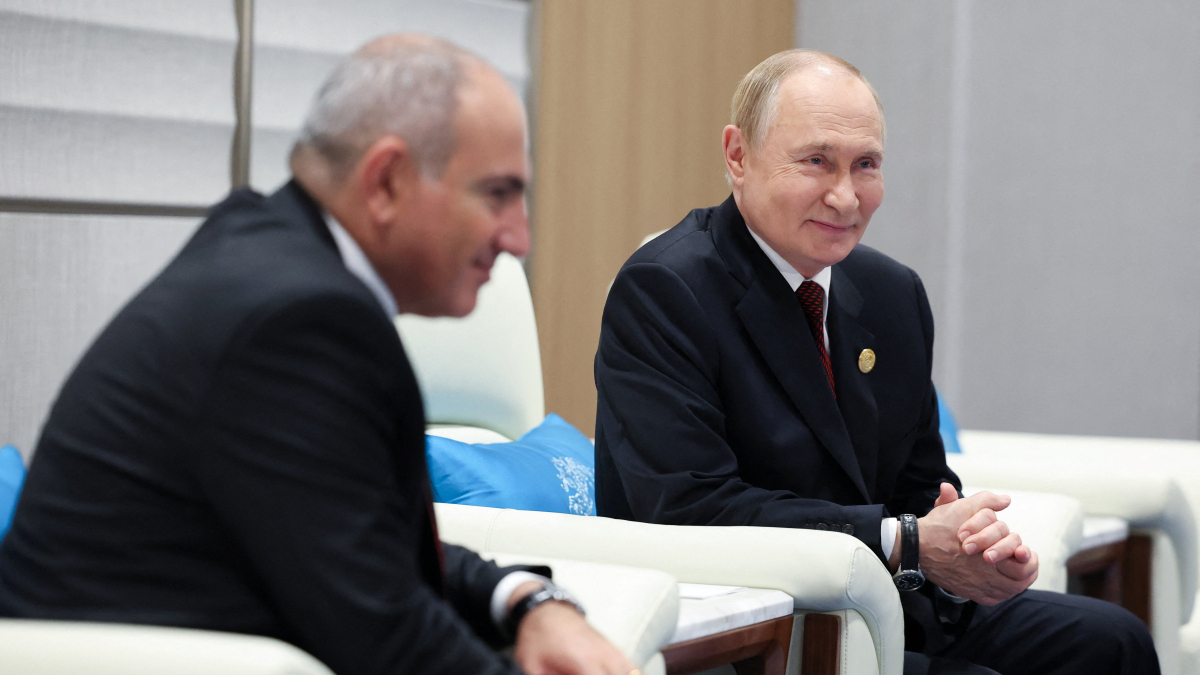
Armenian Prime Minister Nikol Pashinyan has appealed directly to Russian President Vladimir Putin to help resolve a trade dispute that has disrupted Armenian exports to Russia, adding to tensions in the increasingly strained relationship between the two countries.
During a phone call on Monday, Pashinyan raised concerns over Russian restrictions imposed on a range of Armenian goods, arguing that the measures run counter to existing agreements between the two countries as well as the rules of the Eurasian Economic Union (EAEU), the Moscow-led economic bloc of which both nations are members.
According to the Armenian government, Pashinyan asked Putin to take steps to address the issue and restore normal trade flows. Yerevan also said it remains willing to resolve outstanding disagreements through dialogue.
Export restrictions strain ties
The dispute centres on trade restrictions introduced by Russia last month, which temporarily halted imports of several Armenian products, including fruit and vegetables, flowers, fish and alcoholic beverages.
The measures have added to concerns in Armenia, where Russia remains the country's largest trading partner and a critical economic ally. Moscow accounted for roughly 35 per cent of Armenia's foreign trade last year, while Armenia continues to rely heavily on Russian energy supplies.
The restrictions come at a sensitive time for Armenian businesses, many of which depend on access to the Russian market.
Growing divide over Armenia's foreign policy
The trade dispute has unfolded against the backdrop of worsening political relations between Moscow and Yerevan.
Since coming to power, Pashinyan has sought to deepen Armenia's engagement with Western partners while maintaining formal ties with Russia. That balancing act has become increasingly difficult as Armenia moves closer to the European Union and questions grow over the future direction of the country's foreign policy.
The Kremlin said Putin told Pashinyan during the call that the Armenian leader's proposal to pursue European Union membership should be put before voters as soon as possible in a national referendum.
Russia has repeatedly expressed concern about Armenia's growing ties with the West and has warned that a continued push towards EU membership could have consequences for its participation in the EAEU.
Economic and strategic implications
The trade dispute underscores the challenges facing Armenia as it seeks closer cooperation with Europe while remaining economically intertwined with Russia.
Earlier this month, Pashinyan travelled to Russia following the re-election victory of his Civil Contract party in June. His party's success came after defeating several opposition groups seen as more closely aligned with Moscow.
While both governments continue to stress the importance of dialogue, the dispute over trade restrictions is likely to place further strain on relations as Armenia weighs its long-term economic and geopolitical options.










What is your opinion on this topic?
Leave the first comment