Azerbaijan's President Ilham Aliyev said he hopes a peace agreement with Armenia will be signed this year, describing recent developments as evidence that lasting stability in the South Caucasus is within reach.
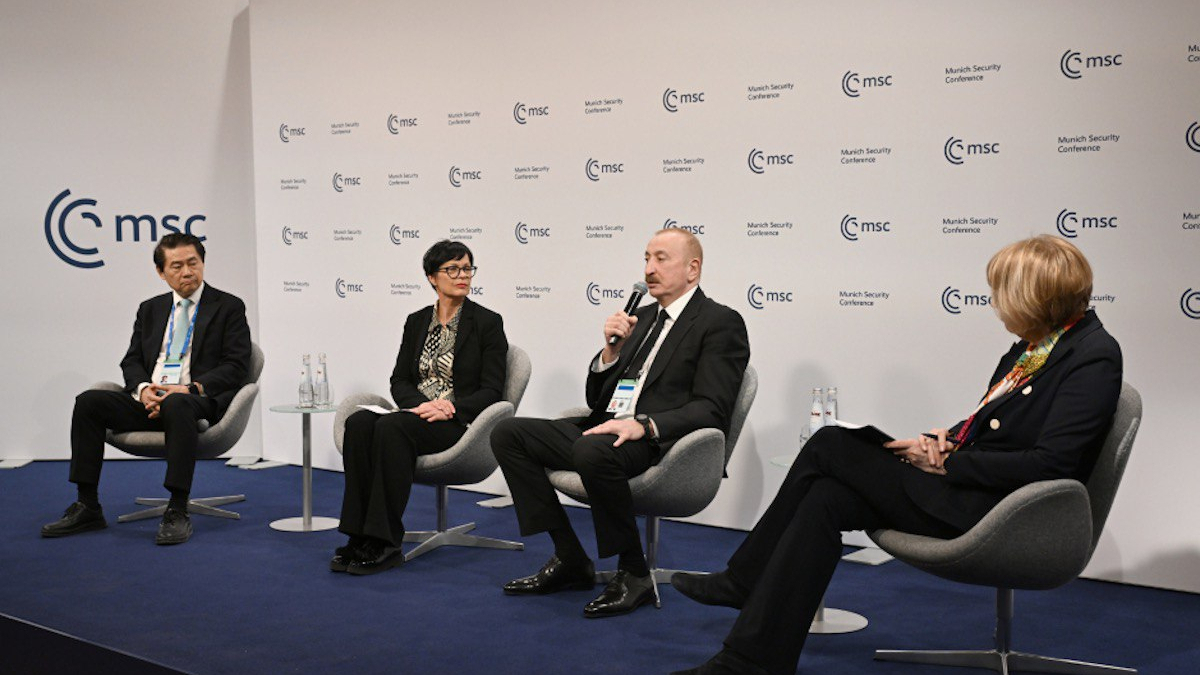
Speaking at the Munich Security Conference during a panel discussion titled “Open Corridor Policy? Deepening Trans-Caspian Cooperation”, the President said the peace process had already produced tangible results on the ground.
“I hope that we will sign the peace agreement this year,” he said, noting that since the joint declaration signed in Washington last August, the situation along the Azerbaijan–Armenia border has fundamentally changed, with no shootings, casualties or incidents recorded.
Aliyev added that practical cooperation between the two countries had already begun, including the removal of transit restrictions and the start of petroleum product supplies to Armenia.
TRIPP Corridor and Regional Connectivity
The President also addressed the Trump Route for International Peace and Prosperity (TRIPP), also known as the Zangezur corridor, which aims to connect mainland Azerbaijan with its Nakhchivan exclave through southern Armenia.
Aliyev said the naming of the initiative after U.S. President Donald Trump signals long-term American engagement.
“The fact that TRIPP carries President Trump’s name means this corridor will be important for this administration and perhaps beyond,” he said. “Otherwise, the President would not have given his name to it.”
According to Aliyev, discussions are under way between the United States and Armenia regarding the operating framework of a company that would manage construction and investment rights for the project.
He emphasised that the corridor would form part of a broader Eurasian transport chain stretching from China through Central Asia, across the Caspian Sea and the South Caucasus to Türkiye and Europe.
In parallel, Azerbaijan is working with Central Asian partners to lay a fibre-optic cable under the Caspian Sea, expected to be completed this year.
“If peace with Armenia is achieved, the corridor from Azerbaijan through Armenia to European destinations has great cargo potential,” Aliyev said.
Aliyev highlighted record cargo transit volumes through Azerbaijan last year, exceeding 100,000 transport units. He said the figure could reach 200,000 to 300,000 in the coming years, with a long-term target of 500,000.
The country is expanding its sea port and investing in rail infrastructure, including a 600-kilometre railway network linking mainland Azerbaijan and Nakhchivan. In Armenia, the required railway stretch is just over 40 kilometres.
European Commissioner for Enlargement Marta Kos said the peace process “opens new doors” and noted that by 2030 cargo flows along the Trans-Caspian route could triple.
Chinese policy expert Wang Huiyao also expressed support for expanded connectivity, describing the Trans-Caspian corridor as complementary to China’s Belt and Road Initiative.
Constitution and Peace Conditions
Aliyev reiterated that the final step towards signing a formal peace treaty depends on amendments to Armenia’s Constitution, specifically the removal of territorial claims against Azerbaijan contained in its preamble.
“Once that happens, the next day the peace agreement will be signed,” he said.
Relations with Russia
The President also addressed a question regarding Russian strikes in Ukraine that reportedly affected Azerbaijani-owned energy infrastructure and diplomatic facilities.
Aliyev said Azerbaijan’s embassy in Kyiv had been hit three times during missile and drone attacks.
“After the first attack we provided all coordinates of our diplomatic facilities to the Russian side,” he said. “Despite this, there were two additional attacks.”
He described the incidents as deliberate, noting that Azerbaijan had supplied Russia with the exact coordinates of its embassy, consular section and cultural centres after the first strike.
“These were deliberate attacks against Azerbaijan’s diplomatic mission,” he said.
Aliyev added that Azerbaijan had responded through diplomatic channels, summoning the Russian ambassador to the Foreign Ministry and issuing a formal diplomatic note.
“We act only through diplomatic means,” he said. “But these actions cannot be considered friendly.”
In addition to the embassy strikes, Azerbaijani-owned energy facilities in Ukraine, including a SOCAR oil depot and a gas compressor station transporting Azerbaijani gas, were also reportedly damaged in Russian attacks in 2024 and 2025.
The panel concluded with discussions on customs simplification, private sector involvement and the broader geopolitical implications of emerging Eurasian transport routes.
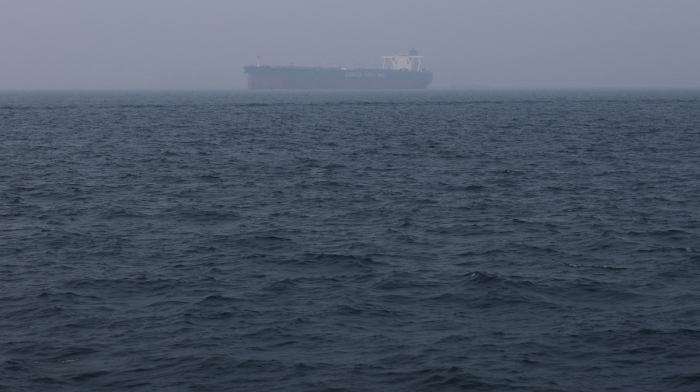
An unknown projectile struck a tanker 68 nautical miles northeast of Saudi Arabia on Friday according to a report released by the United Kingdom Maritime Trade Operations (UKMTO) on Saturday.
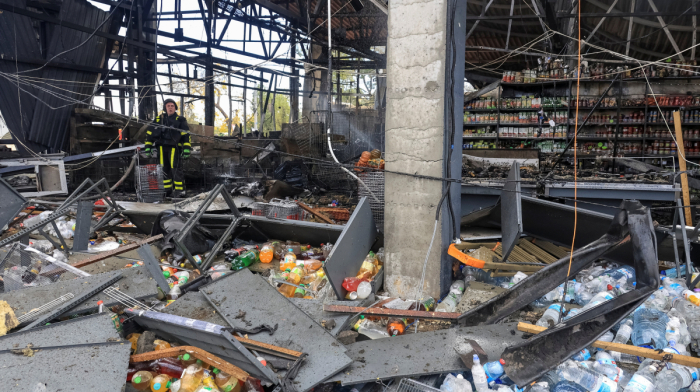
U.S. President Donald Trump has called it “a disgrace” that Ukraine has resumed attacks on Russian oil refineries. Attacks are continuing from Russia and Ukraine as media reports say Ukraine has almost run out of Patriot interceptor missiles.
The day after waiving sanctions and tariffs related to Russian exports, U.S. President Donald Trump said on Saturday he has yet to announce a final decision on the matter as Secretary of State Marco Rubio said officials want more time to evaluate the situation.
A Saudi AH-6i helicopter crashed in the Najran region of Saudi Arabia due to a technical malfunction, killing its two crew members, the Saudi-led coalition's spokesman Brigadier General Turki al-Maliki said in a statement on Sunday.
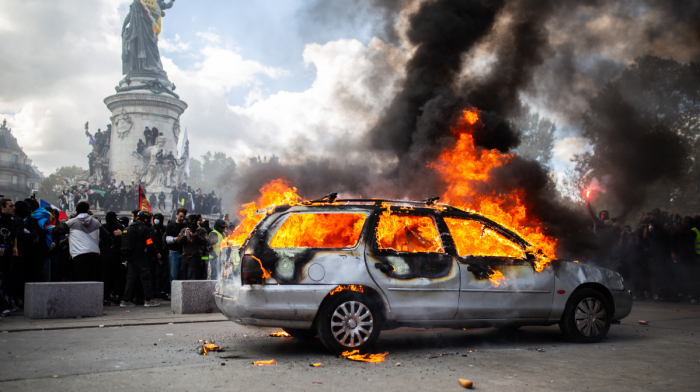
What started out as planned protests against the cost of living, declining public services and education funding in France, quickly devolved into violent riots across the country on Saturday.
A Saudi AH-6i helicopter crashed in the Najran region of Saudi Arabia due to a technical malfunction, killing its two crew members, the Saudi-led coalition's spokesman Brigadier General Turki al-Maliki said in a statement on Sunday.
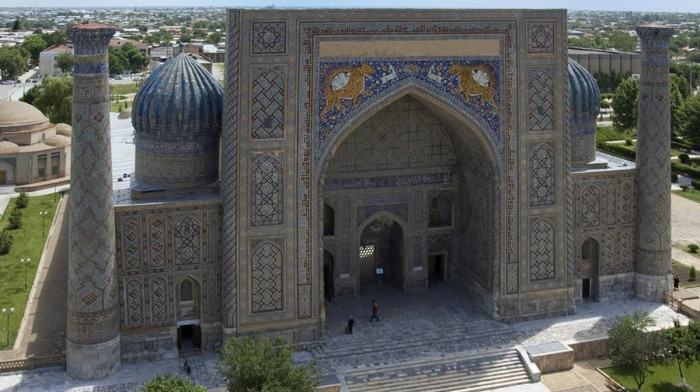
Uzbekistan welcomed 10.3 million foreign tourists in the first nine months of 2026, up 20.4 per cent year-on-year, as the Central Asian nation pushes towards its ambitious goal of attracting 20 million visitors annually by 2030.
In an interview with AnewZ’s Sabir Safarov, Houthi-aligned journalist Hussain al-Bukhaiti warns of possible attacks on Saudi Arabia’s water and power infrastructure, dismisses concerns over global trade and acknowledges Iranian assistance in developing the group’s missiles.
Armenia is looking to turn shared environmental challenges into opportunities for regional cooperation, with Prime Minister Nikol Pashinyan highlighting the potential for stronger ties with neighbouring countries through biodiversity protection.
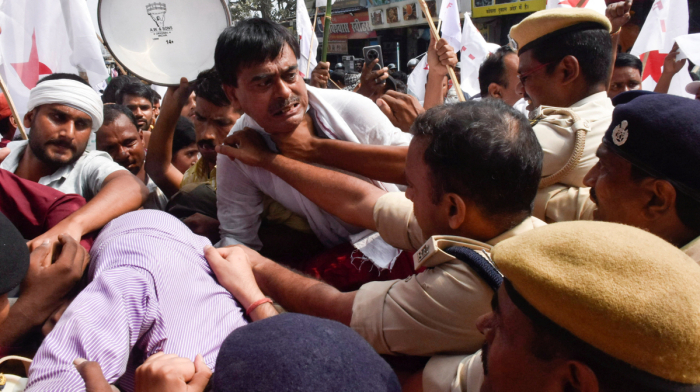
Student organisations, opposition groups and youth-led activists took to the streets in Patna and Mumbai on Friday (16 October), demanding the resignation of India's Chief Election Commissioner, Gyanesh Kumar, amid a row over changes to voter lists.
Download the AnewZ app
You can download the AnewZ application from Play Store and the App Store.











What is your opinion on this topic?
Leave the first comment