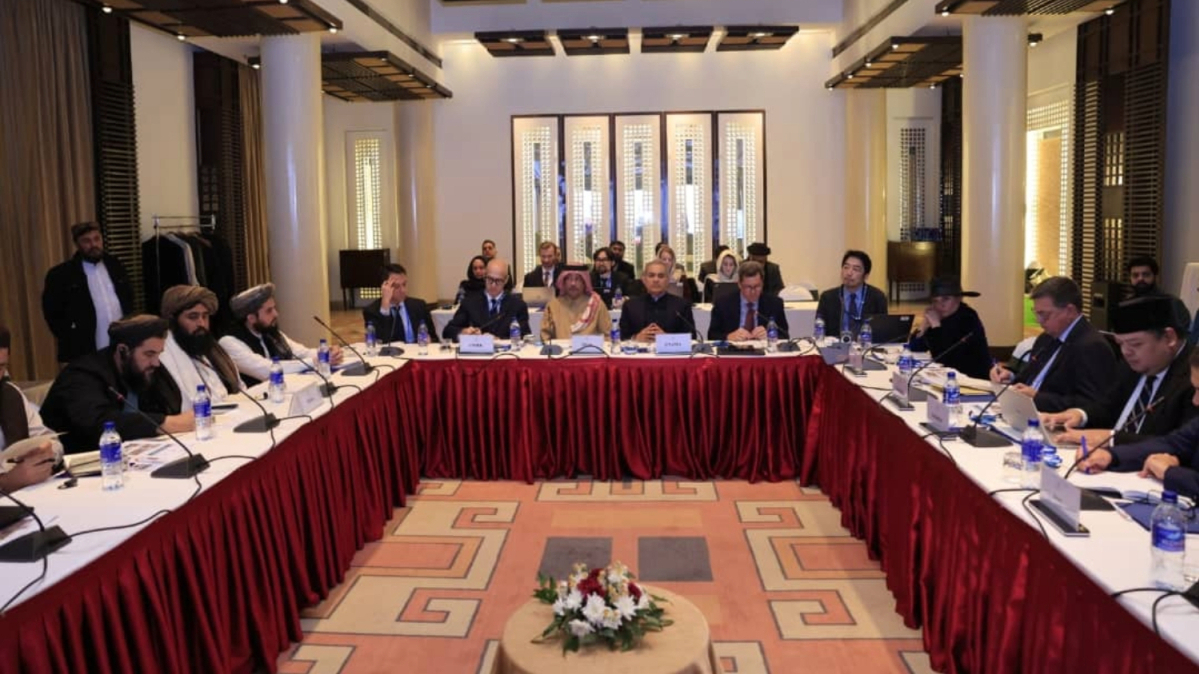
Afghan officials and international partners met in Kabul on Wednesday (4 February) for the fourth meeting of the Doha Process Working Group on Counter-Narcotics, with officials citing a reduction in poppy cultivation to “nearly zero” as efforts to curb drug production and trafficking were reviewed.
According to the Ministry of Foreign Affairs, Afghan officials announced that the decrease in poppy cultivation follows a decree banning poppy farming. Officials outlined progress in law enforcement, alternative livelihoods and the treatment of drug users, while also acknowledging existing challenges and proposing ways forward.
The meeting, hosted by the United Nations Assistance Mission in Afghanistan (UNAMA), brought together representatives from Afghanistan’s ministries of foreign affairs, interior, agriculture, irrigation and livestock and public health, alongside UN agencies, international and regional organisations, the European Union, the Organisation of Islamic Cooperation, diplomats from several countries and subject-matter experts.
Summarising the discussions, the foreign ministry said Afghanistan had “practically demonstrated that it has both the strong will and the capacity to combat narcotics.” It added that although counter-narcotics measures are implemented inside Afghanistan, “their benefits extend to all countries in the region and the world,” stressing that preserving these gains requires “shared responsibility, joint investment and cooperation and coordination based on mutual trust.”
'Major achievement'
Afghan officials also raised concerns about the spread of synthetic drugs, warning that the sources of materials used for such substances lie outside the country’s borders. They cautioned that if left unaddressed, synthetic narcotics could harm not only Afghanistan but also the wider region and beyond.
On the international side, UNAMA, other United Nations agencies, international organisations and experts welcomed Afghanistan’s actions against drugs. Participants pointed to what the statement described as an “extraordinary reduction” in poppy cultivation since the ban, calling it a major achievement in the country’s history.
The ministry said several countries and organisations pledged continued support for counter-narcotics efforts and proposed deeper coordination under the Doha Process, as well as through bilateral channels. Many participants stressed that sustaining the progress would depend on expanding alternative livelihoods for farmers and strengthening treatment and social reintegration programmes for drug users.
The Doha Process working groups were established to facilitate structured dialogue between Afghanistan and international stakeholders on key issues, including counter-narcotics, humanitarian assistance and economic stability, with UNAMA acting as a facilitator.












What is your opinion on this topic?
Leave the first comment