Mexico confirms World Cup venues unchanged after cartel leader killing
Mexico’s President Claudia Sheinbaum on Thursday thanked FIFA and its president, Gianni Infantino, for reaffirming that the country’s 2026 World C...
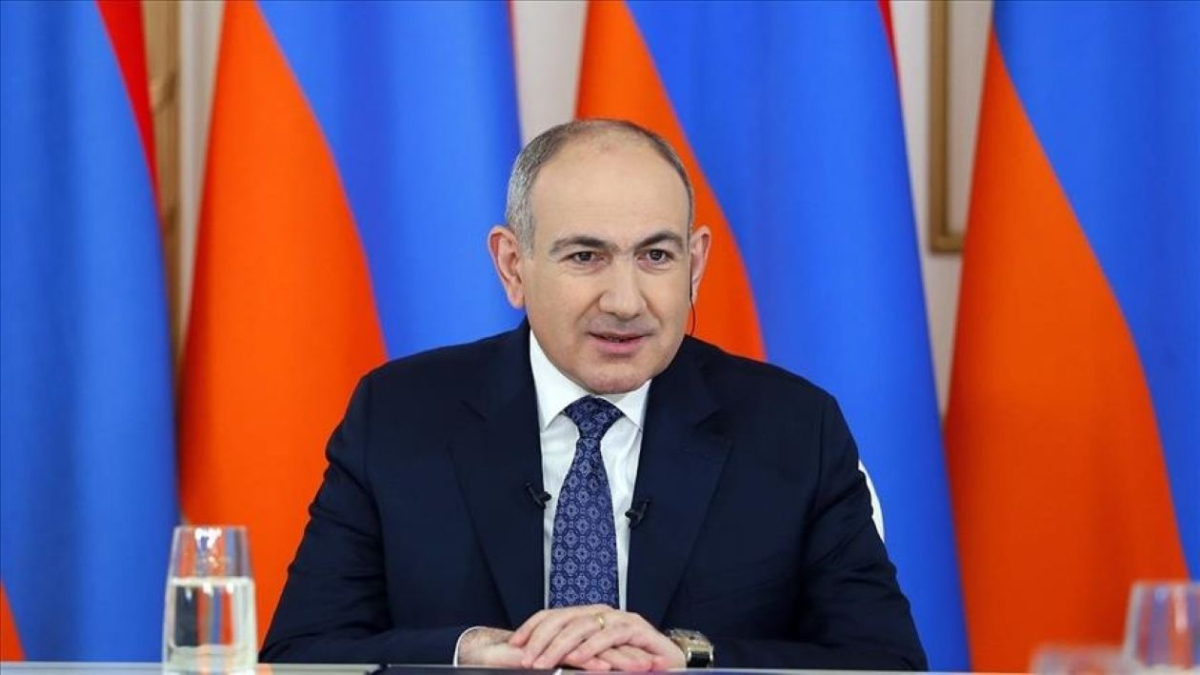
Armenian Prime Minister Nikol Pashinyan has welcomed remarks by Turkish President Recep Tayyip Erdogan indicating progress in the normalisation process between Ankara and Yerevan, describing the moment as ripe for concrete steps.
Speaking at a press briefing, Pashinyan said it was time for “symbolic and non-symbolic, broader and more tangible steps” within the framework of bilateral dialogue, according to state media.
His comments follow statements by Erdogan earlier this month, in which the Turkish president said Türkiye would take “some symbolic steps” from early 2026 as part of ongoing efforts to normalise relations with Armenia. Speaking on 16 December, Erdogan linked the process to parallel developments between Azerbaijan and Armenia.
“Azerbaijan and Armenia are closer than ever to signing a peace agreement. In parallel with this process, and in dialogue with Azerbaijan, we are also advancing our normalisation efforts with Armenia,” Erdogan said.
Addressing the Armenia–Azerbaijan peace process, Pashinyan welcomed Baku’s decision to lift restrictions on the transit of goods to Armenia, calling it a development that could not go unacknowledged. He said Yerevan hoped further steps would follow to promote bilateral trade, including Armenian exports to Azerbaijan.
The Armenian prime minister also referred to cooperation with the U.S. on the TRIPP project — the Trump Route for International Peace and Prosperity — noting that a strategic framework document was being prepared and would require approval by both sides before implementation could begin.
Pashinyan said on-the-ground work on the project was expected to start in the second half of 2026, with railway construction likely to be the first phase. He added that while energy infrastructure such as gas or oil pipelines could become a priority depending on circumstances, the railway currently remained the focus.
In August, Azerbaijan and Armenia signed a declaration at a trilateral summit at the White House, alongside U.S. President Donald Trump, committing to end decades of conflict, reopen transport links and move towards the normalisation of relations.

A F-16 fighter jet of the Turkish Air Force crashed near a highway in western Türkiye early on Wednesday (25 February), killing its pilot, officials and media reports confirmed.
U.S. President Donald Trump declared a “golden age” for America in his first second-term State of the Union on Tuesday evening, delivering the longest-ever address at more than 90 minutes. Here are the main takeaways.
President Donald Trump delivered the first State of the Union address of his second term to Congress on Wednesday (25 February), declaring that America’s “golden age” had begun and that the country was experiencing a “turnaround for the ages.”
Start your day informed with AnewZ Morning Brief. Here are the top news stories for the 25th of February, covering the latest developments you need to know.
Peace-making has a habit of creating new enemies - especially when it reduces someone else’s leverage. As Azerbaijan and Armenia move toward a settlement architecture that no longer depends on Moscow as the indispensable broker, pressure has not vanished; it has shifted shape.
Pakistan’s Foreign Minister Ishaq Dar received a phone call from Qatar’s Deputy Foreign Minister Mohammed bin Abdulaziz Al-Khulaifi on Thursday, as fresh border clashes erupted between Pakistani and Afghan forces.
Ankara has rejected media reports claiming it plans to deploy military forces into Iranian territory in the event of a U.S. attack on the Islamic republic.
Georgia’s path towards European Union membership is facing its most serious crisis to date, with senior European lawmakers warning that the country is now a “candidate in name only” and accusing the ruling government of reversing democratic progress and drifting away from Europe.
As Iran and the United States continue with nuclear talks in Geneva on Thursday, Tehran’s extensive ballistic missile programme remains a central point of contention.
More than 11 million Afghans have been displaced or have returned to the country between 2021 and 2025, as drought, floods and mass returns from neighbouring states deepen an already fragile humanitarian crisis, according to a new report from the International Organization for Migration (IOM).
You can download the AnewZ application from Play Store and the App Store.
What is your opinion on this topic?
Leave the first comment