U.S. and Iran exchange threats - Tuesday, 10 March
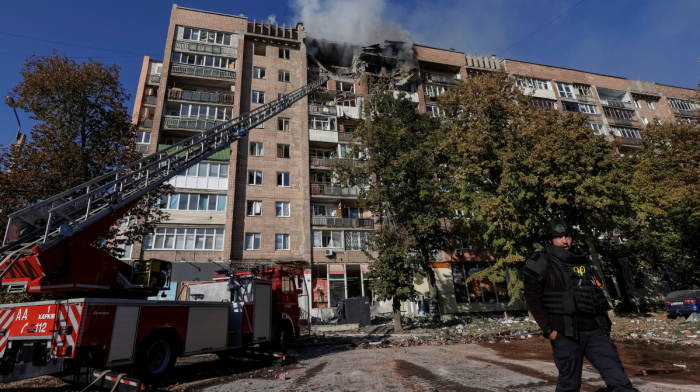
Tensions in the region remained high on Tuesday (10 March), as the United States and Iran exchanged increasingly sharp warnings, including thr...
Energy ministers from the Turkic States have agreed to expand cooperation on key oil, gas, and green energy projects at an event hosted by Türkiye this week. It's a significant move towards regional energy collaboration.
The meeting marked a new phase in Turkic energy cooperation, with Azerbaijan emphasising the growing importance of joint investments and crucial export routes such as the Baku-Tbilisi-Ceyhan (BTC) pipeline.
This pipeline is a vital export route that continues to play a central role in transporting oil and gas to markets in Europe and beyond.
The ministers also highlighted rising gas flows to Türkiye and Europe as a key development in the region’s energy infrastructure.
Azerbaijan’s Minister of Energy, Parviz Shahbazov, outlined the tremendous progress made in Turkic energy relations, particularly in the area of joint investments. He emphasised that energy cooperation within the Turkic States has entered a new phase, underpinned by significant financial commitments and strategic projects.
The ministers also focused on expanding cooperation in renewable energy, digital transformation, and the development of a "Green Energy Corridor." This corridor aims to connect Central Asia, Azerbaijan, and Türkiye, fostering greater integration of green energy solutions and supporting the transition to more sustainable energy sources across the region.
Shahbazov highlighted the impressive trade turnover between the Turkic States, with last year’s trade exceeding $7.3 billion. Notably, around 80% of their joint investment portfolio, which surpasses $20 billion, is concentrated in the energy sector.
"Joint investment funds and numerous projects, especially our collaborations in the energy sector, make a significant contribution to economic growth," said Shahbazov.
The group say the push for closer cooperation on renewable energy and digital transformation aligns with global trends toward a more sustainable energy future. The Green Energy Corridor, in particular, is expected to help the Turkic States become key players in the global green energy landscape, leveraging their rich natural resources while minimising the environmental impact.

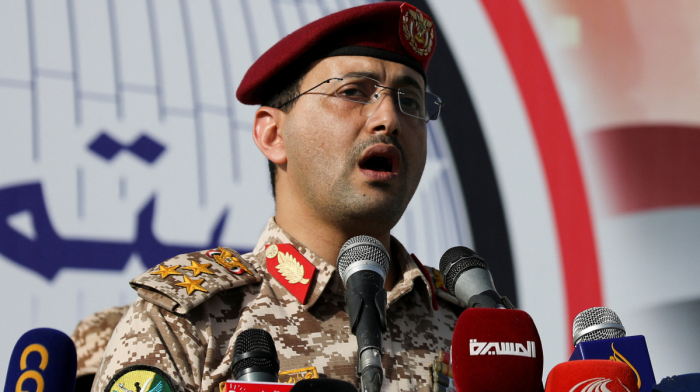
Tensions in the region remained high on Tuesday (10 March), as the United States and Iran exchanged increasingly sharp warnings, including threats over the strategic Strait of Hormuz, a critical artery for global oil supplies.
Global oil prices surpassed $119 a barrel on Monday (9 March, 2026), an almost four year high, as the Middle East conflict rumbled on.
China has urged Afghanistan and Pakistan to resolve their dispute through dialogue after Chinese envoy Yue Xiaoyong met Afghan Foreign Minister Amir Khan Muttaqi, as fighting between the two neighbours entered its eleventh day.
Entry and exit across the state border between Azerbaijan and Iran for all types of cargo vehicles, including those in transit, will resume on 9 March, according to a statement by the Cabinet of Ministers of Azerbaijan.
Iran named Mojtaba Khamenei to succeed his father Ali Khamenei as supreme leader on Monday (9 March), signaling that hardliners remain firmly in charge, as the week-old U.S.-Israeli war with Iran pushed oil above $100 a barrel.
Iran and the U.S. exchanged threats on Tuesday, as U.S. Defense Secretary Pete Hegseth warned Tehran to expect the “most intense day" of attacks so far. Meanwhile, Iranian President Masoud Pezeshkian said “anyone who entertains the illusion of destroying Iran knows nothing of history."
The Strait of Hormuz has become a focal point of global concern as tensions rise following the conflict involving Iran, the United States and Israel. Tehran has threatened to block the strategic waterway, raising fears of disruption to global oil shipments and energy markets.
Reports of so-called “acid clouds” moving from Iran towards Central Asia are not supported by scientific data, national hydrometeorological services in Kazakhstan, Uzbekistan and Kyrgyzstan say, adding there is no threat to the region.
A senior delegation from the OSCE Parliamentary Assembly has been holding meetings with Georgian government officials, opposition leaders and security authorities this week, as international observers attempt to gauge the country’s political climate following last year’s contentious elections.
Turkish President Recep Tayyip Erdoğan has told Masoud Pezeshkian, his Iranian counterpart, that violations of Turkish airspace by Iran could not be justified “for any reason whatsoever.”
You can download the AnewZ application from Play Store and the App Store.
What is your opinion on this topic?
Leave the first comment