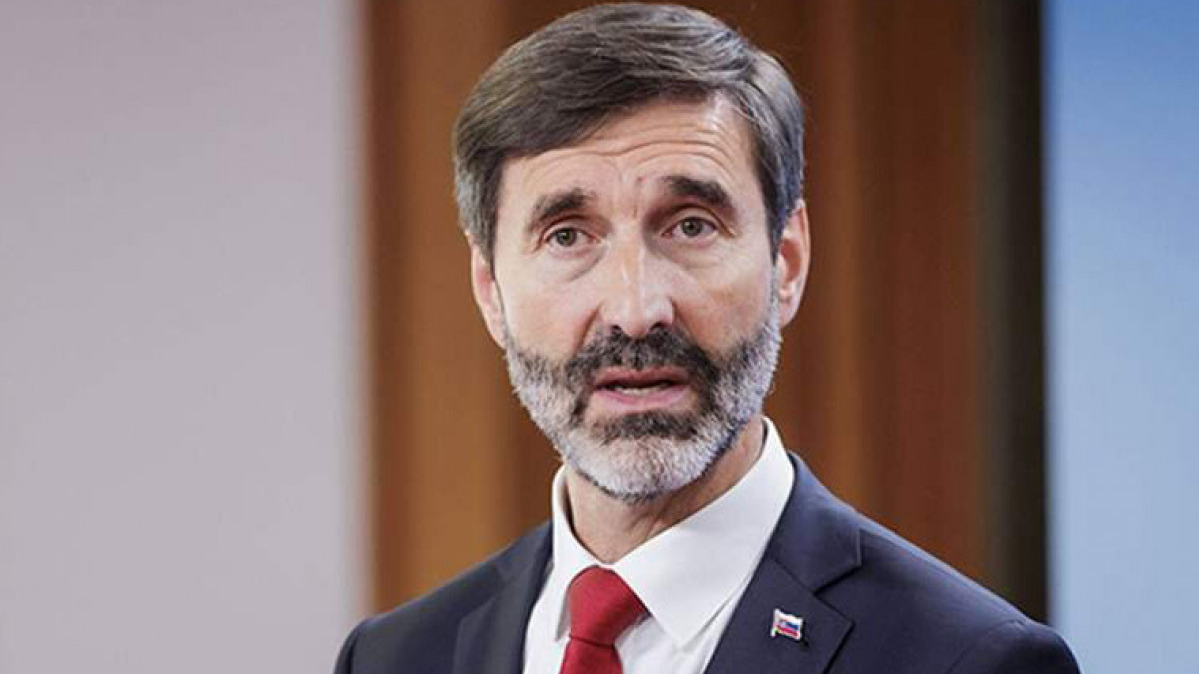
Minister of Foreign and European Affairs of the Slovak Republic, Juraj Blanar touched on the outcomes of President Ilham Aliyev’s official visit to Slovakia.
Speaking in an interview with Azerbaijani Press Agency, he highlighted the growing bilateral relations between Azerbaijan and Slovakia and the progress made in implementing the Joint Declaration on Establishing Strategic Partnership between the two nations.
The Minister emphasised the significant advancements in bilateral ties since the signing of the Declaration on 7 May, 2024, when the Slovak Prime Minister Robert Fico visited Baku.
Blanar noted the intensity of high-level exchanges showcases the growing commitment to the Strategic Partnership after visits by prominent Slovak officials such as the President of the Supreme Court, Chief of the General Staff, and Deputy Prime Minister and Minister of Defence.
Slovakia says it remains dedicated to further expanding cooperation across various sectors, including political dialogue, security cooperation, justice and rule of law, and defence collaboration. Blanar stressed that these high-level exchanges are a clear indication of the countries’ mutual commitment to enhancing cooperation.
State of bilateral relations
Blanar described the current state of bilateral relations as excellent and dynamically developing. Trade between the two nations has increased eightfold after the establishment of the Slovak Embassy in Baku in 2019 and the opening of the Azerbaijani Embassy in Bratislava in 2023.
According to Blanar, the total foreign trade turnover between both countries reached €210.9 million in 2024, a substantial rise from €24.4 million in 2019.
Slovakia is one of the top three exporters of cars to Azerbaijan, and oil and oil products are the largest import items from Azerbaijan.
Opportunities for future cooperation
Blanar highlighted several areas for further cooperation, particularly in trade, energy security, and defence. Slovakia continues to acknowledge Azerbaijan's strategic role in Europe's energy diversification, and strengthening security cooperation remains a priority. He also pointed out the importance of fostering cultural exchanges and people-to-people contacts to further deepen bilateral relations.
Blanar revealed that more visits by Slovak government representatives are planned for the coming year as a way of ensuring sustained dialogue and continued strengthening of the strategic partnership.
Signed agreements and expanding cooperation
The interview highlighted five key documents signed during the visit, which have significantly expanded the scope of cooperation. These agreements include:
- A Memorandum of Understanding on consular affairs between the Ministries of Foreign and European Affairs of Slovakia and Azerbaijan.
- A Memorandum of Understanding on cooperation in animal health and food safety between Slovakia’s State Veterinary and Food Administration and Azerbaijan’s Food Safety Agency.
- A Memorandum of Understanding between the Ministries of Culture of both countries.
- A Memorandum of Understanding between the Slovak Chamber of Commerce and Industry and Azerbaijan’s Small and Medium Business Development Agency (KOBIA).
- A Protocol of Intent on cooperation between the Ministries of Defence of both countries.
Blanar expressed his satisfaction with the first official visit of President Ilham Aliyev to Slovakia, describing it as a historic milestone.
The President of Azerbaijan also engaged in talks with Slovak President Peter Pellegrini, National Council Speaker Richard Raši, and Prime Minister Robert Fico, further solidifying the strategic partnership between the two nations.
International cooperation and support for Slovakia's UN candidacy
Blanar also discussed the mutual support between Azerbaijan and Slovakia on international platforms, particularly Slovakia’s candidacy for a non-permanent seat on the United Nations Security Council for the 2028-2029 term.
According to Blanar, Azerbaijan’s support for Slovakia in this endeavor reflects the maturity and depth of their bilateral relations and their shared commitment to advancing common interests within multilateral organisations.
Azerbaijan-NATO relations and military cooperation
Blanar noted Slovakia’s role as a NATO Contact Point Embassy in Baku. Slovakia has facilitated several visits from NATO Headquarters and the NATO Liaison Office in Georgia. Despite Azerbaijan not seeking NATO membership, it remains a valuable partner for the Alliance, contributing to operations such as ISAF and showing interest in various NATO programmes.
Blanar assessed the growing cooperation in military-technical and defence matters, particularly following agreements signed during Prime Minister Fico’s visit to Azerbaijan. Slovakia sees significant potential for joint projects and reciprocal procurement in defence, with both countries benefiting from shared expertise.
Blanar further highlighted the importance of Azerbaijan’s role in diversifying gas sources and transportation routes for Slovakia, especially amidst ongoing energy challenges. Slovakia is committed to long-term cooperation with Azerbaijan in energy infrastructure, with projects like the Solidarity Ring and the Vertical Corridor being key to ensuring a diversified gas supply.
Agricultural cooperation and reconstruction in Karabakh
Blanar also pointed out the potential for cooperation in agriculture, particularly as Slovakia has significant expertise in modern farming practices and rural development. With the restoration of agriculture in the Karabakh region underway, Slovakia is eager to share its knowledge and contribute to the revitalisation of this important sector.
Slovakia has already launched a Smart Village project in Bash Garvand, marking the first such initiative in the region. Blanar expressed Slovakia’s hope that the successful implementation of this project would pave the way for further Slovak participation in the reconstruction of Karabakh.
As an EU member, Slovakia continues to support the positive development of Azerbaijan-EU relations, particularly in energy diversification and security of supply. Blanar reiterated Slovakia’s firm stance on Azerbaijan’s territorial integrity and sovereignty, advocating for a fair and balanced approach in the EU’s relations with Azerbaijan and other regional partners.
Blanar also expressed Slovakia’s warm welcome for the agreements signed between Azerbaijan and Armenia in Washington on 8 August, viewing them as a significant breakthrough in advancing peace in the region.











What is your opinion on this topic?
Leave the first comment