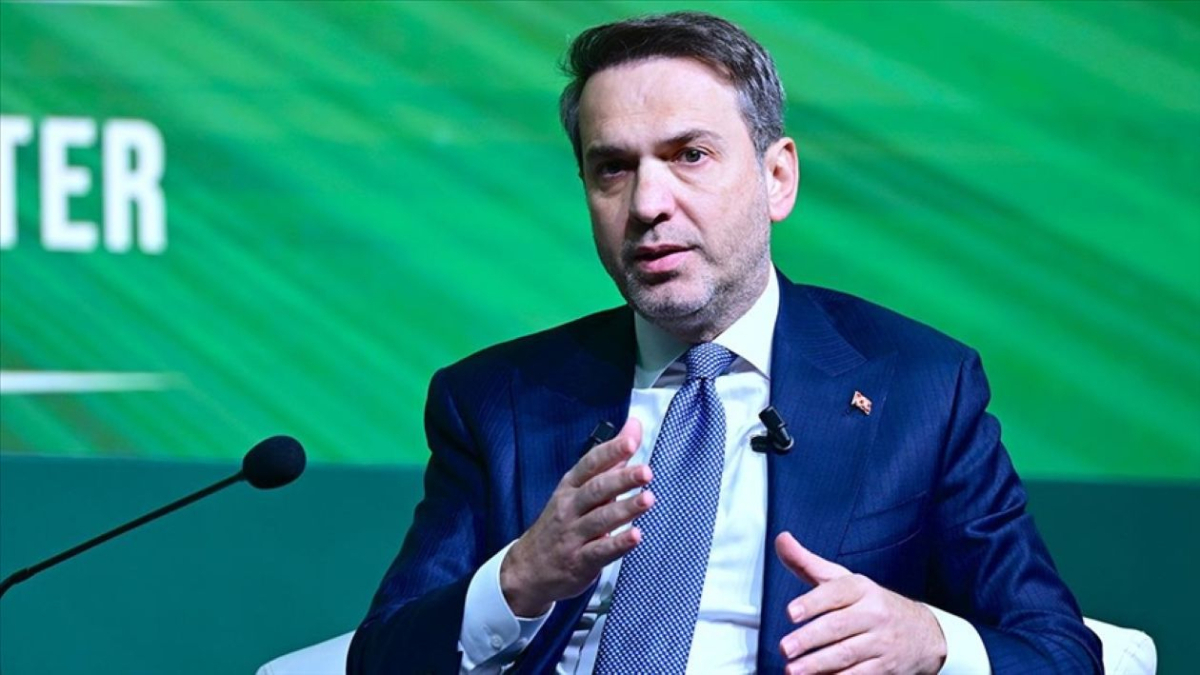
Türkiye’s Minister of Energy and Natural Resources, Alparslan Bayraktar, outlined the country’s energy and gas sector developments at the 15th Türkiye Energy Summit in Istanbul, moving away from its dependence on Russian energy.
He stated that Türkiye has the infrastructure to supply 70-80 billion cubic metres of natural gas annually and is now capable of trading more than 10 billion cubic metres of gas.
Bayraktar noted that Türkiye possesses the fourth-largest fleet of drilling and seismic vessels globally, and the first phase of hydrocarbon exploration in the Black Sea has been completed. He highlighted that natural gas consumption in households and industry has increased, and gas-based electricity production has risen, with an estimated 60 billion cubic metres of gas expected to be consumed this year.
He added that production will double next year, meeting the gas needs of around eight million households. For 2028, the target is daily production of 40-45 million cubic metres and meeting the gas demand of 16-17 million households with domestic resources.
Bayraktar stressed that Black Sea gas remains a key national project, and that daily production from the Gabar oil field is 80,000 barrels, reducing Türkiye’s oil imports by approximately $2 billion.
The minister also said Türkiye plans to conduct six deepwater drilling operations in the Black Sea, with a fifth drilling vessel currently ready for deployment.
Bayraktar emphasised that there is no risk to Türkiye’s gas supply security. He noted that a 22-billion-cubic-metre gas import contract, expiring at the end of this year, has been extended by one year and will be delivered by BOTAŞ. He also highlighted Türkiye’s strong gas transmission and distribution network, with more than 220,000 kilometres of distribution lines already in place.
The minister pointed out that Türkiye’s gas storage capacity is rapidly increasing, aiming to store at least 20% of the country’s needs by the 2030s. He added that Türkiye plans to raise its LNG regasification capacity to 200 million cubic metres, with two additional FSRU vessels to join the system.
Bayraktar also stated that the Son Resource Supply Tariff (SKTT) has been revised for citizens above a certain income level and that a similar scheme will continue next year.
Regarding nuclear energy, Bayraktar said the first reactor at the Akkuyu Nuclear Power Plant has experienced delays but expects to reach a domestic production value of $10.6 billion by the end of the second quarter of 2025. The construction currently has a 56% domestic content rate. He added that Türkiye aims to develop its nuclear energy sector across all areas, including small modular reactors.
He further noted ongoing talks with various countries and companies regarding nuclear projects in Sinop and Thrace.
Bayraktar touched on the YEKA renewable energy competitions, announcing that six projects have been awarded with a contribution of €208 million, leading to a total investment of $1.1 billion.
He emphasised the importance of strengthening electricity infrastructure alongside energy investments and stated that TEİAŞ, system operators, and distribution companies need to transition to new system operations.
Finally, Bayraktar said improvements will be made for self-consumption licence-free projects, with rooftop and other self-consumption applications opening new opportunities. He also noted that hybrid and wind power plants will have capacity allocations determined based on technical possibilities.











What is your opinion on this topic?
Leave the first comment