Armenian Prime Minister Nikol Pashinyan has welcomed Azerbaijan’s decision to lift all transit restrictions on cargo shipments to Armenia, calling it a major step toward regional peace and economic cooperation.
Speaking at the 5th Tbilisi Silk Road Forum, Pashinyan said, “The President of Azerbaijan has taken a very important and positive step. This decision holds great importance for restoring trust and developing economic ties in the region. Peace in the region is of utmost importance,” he said.
According to Report’s Georgian bureau, Pashinyan noted that thanks to this platform, Armenia has moved closer to achieving peace with Azerbaijan.
He described the Tbilisi Silk Road Forum as an essential initiative connecting regional nations and deepening mutual ties.
“This major project is not only economic but also a significant step towards peace and stability. One of its outcomes will be the opening of the peace route connecting Azerbaijan and Nakhchivan.”
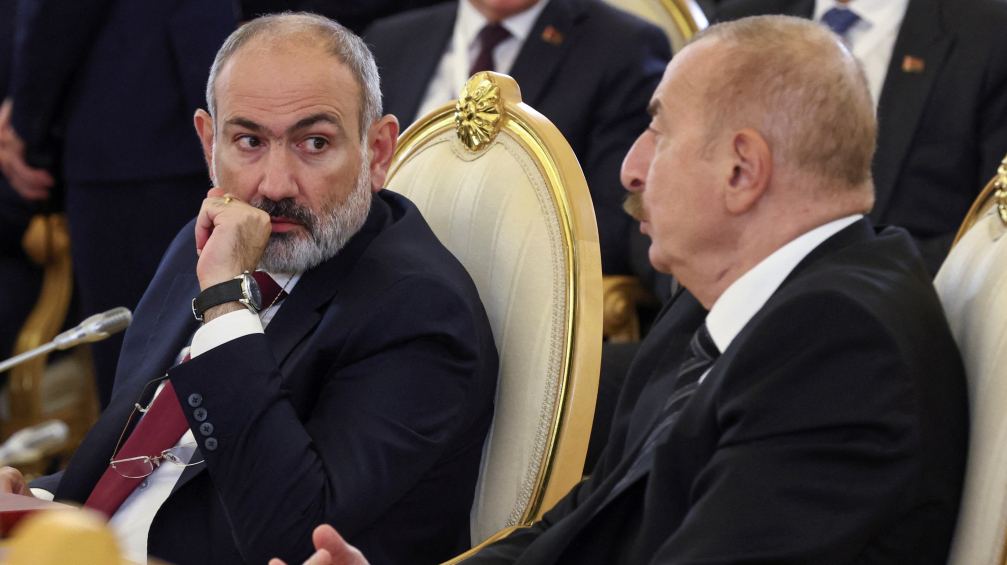
The remarks came a day after Azerbaijani President Ilham Aliyev announced the removal of all transit restrictions for Armenian-bound cargo. Speaking in Astana, Aliyev said a shipment of Kazakh grain via Azerbaijan to Armenia marked the first such consignment since the late Soviet era.
“I think this is also a good indicator that peace between Azerbaijan and Armenia is no longer on paper, but in practice,” Aliyev said.
A spokeswoman for the Armenian prime minister also hailed the move as a “step of great importance for opening regional communications, strengthening mutual trust, and institutionalising the peace established between Armenia and Azerbaijan.”
Pashinyan further expressed appreciation to Georgia and Kazakhstan for their role in fostering dialogue and regional stability.
“I want to express my gratitude to the President of Azerbaijan for this step, as well as to the President of Kazakhstan and the Prime Minister of Georgia,” he said.
Highlighting the broader implications for the South Caucasus, Pashinyan emphasised that developing communications, transport routes, and economic ties will consolidate peace and prosperity:
“Building connections and expanding cooperation will bring more opportunities, growth, and prosperity to the countries of the region. This will further strengthen peace in the South Caucasus,” he said.
The lifting of transit restrictions marks one of the most tangible signs of progress since the U.S.-brokered peace agreement signed between Armenia and Azerbaijan in August, as both countries seek to normalise relations after decades of conflict.














What is your opinion on this topic?
Leave the first comment