Fidan meets Zelenskyy in Kyiv as Türkiye renews push for Ukraine peace talks
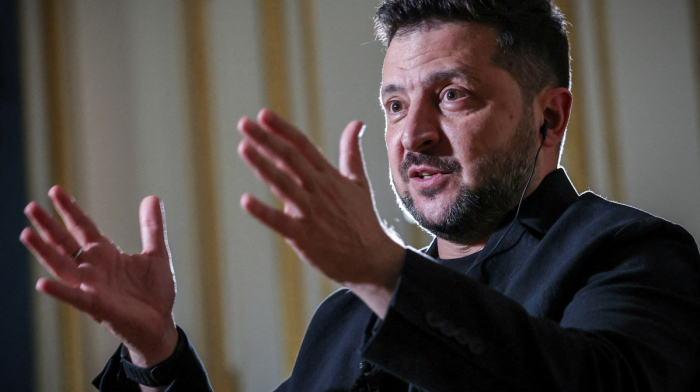
Turkish Foreign Minister Hakan Fidan met Ukrainian President Volodymyr Zelenskyy in Kyiv on Thursday as Türkiye stepped up efforts to revive stalled ...
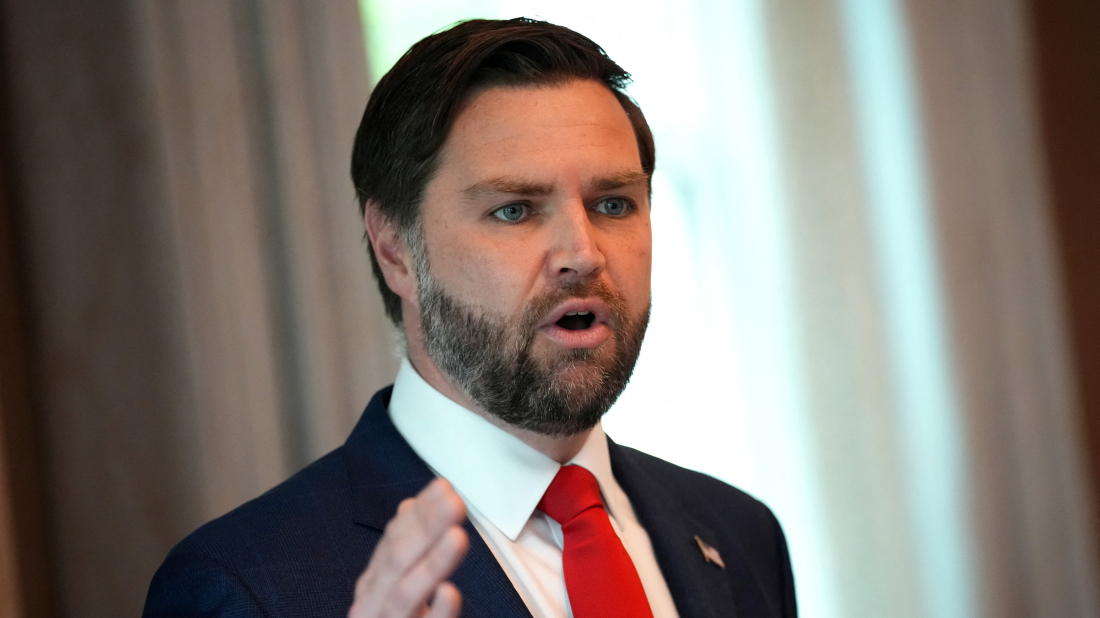
U.S. Vice President JD Vance said Washington holds greater leverage than China in the deepening trade standoff, after President Donald Trump announced 100% tariffs on Chinese imports and new export restrictions on critical software.
Speaking on Fox News, Vice President JD Vance said the United States has “far more cards” to play than China in the escalating trade tensions, but expressed hope that Beijing would take a “reasonable” approach to avoid further confrontation.
“If they respond in a highly aggressive manner, I guarantee you, the president of the United States has far more cards than the People's Republic of China,” Vance said. “It’s going to be a delicate dance, and a lot of it will depend on how the Chinese respond.”
Vance said President Trump hopes to avoid using that leverage but will act if necessary. “What the United States has is a lot of leverage, and my hope, and I know the president’s hope, is that we don’t have to use it,” he said.
The comments came after Trump announced sweeping 100% tariffs on all Chinese goods starting 1 November, in addition to existing duties, and plans to restrict exports of key software. The move followed Beijing’s decision to tighten controls on rare earth exports and limit cooperation with foreign firms without government approval.
China’s Commerce Ministry said on Sunday that while Beijing does not want a trade war, it “is not afraid of one.”
Vance added that Trump values his “friendship and good relationship” with Chinese President Xi Jinping but said China’s latest actions “shocked” many in Washington.
U.S. markets fell sharply on Friday following Trump’s tariff announcement, reflecting investor concerns over supply chain disruptions and inflation risks. The rare earth sector, critical for electronics and clean energy technologies, is seen as one of Beijing’s main pressure points.
Vance stressed that Washington wants constructive relations with China, “but not if the Chinese go down this pathway of cutting off the entire world from access to some of the goods that they produce.”

U.S. President Donald Trump announced the reimposition of a U.S. naval blockade on all Iranian ports and warned that power plants and bridges could be targeted next week unless Tehran returns to negotiations.
The U.S. military announced that it has completed a new wave of strikes against Iranian military targets under U.S. President Donald Trump's orders. The operation targeted command centres, air defence systems, missile and drone facilities, and coastal surveillance sites across multiple locations.
The half-time interval during the 2026 FIFA World Cup final is expected to be extended to around 30 minutes to accommodate the tournament’s first-ever major half-time concert.
Nineteen years ago, at Barcelona's Camp Nou, Lionel Messi posed for a charity photo shoot with a five-month-old baby he had never met. On Sunday, that baby, Lamine Yamal, will face Messi in the 2026 FIFA World Cup final as Spain take on Argentina. A full-circle football story.
The U.S. military said it completed a sixth consecutive night of strikes on Iran late on Thursday, targeting logistics infrastructure and maritime capabilities. Iran responded by launching strikes at U.S. bases in neighbouring countries.
Aid organisations in Afghanistan are struggling to keep women in work as Taliban restrictions force them to spend more on male guardians, transport and separate workplaces, a June 2026 survey has found.
Uzbekistan and Italy's Tuscany region have agreed to expand cooperation in trade, investment, education and culture following talks between President Shavkat Mirziyoyev and Tuscany Governor Eugenio Giani in Tashkent.
Iran struck eastern Syria on Friday, Iranian state media and a Syrian military source said, in the first known attack by Tehran on Syrian territory since a regional war erupted earlier this year.
Disruptions to shipping through the Gulf are creating an unexpected opportunity for Pakistan, as conflict around the Strait of Hormuz prompts vessels to divert cargo to Karachi, reshaping regional maritime trade.
Uzbekistan and Türkiye have agreed to expand the range of products eligible for preferential tariff treatment, signing a protocol that adds eight new tariff lines to their Preferential Trade Agreement (PTA). The move increases the total number of covered product categories from 12 to 20.
You can download the AnewZ application from Play Store and the App Store.
What is your opinion on this topic?
Leave the first comment