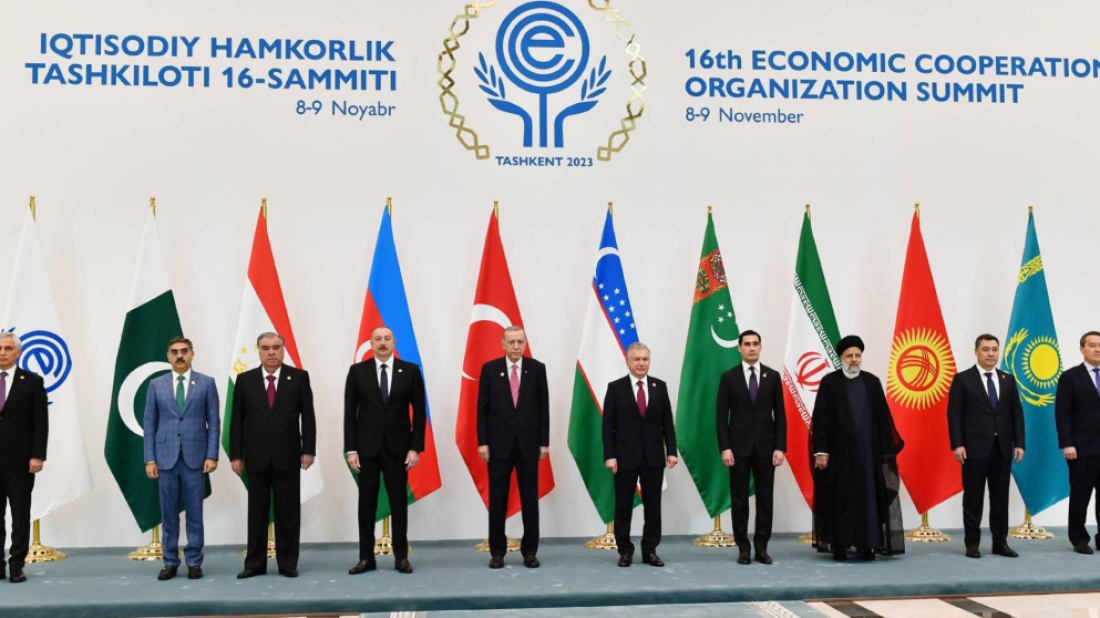
Leaders of the Economic Cooperation Organization country-members will gather for the 17th summit hosted on 3rd and 4th July in Khankendi, Azerbaijan.
Reaffirming its leadership in promoting regional cooperation and sustainable development, Azerbaijan will bring together ECO heads of states, senior government officials, ECO Observers, special guests from non-ECO countries and heads of international organizations to achieve prosperity through fragile economic integration, reads ECO 's statement.
The Summit will feature a dynamic and inclusive ECO Week, kicked on 1st July across multiple cities in Azerbaijan.
"This is the third time Azerbaijan hosts the ECO Summit, but, for the first time, it will be held in Karabakh. Thanks to the initiative and leadership of President Ilham Aliyev, this year marks the inaugural ECO Week involving a wide range of stakeholders. All these events are aimed at developing a shared vision for the future of the Economic Cooperation Organization for the next ten years," - stated Asad. M. Khan, the Secretary General of the Economic Cooperation Organization (ECO).
The ECO Week includes a series of thematic forums aimed at advancing youth engagement, gender inclusion and economic connectivity within the region.
The ECO Youth Forum with its thematic focus on “Enhancing the Role of Youth for Building a Sustainable and Climate-Resilient Future” was held in Aghdam on 1st July. The event centered on three main themes: Economic and Trade Cooperation, which explored opportunities for intra-regional trade, removing barriers, and promoting youth entrepreneurship and the digital economy; Sustainability and Technology, which addressed climate-resilient development and the role of AI and digital transformation in regional growth; and Human Development and People-to-People Ties, which focused on education, health, youth mobility, and tourism, while strengthening cultural and historical connections among member states. The outcomes of the forum reflect a collective commitment to building a sustainable, inclusive, and climate-resilient future, with young leaders at the forefront of this vision.
Today, ECO Women Forum focused on “Enhancing the Role of Women for Building a Sustainable and Climate-Resilient Future” launched in Lachin, while the 6th Business Forum is gathering business leaders and investors in Fuzuli, under the theme of “Investment and Trade Promotion as a Catalyst for Sustainable Development in the ECO Region.”
Currently ten countries from West and South Asia, Caucuses and Central Asia are members of the organization, including Afghanistan, Azerbaijan, Iran, Kazakhstan, Kyrgyz Republic, Pakistan, Tajikistan, Türkiye, Turkmenistan and Uzbekistan.














What is your opinion on this topic?
Leave the first comment