Russia-Ukraine peace talks in Abu Dhabi: What you need to know
Ukrainian and Russian negotiators began the second round of U.S.-brokered talks in Abu Dhabi on Wednesday, according to Ukrainian officials....
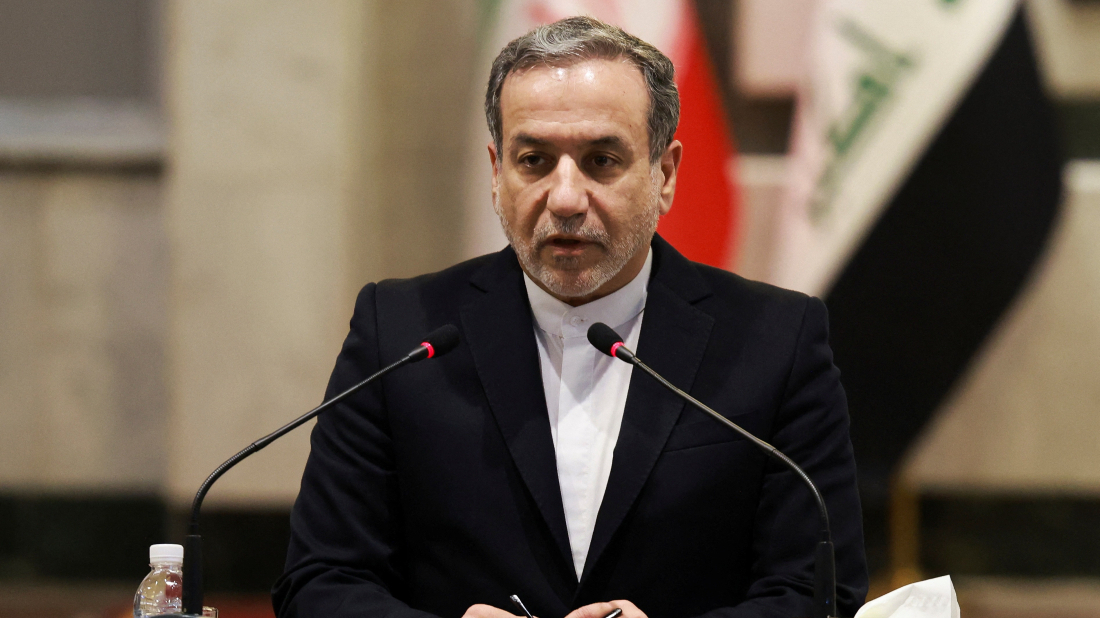
Iran will continue to enrich uranium regardless of whether a new nuclear agreement is reached with the United States, Iranian Foreign Minister Abbas Araghchi said on Monday in a statement on social media platform X.
“In addressing the talks regarding Iran's peaceful nuclear program, our U.S. interlocutors are naturally free to publicly state whatever they deem fit to ward off special interest groups—malign actors which set the agendas of at least previous administrations,” Araghchi wrote.
He emphasized that Iran would not negotiate in public, especially given what he described as a disconnect between U.S. officials’ public and private statements. “Iran can only control what we Iranians do,” he added.
Araghchi reaffirmed Iran’s rights under the Non-Proliferation Treaty (NPT) and described uranium enrichment as a hard-earned, homegrown scientific achievement that came at significant national sacrifice.
“If the U.S. is interested in ensuring that Iran will not have nuclear weapons, a deal is within reach,” he wrote. “We are ready for a serious conversation to achieve a solution that will forever ensure that outcome. Enrichment in Iran, however, will continue with or without a deal.”
His comments followed remarks by Steve Witkoff, the U.S. president’s special envoy, who recently stated that Washington “will not allow Iran even 1% enrichment capacity.” Araghchi’s response made clear that Tehran considers enrichment non-negotiable, reinforcing its long-standing position in the ongoing nuclear discussions.

Talks with the U.S. should be pursued to secure national interests as long as "threats and unreasonable expectations" are avoided, President Masoud Pezeshkian posted on X on Tuesday (3 February).
Cuba’s Deputy Foreign Minister Carlos Fernández de Cossío has denied that Havana and Washington have entered formal negotiations, countering recent assertions by U.S. President Donald Trump, while saying the island is open to dialogue under certain conditions.
Mexico said it will stop sending oil to Cuba as U.S. President Donald Trump ramped up pressure on the Caribbean nation.
Web Summit Qatar 2026 opened in Doha on Sunday, drawing tens of thousands of founders, investors, policymakers and technology leaders to what organisers describe as one of the region’s largest digital economy gatherings.
Elon Musk’s rocket company SpaceX has acquired his artificial intelligence firm xAI, as the billionaire moves to bring more of his technology businesses under one structure.
Uzbekistan is accelerating plans to expand uranium production and deepen international nuclear cooperation, positioning the sector as a pillar of long-term industrial growth and resource security.
A landmark gathering of commercial and political minds has convened in the Kyrgyz capital, signalling a significant shift in Washington’s foreign policy approach towards the Eurasian heartland.
Syrian government security forces entered the Kurdish-controlled northeastern city of Qamishli on Tuesday (3 February), security sources and witnesses said.
Israeli tank shelling and airstrikes killed at least 18 people, including four children, in Gaza on Wednesday, Palestinian officials said, as Israel halts the passage of patients through the Rafah border crossing into Egypt.
Azerbaijan’s President Ilham Aliyev and Armenia’s Prime Minister Nikol Pashinyan met in Abu Dhabi, February 4, reaffirming momentum in their peace process and highlighting growing trade, connectivity and confidence-building measures.
You can download the AnewZ application from Play Store and the App Store.
What is your opinion on this topic?
Leave the first comment