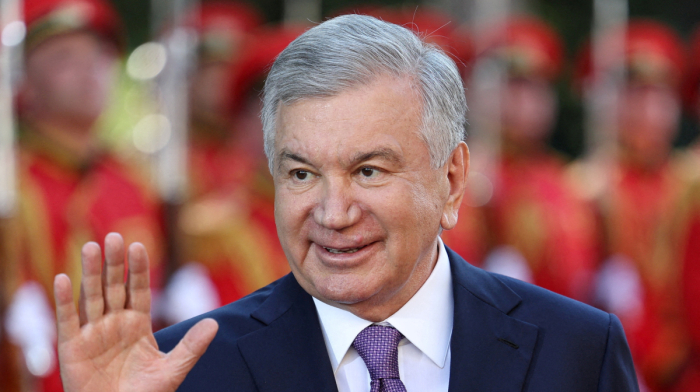
President Ilham Aliyev meets UAE leader in Abu Dhabi
President Ilham Aliyev met President of the United Arab Emirates Sheikh Mohamed bin Zayed Al Nahyan in Abu Dhabi on Monday, where the two leaders reaf...
Afghanistan and Iran have agreed to strengthen agricultural cooperation as Afghan officials seek to expand export routes and support struggling farmers across the country.
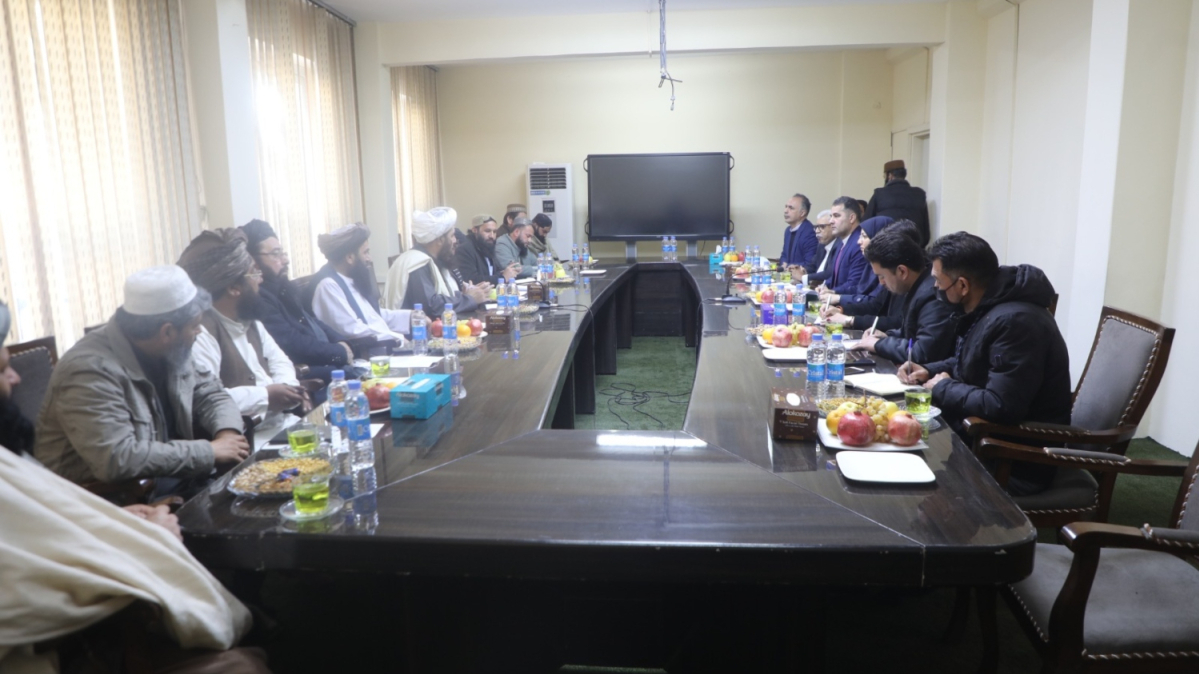
The Ministry of Agriculture, Irrigation and Livestock said its Deputy Minister for Agriculture and Livestock, Mawlawi Sadr-Azam Osmani, met Maryam Jalili-Moqaddam, Deputy Minister of Iran’s Ministry of Agricultural Jihad, at the ministry’s headquarters. Senior officials from both sides attended the meeting.
According to the ministry, both delegations underscored the need to “expand joint cooperation in agriculture and livestock” and to create practical facilities enabling Afghan farmers, orchard owners and livestock breeders to export their products more easily.
The statement added that discussions focused on joint investments in cotton, oilseed cake, fruits, grains and meat production, as well as the establishment of livestock farms.
Osmani said the partnership would help Afghanistan’s agricultural sector “build resilience and benefit from technical expertise”, noting the importance of cooperation at a time when millions of Afghans face food insecurity.
He added that the ministry welcomes any programme that strengthens livelihoods and increases export capacity.
Jalili-Moqaddam commended the work of the ministry and reaffirmed Iran’s commitment “to support Afghan farmers and expand technical collaboration”.
She said the exchange of expertise between specialists from both countries would enhance productivity and improve agricultural practices.
The ministry confirmed that the meeting concluded with an exchange of gifts and expressions of willingness from both sides to deepen cooperation.
Officials said they expect follow-up discussions on investment opportunities and cross-border agricultural projects in the coming months.
Agriculture remains one of Afghanistan’s largest sources of income, with the United Nations reporting that more than 15 million people rely on farming and livestock for their livelihoods.
Afghan officials have repeatedly stated that strengthening regional partnerships is essential to stabilising the sector and improving food security.

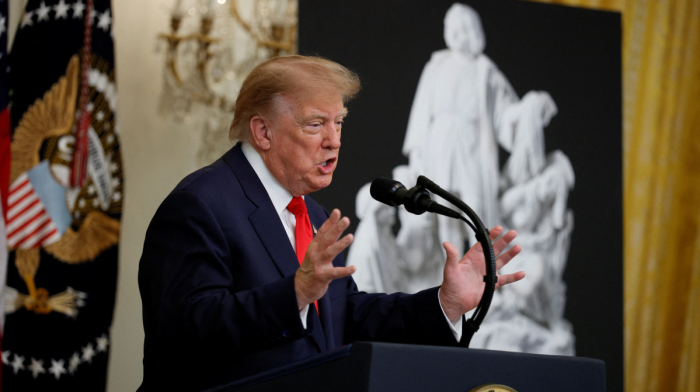
U.S. President Donald Trump said on Saturday that the United States has begun negotiations with European leaders over Greenland and that an agreement is already taking shape.
The United States accused Cuba of interfering with the work of its top diplomat in Havana on Sunday (1 February) after small groups of Cubans jeered at him during meetings with residents and church representatives.
Dmitry Medvedev, said European countries have failed to defeat Russia in Ukraine and have instead inflicted serious economic damage on themselves, as he criticised EU policy, praised Donald Trump as a leader who seeks peace, and said Russia would “soon” achieve military victory in the war.
Iran’s Supreme Leader Ayatollah Ali Khamenei has warned that any U.S. military attack on Iran would spark a wider regional conflict, Iranian semi-official Tasnim news agency reported on Sunday.
U.S. president Donald Trump said Iran is “seriously talking” with the United States and expressed hope that negotiations could lead to an outcome acceptable to Washington.
President Ilham Aliyev met President of the United Arab Emirates Sheikh Mohamed bin Zayed Al Nahyan in Abu Dhabi on Monday, where the two leaders reaffirmed that Azerbaijan–UAE ties are built on a strategic partnership.
U.S. envoy Steve Witkoff and Iranian Foreign Minister Abbas Araghchi are expected to meet in Istanbul on Friday for renewed discussions on Iran’s nuclear programme, according to reporting by Axios.
Limited crossings took place at Rafah on Monday, as patients and families moved through the gates for the first time in months. Photographers captured the tension, relief, and emotional toll of separation at a crossing long marked by both isolation and hope.
Any U.S. military strike on Iran would almost certainly trigger cross-border retaliation and could ignite a wider regional war, according to political analyst James M. Dorsey.
Iran's leadership warned of a regional conflict on Sunday (1 February) if the U.S. were to attack it, stoking the tension between Washington and Tehran, and it designated EU armies as "terrorist groups" in a retaliatory move.
You can download the AnewZ application from Play Store and the App Store.
What is your opinion on this topic?
Leave the first comment