Iran sees surge in protests as unrest spreads nationwide
Protests continued into another day in Iran, with crowds returning to the streets despite mounting pressure from the authorities. By scale and spread,...
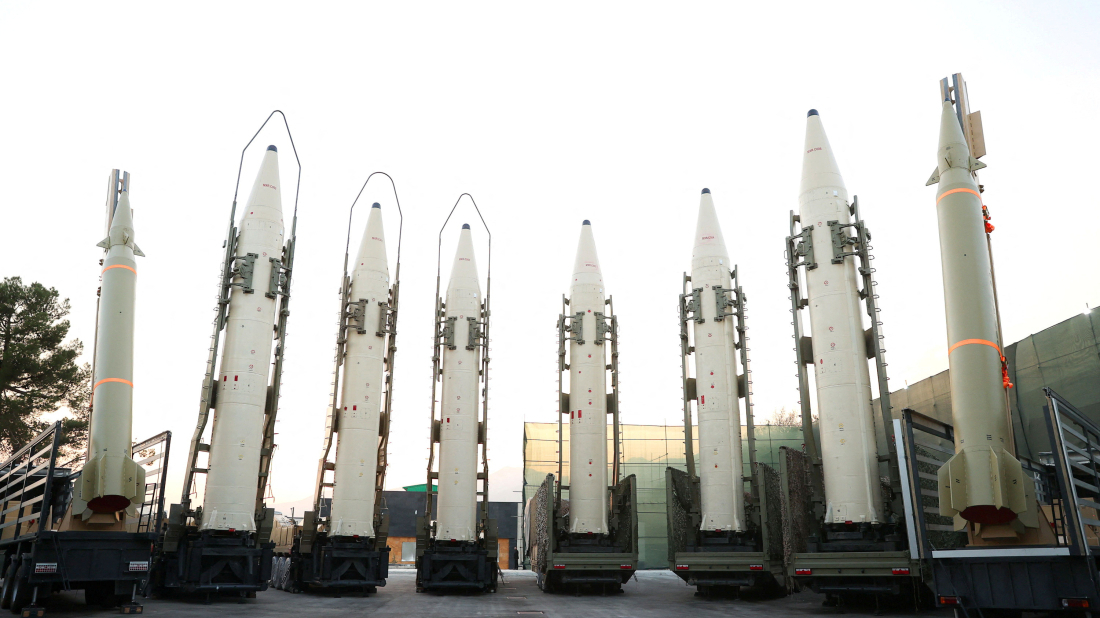
Iran has readied missiles capable of striking U.S.-related positions, responding to President Trump's escalating threats of military action if Tehran does not agree to his terms for a new nuclear agreement.
Iran's armed forces have prepared missiles capable of targeting U.S.-related positions, in response to ongoing threats of military action from U.S. President Donald Trump, The Tehran Times reports.
Trump has insisted on a new nuclear agreement on his terms, warning that he would bomb Iran if they do not comply.
Many of these missiles are stored in underground facilities across Iran, designed to withstand airstrikes.
Since taking office in January, Trump has demanded Iran dismantle its nuclear program, sever ties with Resistance groups, and limit its missile and drone capabilities.
Iran has refused to negotiate under these conditions, stating they are ready to respond decisively to any aggression.

Germany’s foreign intelligence service secretly monitored the telephone communications of former U.S. President Barack Obama for several years, including calls made aboard Air Force One, according to an investigation by the German newspaper Die Zeit.
Israeli media report that Israeli Prime Minister Benjamin Netanyahu chaired a lengthy security meeting that reportedly focused on the country’s regional threats, including Gaza, Lebanon, and Iran.
U.S. President Donald Trump said on Sunday (4 January) that the United States could carry out further military action in Venezuela following the capture of President Nicolás Maduro. Speaking to reporters aboard Air Force One, he said Washington now effectively controls the country.
At the end of last year, U.S. President Donald Trump was reported to have raised the Azerbaijan–Armenia peace agenda during a conversation with Israel’s prime minister, warning that if peace were not achieved, Washington could raise tariffs on both countries by 100 percent.
President Ilham Aliyev said 2025 has politically closed the Armenia-Azerbaijan conflict, as a Trump-era reset in U.S. ties, new transport corridors and a push into AI, renewables and defence production reshape Azerbaijan’s priorities.
Protests continued into another day in Iran, with crowds returning to the streets despite mounting pressure from the authorities. By scale and spread, the unrest has entered its most significant phase so far.
International law remains codified through treaties, charters, and resolutions, but enforcement depends largely on political will. When major powers choose not to comply, there is no global authority capable of compelling implementation.
President Ilham Aliyev has said Azerbaijan is not considering participation in any combat or peace enforcement mission in the Gaza Strip, stressing that any discussion of involvement depends on a clearly defined international mandate, the nature of the mission, and the consent of all parties.
Iran has denounced the U.S. detention of Venezuelan President Nicolás Maduro, describing the operation as an ‘abduction’ and calling for his immediate release.
The speaker of Georgia’s parliament, Shalva Papuashvili, has questioned the European Union’s ability to act as a global geopolitical power, saying it no longer functions as a guarantor of international order.
You can download the AnewZ application from Play Store and the App Store.
What is your opinion on this topic?
Leave the first comment