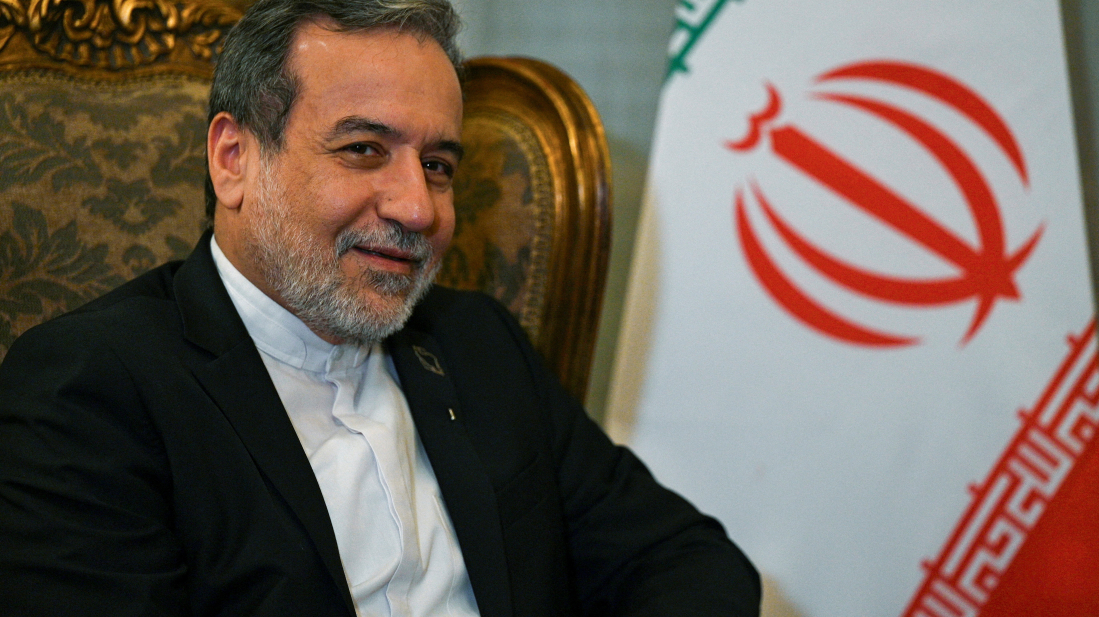
Iran's Foreign Minister Abbas Araghchi has said that U.S. President Donald Trump had been misled by disinformation on Tehran’s peaceful nuclear program which led him to order an attack on Iran in June.
“It is more than clear by now that POTUS has been badly fed the fake line that Iran’s peaceful nuclear program was on the verge of weaponization this spring. That is simply a BIG LIE, and he should have been informed that there is zero proof of that, as confirmed by his own intelligence community,” he said in a post on X.
His reaction comes following remarks on Monday by the U.S. President in the Israeli parliament as well as at the Sharm El-Sheikh Summit in Egypt, alleging that Theran was developing nuclear bombs and was deterred after the airstrikes on its nuclear facilities.
“One can hardly be branded as President of Peace while provoking endless WARS and aligning with WAR criminals. Mr. Trump can either be a President of Peace or a President of War, but he cannot be both at the same time,” Araghchi added.
Ironically, Iran’s top diplomat agreed with U.S. president in that Iran should not be used as a scapegoat in the Arab-Israeli normalization process while Tehran does not recognize Israel and has not accepted the two-state formula.
“He is right in saying that Iran should not be used as a pretext regarding normalization with Israel.
If someone wants to throw the Palestinians under the bus while embracing a genocidal entity that thirsts to devour the whole region, they should have the guts to take full responsibility for it in front of their people and not blame others.” he said.
Iran’s Foreign Ministry had on Tuesday strongly condemned Trump's call for dialogue with Tehran at the Israeli parliament as “contradictory”, accusing him of “hostile and criminal behaviour”.
Tehran also declined Egypt’s invitation to participate in the Sharm El-Sheikh Summit on Gaza ceasefire between Hamas and Israel on Monday saying that it cannot sit at the same table with those who attacked Iran, referring to the joint Israel - US airstrikes in June.
Araghchi is currently in Kampala, Uganda to take part at the 19th Mid-Term Ministerial meeting of the Non-Aligned Movement (NAM) on October 15-16.
He is expected to state Iran’s position on regional and international developments including the stalled nuclear talks with US and the Gaza ceasefire besides meeting with the counterparts from the NAM member states.
Established in 1961 at the Bandung Conference at the height of Cold War geopolitical rivalry, NAM is an alliance of 121 developing countries with the agenda to be their voice in an imbalanced world order.
Rising global conflicts dominate the Kampala meeting as NAM foreign ministers gather in Uganda -- the movement’s chair-state for 2024-26 to discuss the theme “Deepening Cooperation for Shared Global Affluence”.










What is your opinion on this topic?
Leave the first comment