Iran says it is prepared for all scenarios as Tehran and Washington seek to avoid renewed tensions ahead of the planned signing of a memorandum of understanding on a peace deal in Switzerland on Friday.
Tehran signals caution ahead of signing
Posting on social media platform X, Iranian President Masoud Pezeshkian said a final agreement with the U.S. had not yet been reached and stressed that Tehran was prepared for all outcomes in pursuit of its national interests.
He added that Iran had learned from the killing of its leaders and would not allow itself to be humiliated as it prepared for all possible scenarios.
His remarks came as both sides continue preparations for the signing of a memorandum of understanding (MoU) aimed at ending the conflict and opening the way for negotiations on a final peace agreement.
Negotiations to begin after memorandum
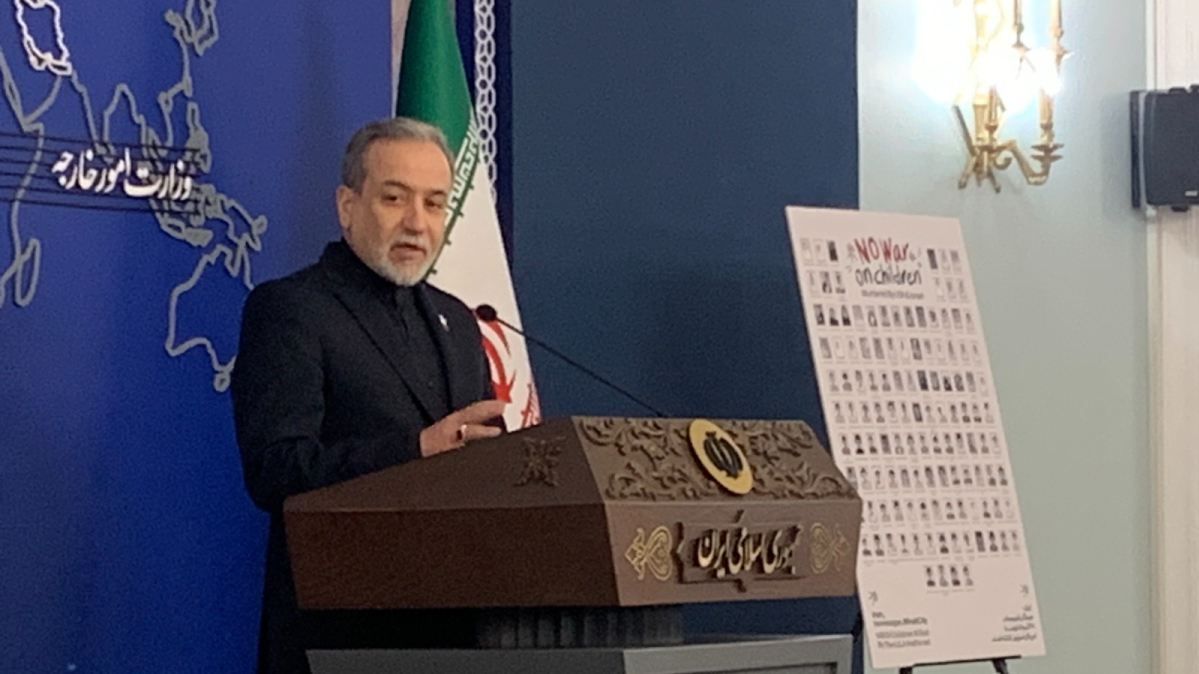
Foreign Minister Abbas Araghchi said Tehran and Washington would begin negotiating the provisions of a comprehensive peace deal after the signing ceremony, which is expected to take place in Switzerland on Friday.
In remarks carried by state news agency IRIB, he said Iranian Parliament Speaker Mohammad-Bagher Ghalibaf and U.S. Vice President J.D. Vance were expected to sign the memorandum.
“On Friday, a meeting between the heads of delegations from both sides is likely to take place in Switzerland, and a memorandum of understanding between Iran and the United States will be signed, followed by the first round of negotiations,” he was quoted as saying.
Araghchi said the process would initially run for 60 days, with the possibility of an extension, during which both sides would discuss issues including the lifting of U.S. sanctions and Iran’s civilian nuclear programme.
“This agreement is a two-stage process: a memorandum of understanding signed last night, followed by a 60-day round of negotiations that could be extended,” he added.
“In the final agreement, nuclear-related issues and the lifting of sanctions will be discussed and possibly agreed upon.”
He did not indicate whether Iranian and U.S. negotiators would meet directly, with mediators expected to continue facilitating contacts between the two sides.
Araghchi also emphasised the potential economic benefits of an agreement while maintaining Tehran’s cautious approach.
“We do not miss any opportunity in foreign policy, but we do not tie our hopes to any opportunity either.”
Stressing that Iran had based the process on deep scepticism towards Washington, he said: “There is a history of non-compliance, non-implementation and tearing up of agreements.”
Oman continues mediation efforts
In the latest diplomatic contacts following Monday’s announcement of the deal, Araghchi held a telephone conversation on Tuesday with Oman’s Foreign Minister Badr Albusaidi.
According to official sources, the two discussed the Islamabad Memorandum of Understanding between Iran and the U.S., as well as bilateral issues.
Oman has played a central role in mediating indirect talks between Tehran and Washington and facilitating the exchange of messages between the two sides.
Meanwhile, Foreign Ministry spokesman Esmaeil Baghaei reiterated Iran’s lack of trust in the U.S., citing what he described as a history of attacks against Iran during periods of negotiation.
He said Tehran had requested a binding United Nations Security Council resolution to guarantee implementation of any future agreements.
Focus on sanctions relief and frozen assets
Iran's Central Bank Governor Abdolnasser Hemmati said the peace agreement includes provisions designed to secure the release of Iranian assets frozen abroad.
The semi-official Tasnim News Agency quoted Hemmati as saying that extensive consideration had been given to the mechanisms governing the release of the funds.
He said efforts had been made to ensure the agreement provided the highest possible level of certainty regarding access to and use of the financial resources.
During the ceasefire negotiations, Iran reportedly demanded the release of around $60 billion in assets frozen in countries including China, India, Japan, Qatar, South Korea, the United Arab Emirates and the U.S.
Hemmati is currently in Russia, where he is seeking to strengthen monetary and banking cooperation amid Western sanctions imposed on both Tehran and Moscow.













What is your opinion on this topic?
Leave the first comment