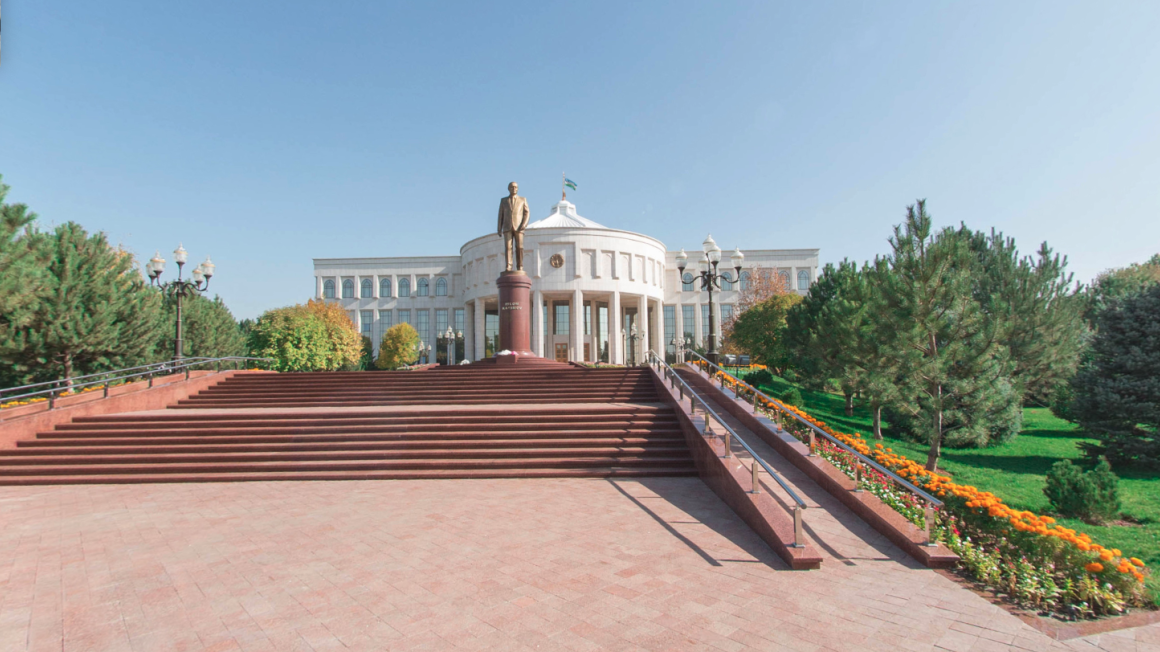
Tashkent has begun work to open the Islam Karimov Memorial Complex to the public as part of plans for a 700-hectare green corridor linking major parks and public spaces across the Uzbek capital.
Officials say the project, which is due to be implemented over the next five years, will improve pedestrian access across the city while preserving existing green areas.
Memorial complex to open to visitors
According to Tashkent Deputy Hokim Azizkhon Shavkatov, work has begun to make the grounds of the Islam Karimov Memorial Complex freely accessible following instructions issued after a visit by Saida Mirziyoyeva, head of the Presidential Administration.
The first stage of the project includes dismantling nearly two kilometres of fencing that previously restricted access to the site. City authorities have also begun upgrading visitor infrastructure.
City-wide green route
The memorial complex will become part of a larger “green route” designed to link Tashkent’s main parks in a single network covering around 700 hectares.
The planned corridor will connect Magic City, Ankhor-Lokomotiv Park, the Ecopark, Telman Park, Abdulla Qodiriy Park, the Centre of Islamic Civilisation and Chorsu Bazaar.
Authorities aim to complete the project within five years, allowing residents and visitors to travel between major green spaces along continuous pedestrian routes.
No construction or tree removal planned
Shavkatov stressed that the project does not include any major construction within the memorial complex. Instead, authorities plan to create walking and recreational areas, install benches, renovate existing pavements and improve public amenities.
He also said the landscaping work would not involve cutting down trees.
“No trees will be damaged. Not a single tree will be felled,” Shavkatov promised, adding that new footpaths will follow existing routes to preserve the current landscape.
The project also includes the redevelopment of 37 hectares surrounding the memorial complex. Authorities plan to introduce barrier-free access, new pedestrian routes, modern lighting, navigation systems and enhanced safety measures while preserving existing greenery.
Part of a broader greening strategy
The initiative forms part of Tashkent’s wider programme to expand public green spaces. Authorities also plan to open a new park on Afrosiab Street and expand both Babur Ecopark and Mirzo Ulugbek Park.
The expansion of urban greenery comes as environmental concerns remain high in the capital. During the past winter, Tashkent experienced several periods of severe air pollution, with fine particulate matter reaching hazardous levels on multiple occasions.
Urban planners and environmental experts generally regard parks and green corridors as an important part of improving the urban environment. They can provide shade, help reduce the urban heat island effect, support biodiversity and contribute to better air quality alongside broader measures to reduce emissions.
The new green corridor is expected to improve access to public recreational spaces while supporting Tashkent’s long-term environmental and urban development goals.










What is your opinion on this topic?
Leave the first comment