Mali’s al Qaeda-affiliated group Jama’at Nusrat al-Islam wal-Muslimin (JNIM) has offered multimillion-dollar rewards for information on senior military officials and the country’s head of state.
The announcement was circulated through jihadist-linked channels and reported by monitoring organisations such as the SITE Intelligence Group. It described Mali’s ruling authorities as an “illegitimate entity” and called for intelligence leading to the location of key figures in the military leadership.
Bounty offers
JNIM offered $2.3 million for information on Mali’s military leader Assimi Goïta, who took power after coups in 2020 and 2021.
It also offered €1 million each for Colonel Lassina Diallo and General Malik Dicko, stating that payments would be made for actionable intelligence or assistance in efforts to “neutralise” them.
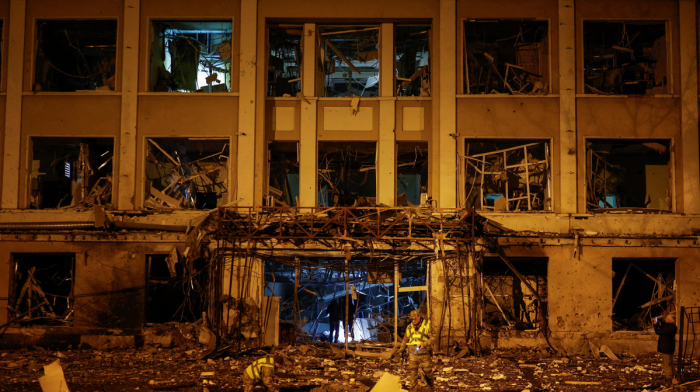
The move comes amid a broader escalation in Mali’s long-running conflict, which has expanded beyond isolated insurgent attacks into a complex confrontation. The hostilities involve armed groups, local militias and state security forces across large parts of the country’s north and centre.
JNIM and Al Qaeda
JNIM was formed in 2017 as a coalition of several militant groups operating in Mali and neighbouring Sahel states, including factions that pledged allegiance to Al Qaeda.
The group is widely described by international security organisations, including the United Nations and the U.S. State Department, as the primary Al Qaeda-affiliated organisation in the Sahel.
It is led by Iyad Ag Ghaly, a long-time Malian Tuareg rebel who later aligned himself with Al Qaeda in the Islamic Maghreb (AQIM), the regional branch of Al Qaeda that emerged from North Africa’s jihadist networks in the early 2000s.
Al Qaeda origins
Al Qaeda itself, founded by Osama bin Laden in the late 1980s, has evolved into a decentralised global network after losing its central leadership structure in Afghanistan.
Instead of direct command, it now operates through regional affiliates such as AQIM, Al Qaeda in the Arabian Peninsula, and Al Qaeda in the Indian Subcontinent, with groups like JNIM functioning as locally rooted extensions of its ideology and strategy.
Security analysts say JNIM’s influence has grown in the Sahel partly due to weak state presence, political instability following repeated coups in Mali, Burkina Faso and Niger, and the fragmentation of counter-insurgency efforts previously led by international partners.
Violence and targeting
The latest bounty announcement follows similar steps taken by Mali’s government, which has previously offered rewards for information on militant leaders, including JNIM figures.
Analysts note that both sides increasingly rely on intelligence-driven incentives as direct battlefield control remains contested.
The escalation also follows al Qaeda-linked attacks in April that killed Mali’s defence minister and triggered renewed clashes across the country’s northern regions.
Observers warn that the expanding use of targeted rewards reflects a broader shift in the conflict. They note that both state and insurgent actors are attempting to disrupt leadership structures while consolidating influence over remote and lightly governed areas.
















What is your opinion on this topic?
Leave the first comment