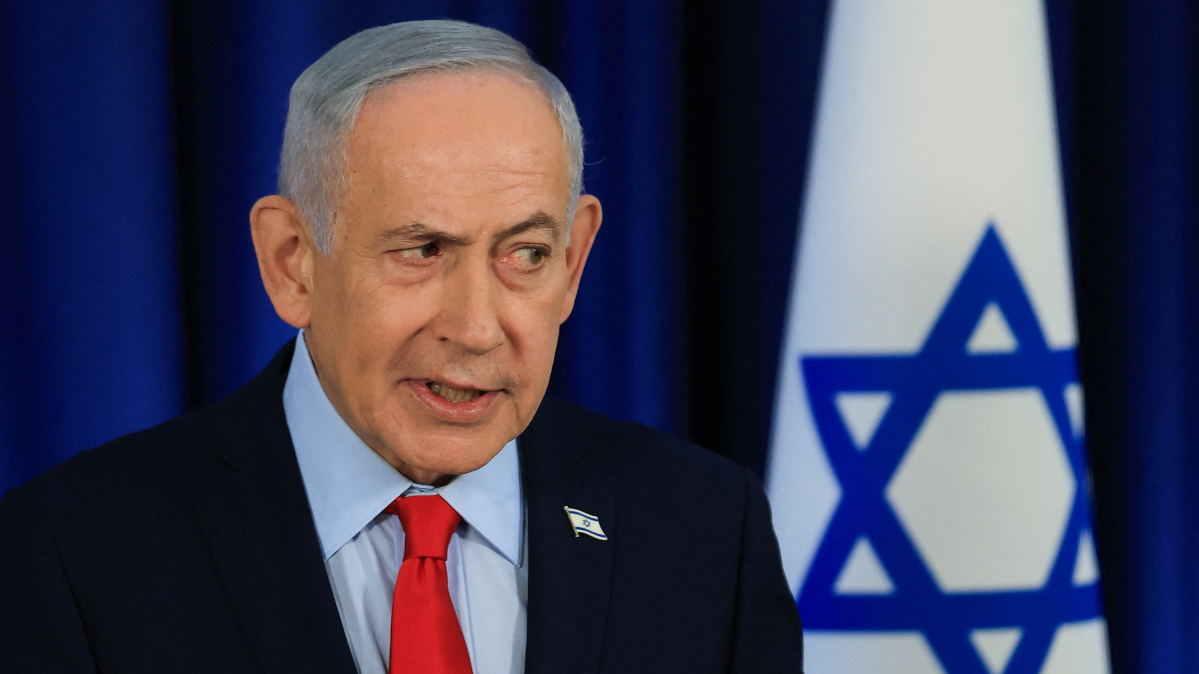
Israeli Prime Minister Benjamin Netanyahu says he has given an instruction for Israel to begin peace talks with Lebanon that would also include the disarming of Hezbollah.
⦿ 20:00 GMT | UPDATE
Wrap-up of day 41 of the Middle East conflict
Thank you for joining AnewZ on our live coverage throughout the day. Below are the key points you need to know, including the developing news about peace negotiations.
We will be back tomorrow and look forward to seeing you then. In the meantime, please do follow us on social media - just search 'AnewZ tv'.
- Israel's PM Benjamin Netanyahu directs his cabinet to start peace talks with Lebanon, urges to dismantle Hezbollah.
- Hezbollah in Lebanon urges the government to put down requirements including withdrawal of Israeli soldiers before discussions. Lebanese President Joseph Aoun says the "only solution" is "direct negotiations".
- A statement from Iran's Supreme Leader Mojtaba Khamenei says they will take the management of the Strait of Hormuz waterway "into a new phase". It's currently effectively closed, causing a global energy and economic crisis.
- Khamenei also says Iran will "seek compensation for every single loss inflicted", calls on pro-Iran protestors to take to the streets to voice their opinion and the country "never sought war and we're not seeking war".
- U.S. President Donald Trump said troops are staying in the Middle East during what is seen as a fragile ceasefire.
- Representatives from U.S. and Iran will meet in Pakistan's capital Islamabad on Saturday. There is conflicting messages about Iran's position.
- Lebanon has still been under a bombing campaign by Israel, with hundreds killed.
⦿ 19:26 GMT | UPDATE
Iran-backed Hezbollah urges Lebanese government to make negotiation conditions
Reuters
Ali Fayyad, a Hezbollah politician, has said the organisation rejects direct talks with Israel. He said the Lebanese government should ask for Israeli withdrawal of troops and safe return home for those displaced.
Israel have signalled their intention to start negotiations for a ceasefire (see update 15:44 below).
⦿ 19:05 GMT | BREAKING
Iran's Supreme Leader warns attackers will be punished
X
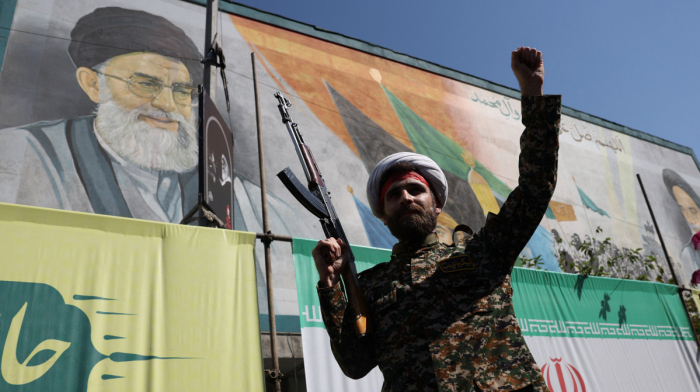
There has been a sudden flurry of posts on the official account for the news and statements of Ayatollah Mojtaba Khamenei, saying "the heroic nation of Iran, are the definite victors in this battlefield" and for their allies to "stand on the right side, and be distrusful of the false promises of the devils".
The account also makes a post that the attackers will see retalitation. Mojtaba Khamenei has not been seen in public since his appointment last month.
⦿ 18:41 GMT | UPDATE
Operational activities halted at several energy facilities in Saudi Arabia
Reuters
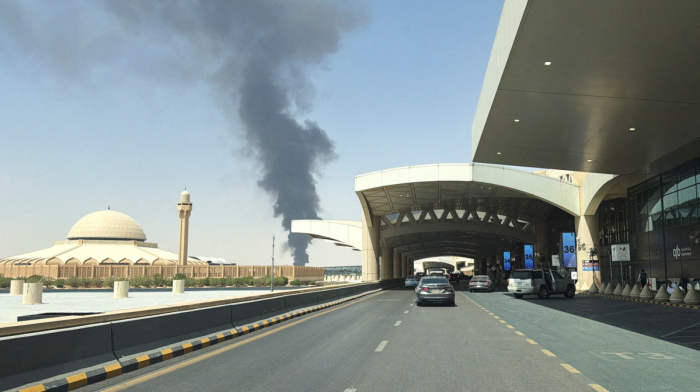
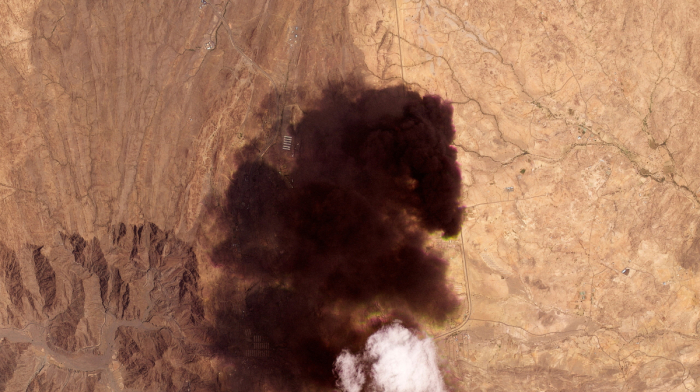
Operational activities have been halted at several energy facilities in Saudi Arabia due to recent attacks, Saudi state news agency SPA reported citing an official source at the ministry of energy.
The attacks resulted in the death of one Saudi national from the industrial security personnel of the Saudi energy company, SPA added.
⦿ 18:30 GMT | UPDATE
Erdoğan urges utmost efforts for peace in call with Iran's Pezeshkian
Reuters
Turkish President Tayyip Erdoğan told Iran's President Masoud Pezeshkian by phone on Thursday that the upcoming U.S.-Iran talks must be utilised to the utmost degree to achieve lasting peace, Erdoğan’s office said.
It quoted Erdoğan as saying it was of critical importance not to give opportunities to those seeking to undermine the process, and that Türkiye was ready to help in all ways in the new process.
⦿ 18:00 GMT | UPDATE
Iran’s supreme leader says management of the Strait of Hormuz will enter a new phase
Reuters
Iran will move the management of the strategic Strait of Hormuz into a new phase, its Supreme Leader Ayatollah Mojtaba Khamenei said on Thursday in a statement read out on state TV.
"Iran is not seeking war but will not forfeit its rights and considers all resistance fronts as a unified entity," Khamenei added.
⦿ 17:50 GMT | UPDATE
Hezbollah lawmaker says group rejects direct negotiations with Israel
Reuters
Hezbollah lawmaker Ali Fayyad said that the group rejected direct negotiations with Israel and that the Lebanese government should demand a ceasefire as a precondition before any further steps are taken.
Fayyad's statement came after Israeli Prime Minister Benjamin Netanyahu said he had instructed his cabinet to begin direct talks with Lebanon.
Fayyad said the Lebanese government's position should also prioritise the withdrawal of Israeli troops from Lebanese territory and the return of displaced people to their homes.
⦿ 17:31 GMT | UPDATE
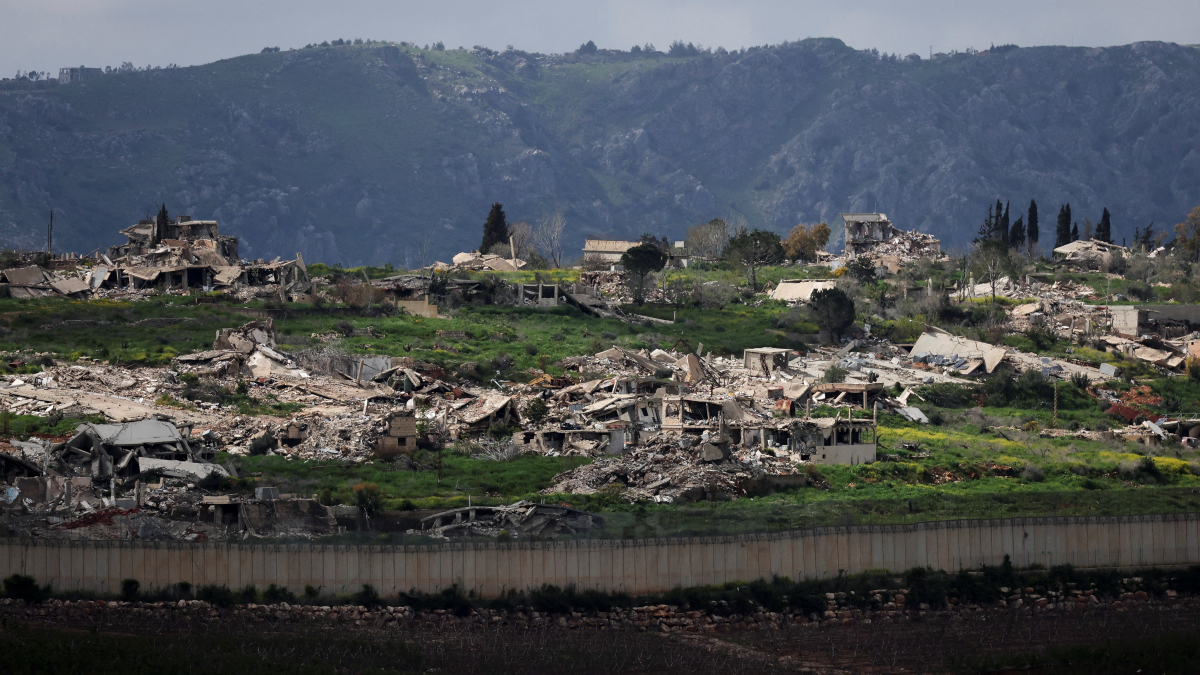
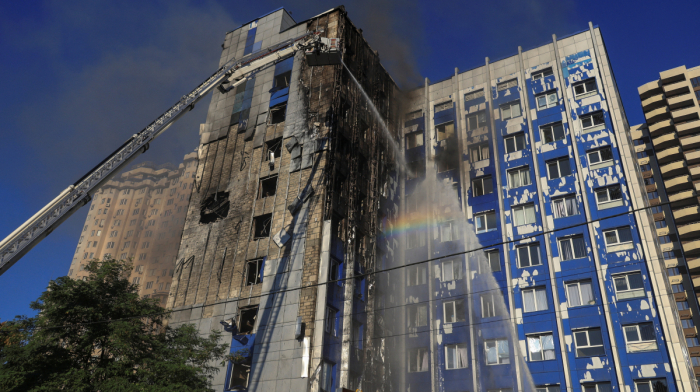
Lebanon reports 303 killed in Wednesday's Israeli attacks
Reuters
Lebanon's health ministry said that the toll from Israel's strikes the previous day across Lebanon had risen to 303 killed. It said the toll was not final and was expected to rise further as rescue teams were still removing bodies from under the rubble.
The ministry added that the total toll since 2 March was 1,888 dead and more than 6,000 wounded.
⦿ 17:22 GMT | UPDATE
EU Mediterranean commissioner condemns Israeli strikes on Lebanon
Reuters
The European Commissioner for the Mediterranean, Dubravka Šuica, condemned Israeli strikes on Lebanon at an informal meeting of the EU MED9 group in Croatia on Thursday, and called for a ceasefire.
Another attendee at the gathering of foreign ministers and state secretaries of nine Mediterranean countries, Slovenia's Foreign Minister Tanja Fajon, also called for all sides to stop the violence in the Middle East.
⦿ 16:02 GMT | UPDATE
Rutte says NATO could assist U.S. efforts in Strait of Hormuz
Reuters
Secretary General Mark Rutte said that NATO would be willing to play a role in a potential mission to secure the Strait of Hormuz if the alliance is able to do so.
Speaking in Washington, Rutte said “there is no reason not to be helpful” if NATO can contribute.
⦿ 15:44 GMT | UPDATE
Netanyahu says Israel to start Lebanon talks
Reuters
Israeli PM Benjamin Netanyahu said on Thursday that he has instructed Israel’s cabinet to begin direct peace talks with Lebanon as soon as possible, following repeated requests from Beirut.
In a statement, Netanyahu said the negotiations would focus on disarming Hezbollah and establishing peaceful relations between the two countries.
⦿ 15:30 GMT | UPDATE
NATO chief Rutte says allies now meeting Trump demands on Iran
Reuters
Mark Rutte said on Thursday that NATO members are now delivering on requests from Donald Trump to support Washington amid its war with Iran, despite some allies initially being “a bit slow” to respond.
Speaking in Washington after meeting Trump, Rutte said the lack of early coordination was partly due to the need to preserve operational surprise for initial U.S. strikes.
He added that European allies are now providing “a massive amount of support,” with nearly all responding to U.S. requests.
⦿ 14:51 GMT | UPDATE
Austria’s Stocker backs Pakistan’s role in Iran ceasefire
Reuters
Austrian Chancellor Christian Stocker on Thursday praised Shehbaz Sharif for his role in facilitating the U.S.-Iran ceasefire, expressing Vienna’s full support for a diplomatic resolution to the crisis.
In a post on X, Stocker also stressed that freedom of navigation through the Strait of Hormuz must be upheld in line with international law, calling on all sides to fully implement the ceasefire and halt military operations.
⦿ 14:49 GMT | UPDATE
Greenland’s Nielsen pushes back after Trump’s ‘piece of ice’ comment
Reuters
Prime Minister of Greenland Jens-Frederik Nielsen pushed back on Thursday against remarks by U.S. President Donald Trump about Greenland, saying he represents a proud nation committed to upholding global order.
The response came after Trump, amid escalating tensions with NATO over the Iran war, criticised the alliance and referred to Greenland as a “big, poorly run piece of ice.”
⦿ 14:35 GMT | UPDATE
Moscow urges ceasefire after deadly Israeli attacks on Lebanon
Reuters
Ministry of Foreign Affairs of Russia on Thursday strongly condemned Israel’s latest strikes on Lebanon, warning they risk derailing ongoing negotiations and triggering wider regional escalation.
Moscow called for an immediate ceasefire, as Israel carried out its heaviest bombardment of Lebanon since fighting with Hezbollah reignited last month, killing more than 250 people on Wednesday.
⦿ 14:15 GMT | UPDATE
U.S. condemns Basrah attack on Kuwaiti consulate
Reuters
The United States condemns the 7 April attack on the Kuwaiti consulate in Basrah, Iraq, the State Department said in a post on X.
Protesters stormed and vandalised the diplomatic mission following a nearby rocket strike that killed at least three people.
⦿ 13:56 GMT | UPDATE
Lebanon’s hospitals may soon run out of medical supplies
Some of Lebanon's hospitals could run out of life-saving trauma medical kits within days as supplies near depletion following mass casualties from large-scale Israeli strikes over the past day, the World Health Organization said.
"Some of the trauma management supplies were in short (supply) and we may run out in a few days," Dr Abdinasir Abubaka, the WHO's representative in Lebanon told Reuters.
The life-saving trauma kits include bandages, antibiotics and anaesthetics to treat patients who sustained war-related injuries, he said.
⦿ 13:30 GMT | UPDATE
Pakistan says Lebanon’s prime minister requests backing for a swift halt to attacks
Pakistan said Lebanon’s Prime Minister Nawaf Salam called Prime Minister Shehbaz Sharif to seek Islamabad’s support. He requested help in bringing an immediate end to the attacks targeting Lebanon and its people.
"... Pakistan was engaged in sincere efforts for regional peace and it was in this spirit that the peace talks between Iran and the U.S. were being convened," Sharif told Salam, according to a statement from Pakistan's Prime Minister Office.
⦿ 13:15 GMT | UPDATE
Gulf states say there were no new aerial attacks from Iran today
The UAE’s Defence Ministry stated that the country remained “free of any air threats” on 9 April.
Meanwhile, the militaries of Saudi Arabia, Qatar, and Oman did not report any missile or drone attacks, unlike in the preceding days.
⦿ 13:02 GMT | UPDATE
Iran’s parliament speaker says Lebanon is part of the ceasefire agreement
Mohammad Bagher Ghalibaf stated that Lebanon played a central role in the two-week ceasefire with the U.S., cautioning that any violations could trigger serious repercussions after the recent Israeli strikes on the country.
“Lebanon and the entire Resistance Axis, as Iran’s allies, form an inseparable part of the ceasefire,” Mohammad Bagher Ghalibaf said in a post on X.
⦿ 12:44 GMT | UPDATE
Iran to cap Strait of Hormuz traffic at 15 vessels daily
Reuters
Iran will limit daily traffic through the Strait of Hormuz to no more than 15 vessels under the recent ceasefire agreement with the United States, according to an unnamed senior Iranian official quoted by TASS on Thursday.
The strait, a narrow 34 km channel between Iran and Oman, is a critical passage from the Gulf to the Indian Ocean, handling roughly 20% of global oil exports and other essential goods such as fertilisers.
It has remained largely closed since the conflict began on February 28.
⦿ 12:28 GMT | UPDATE
NATO says Trump seeks quick commitments from allies to secure Strait of Hormuz
NATO Secretary General Mark Rutte has informed several European capitals that Donald Trump is seeking concrete commitments within the next few days from allies to assist in securing the Strait of Hormuz, according to two European diplomats speaking to Reuters.
The briefings underscore Washington’s urgency in rallying international support to maintain safe navigation through the critical chokepoint amid ongoing regional tensions.
⦿ 11:53 GMT | UPDATE
President Pezeshkian vows Iran won’t abandon Lebanon
Reuters
Iran’s president, Masoud Pezeshkian, condemned on Thursday what he called Israeli violations of the ceasefire in Lebanon, saying that the recent Israeli strikes there undermine the very basis of the truce and would render further negotiations “meaningless.”
Pezeshkian reiterated that Tehran would not abandon the Lebanese people, framing the inclusion of a Lebanon ceasefire as a key condition of Iran’s ceasefire proposal with the United States.
His comments followed Israel’s heaviest bombardment of Lebanon in weeks, which killed more than 250 people.
⦿ 11:42 GMT | UPDATE
European Commission urges early gas storage due to energy crisis
Reuters
The European Commission’s gas coordination group met on Thursday to assess the fallout from soaring gas prices amid the Middle East crisis. According to an EU official, there is currently no risk to supply, but long-lasting consequences are expected.
The official stressed the importance of preparing for winter, urging member states to refill storage infrastructure to 80% by November.
Early injections are recommended to avoid a last-minute scramble at the end of the summer, leveraging the EU’s available tools and time to anticipate challenges.
⦿ 11:06 GMT | UPDATE
Strait of Hormuz traffic remains stalled, only six vessels sail since ceasefire
Reuters
Maritime traffic through the Strait of Hormuz remains severely restricted, with only one oil products tanker and five dry bulk carriers passing through in the past 24 hours, according to ship-tracking data.
The limited movement comes despite the recent two-week U.S.-Iran ceasefire.
Analysts from Kpler, Lloyd’s List Intelligence, and Signal Ocean note that traffic has largely stalled since the U.S.-Israeli war on Iran began on 28 February, averaging just a few vessels daily compared with roughly 140 daily sailings before the conflict.
⦿ 11:05 GMT | UPDATE
South Korea to send special envoy to Iran
Reuters
South Korea is taking diplomatic steps amid the escalating Middle East crisis. Minister of Foreign Affairs Cho Hyun will dispatch a special envoy to Iran to discuss both regional tensions and bilateral issues, the South Korean foreign ministry said Thursday.
In a phone call with Iranian Foreign Minister Abbas Araghchi, Cho welcomed the U.S.-Iran ceasefire and stressed the importance of free navigation through the Strait of Hormuz.
Araghchi welcomed the envoy decision and agreed to maintain communication on related matters, signalling a tentative avenue for diplomatic coordination.
⦿ 10:36 GMT | UPDATE
Iranian media suggest sea mines in Strait of Hormuz
Touraj Shiralilou, AnewZ
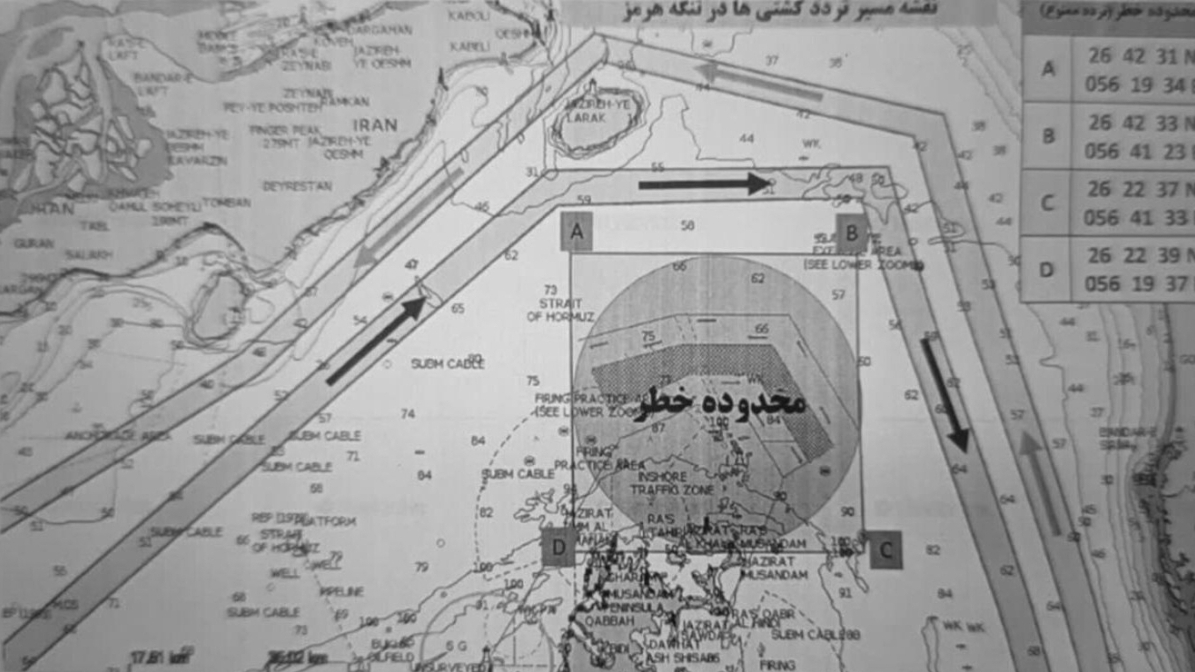
Semi-official Iranian outlets signalled potential escalation in the Strait of Hormuz, publishing a chart suggesting the Islamic Revolutionary Guard Corps deployed sea mines in the waterway during the war.
The graphic, released by ISNA and Tasnim News Agency, marked a large “danger zone” along key shipping routes.
The strait, one of the world’s most critical energy chokepoints, previously handled around 20% of globally traded oil and gas, amplifying concerns over further disruption.
⦿ 09:55 GMT | UPDATE
ADNOC CEO says Hormuz must reopen
Reuters
The Head of Abu Dhabi’s state oil giant ADNOC, Sultan Al Jaber, said on Thursday (9 April) that the Strait of Hormuz remains effectively closed and must be reopened unconditionally.
Writing on LinkedIn, Al Jaber stressed that the strait is a natural international waterway governed by law guaranteeing transit rights.
⦿ 09:52 GMT | UPDATE
EASA extends advisory to avoid Middle East airspace
Reuters
Europe’s aviation safety regulator European Union Aviation Safety Agency (EASA) on Thursday extended its advisory urging airlines to avoid large parts of Middle Eastern and Gulf airspace, as security risks persist amid the ongoing conflict.
The updated bulletin on conflict zones pushes the guidance out to 24 April, extending the previous deadline of 10 April.
⦿ 09:50 GMT | UPDATE
More than 3,000 killed in Iran war, many bodies still unidentified, officials say
Reuters
The human toll inside Iran continues to mount, with more than 3,000 people killed nationwide since the war began on 28 February, according to the country’s forensic chief.
Speaking to state media, officials said the scale of casualties has overwhelmed identification efforts, with around 40% of the dead requiring forensic analysis before they can be identified and returned to their families.
⦿ 09:19 GMT | UPDATE
EU’s Kallas says Iran ceasefire must cover Lebanon
Reuters
European Union Foreign Policy chief Kaja Kallas called on Thursday for the U.S.-Iran ceasefire to be expanded to Lebanon, warning that escalating Israeli strikes risk undermining the fragile ceasefire.
In a post on X, Kallas said the scale of Israeli attacks made it difficult to justify them as self-defence and was placing the ceasefire under “severe strain.”
She also reiterated that the Iran-backed group Hezbollah must disarm as part of broader efforts to stabilise the situation.
⦿ 08:35 GMT | UPDATE
Israeli military says Hezbollah leader’s nephew killed in overnight Beirut strike
Reuters
The Israeli military said on Thursday it had killed Naim Qassem, a nephew of the leader of the Iran-backed Lebanese group Hezbollah, in an overnight strike on Beirut.
"The IDF struck in the Beirut area and eliminated Ali Yusuf Harshi, the personal secretary and nephew of Hezbollah Secretary-General Naim Qassem," the military said.
⦿ 07:23 GMT | UPDATE
Spain to reopen Tehran embassy as part of peace efforts in Iran conflict
Reuters
Spain is reopening its embassy in Tehran as part of efforts to support peace in the U.S.‑Israeli war involving Iran, Foreign Minister José Manuel Albares said on Thursday.
Albares told reporters he had instructed Spain's ambassador to return to Tehran and resume his duties, saying the move would allow Spain to contribute to peace efforts “from every possible quarter, including from the Iranian capital itself.”
⦿ 07:02 GMT | UPDATE
Israel orders resumption of Karish gas platform after ceasefire
Reuters
Israel’s Energy Ministry said on Thursday it had directed Energean to begin resuming operations at the Karish natural gas platform in the Eastern Mediterranean following the ceasefire with Iran.
The Platform was shut down on 28 February as a security precaution at the start of the conflict with Iran.
⦿ 06:48 GMT | UPDATE
French Foreign Minister condemns Israel strikes, urges Lebanon included in the ceasefire
Reuters
French Foreign Minister Stéphane Séjourné said France “firmly condemns Israel’s massive strikes on Lebanon” and insisted that Lebanon must be included in the ceasefire agreement.
He said he did not believe it was possible to speak of a winner in the current war, noting that a ceasefire is now in place.
Séjourné said Iran must abandon any plans to acquire nuclear weapons, renounce the use of drones and missiles, and stop supporting groups such as Hezbollah, Hamas and the Houthis. He added that Iran must also allow traffic to resume freely through the Strait of Hormuz.
⦿ 06:31 GMT | UPDATE
Seven killed in Israeli airstrikes on southern Lebanon towns overnight
Anadolu
At least seven people have been killed in Israeli airstrikes on towns in southern Lebanon since overnight, Anadolu reports.
Lebanon's National News Agency (NNA) said Israeli military operations, which began on 2 March, have continued throughout the night, with aircraft striking several southern towns, including Abbasiya, Habbush, Jabshit, Deir Zahran, Duweir, Kafra, Jumayjima, Safad Battih, Majdal Silm, and Deir Antar.
It said seven people were killed in an attack on Abbasiya, with many others injured.
⦿ 05:54 GMT | UPDATE
UK Foreign Secretary Yvette Cooper calls for Lebanon to be included in the ceasefire
Reuters
UK Foreign Minister Yvette Cooper said freedom of navigation must mean that maritime routes remain genuinely open and accessible, Reuters reports.
She stressed that Lebanon should be included in any ceasefire agreement and said countries should back the International Maritime Organization’s proposals to assist ships stranded in the Strait of Hormuz.
She added that the fundamental freedoms of the seas must not be unilaterally withdrawn, restricted or treated as something that can be sold off.
⦿ 05:38 GMT | UPDATE
Pakistan condemns Israeli airstrikes on Lebanon, urges urgent international action
Anadolu
Pakistan on Thursday strongly condemned Israeli airstrikes in Lebanon, describing them as a blatant violation of international law and fundamental humanitarian principles.
In a statement, the foreign ministry said it denounced what it called ongoing Israeli “aggression” against Lebanon, citing civilian casualties and widespread destruction of infrastructure.
Islamabad said the attacks undermine international efforts to promote peace and stability in the region, urged the global community to take urgent action to halt the violence, and reaffirmed Pakistan’s “unwavering” solidarity with the Lebanese government and people, stressing its support for Lebanon’s sovereignty, territorial integrity, peace and stability.
⦿ 05:29 GMT | UPDATE
Iran delegation due in Islamabad for talks with the U.S. and Israel
Reuters
An Iranian delegation is set to arrive in Pakistan’s capital, Islamabad, on Thursday night for talks aimed at resolving the conflict with the United States and Israel, Iran’s ambassador to Pakistan said.
In a post on X, Ambassador Reza Amiri Moghadam said that despite scepticism among Iranian public opinion due to what he described as repeated ceasefire violations by Israel, the delegation was heading to Islamabad for serious negotiations based on a 10‑point proposal put forward by Iran.
⦿ 04:15 GMT | UPDATE
UN's Guterres condemns Israel's strikes on Lebanon, warns of threat to ceasefire
Anadolu
United Nations Secretary-General Antonio Guterres has strongly condemned Israel’s strikes across Lebanon, warning that the growing civilian death toll risks destabilising the region and undermining ceasefire efforts.
In a statement issued on Wednesday, Guterres said the 8 April attacks killed and injured hundreds of civilians, including children, and caused widespread damage to civilian infrastructure.
“With the announcement of the ceasefire between Iran and the U.S., the ongoing military activity in Lebanon poses a grave risk to the ceasefire and the efforts toward a lasting and comprehensive peace in the region,” he said, reiterating his call for all parties to immediately cease hostilities, respect international humanitarian law and pursue a diplomatic path forward.
⦿ 04:04 GMT | UPDATE
Israel eases nationwide restrictions after U.S.-Iran ceasefire, limits remain in north
Anadolu
Israel said on Wednesday it had eased nationwide restrictions following the ceasefire between the United States and Iran. However, tighter measures will remain in force in the northern areas of the country.
In a statement, the home front command said the decision was taken after a situational assessment and would come into effect at 6 a.m. local time (0300GMT). Schools and workplaces will reopen across most of Israel, but restrictions will stay in place near the Lebanese border, the occupied Golan Heights and parts of Haifa’s coastline.
In those areas, education will be limited to bomb shelters, workplaces must be close to shelters, and gatherings will be capped at 200 people indoors and 50 outdoors.
Tighter restrictions had been introduced during the escalation with Iran, with some measures already eased last month over economic concerns.
⦿ 03:53 GMT | UPDATE
Trump says U.S. forces to remain in and around Iran as he warns of renewed action if deal fails
Truth Social/@realDonaldTrump
The United States has said its military forces will remain positioned in and around Iran, maintaining full readiness while the ceasefire agreement is being implemented. In a social media post, the U.S. president said American ships, aircraft, and personnel would stay in place until the terms of what he described as the “real agreement” are fully met.
“All U.S. ships, aircraft, and military personnel… will remain in place in, and around, Iran, until such time as the real agreement reached is fully complied with,” he wrote, warning that if it were not, then the “shootin’ starts,” adding that it would be “bigger, and better, and stronger than anyone has ever seen before.”
He added that long‑standing terms included “no nuclear weapons” and that “the Strait of Hormuz will be open & safe,” concluding by saying the military was regrouping and that “America is back.”
⦿ 03:47 GMT | UPDATE
Iran urges ships to take alternative routes through the Strait of Hormuz over mine risks
Reuters
The Iranian Revolutionary Guards have urged ships planning to transit the Strait of Hormuz to use alternative routes to “comply with the principles of maritime safety” and avoid potential collisions with sea mines, according to a statement carried by Iranian state media.
The statement outlined revised navigation patterns and included a map of suggested routes. Vessels entering from the Sea of Oman were advised to sail north of Larak Island before continuing into the Persian Gulf, while ships heading out of the gulf were instructed to pass south of Larak Island before proceeding towards the Sea of Oman.
⦿ 03:31 GMT | UPDATE
Israeli strikes on Lebanon raise doubts over fragile ceasefire and planned peace talks
Reuters
Israel carried out its heaviest strikes yet on Lebanon on Wednesday, killing hundreds and prompting a sharp warning from Iran, which said it would be “unreasonable” to proceed with talks on a permanent deal with the United States under the current circumstances.
Iran’s lead negotiator and parliament speaker, Mohammed Baqer Qalibaf, said Israel had violated the ceasefire by escalating its campaign against Hezbollah, while accusing Washington of breaching the agreement by demanding that Iran abandon its nuclear ambitions.
⦿ 03:00 GMT | UPDATE
UAE Foreign Minister consults regional counterparts on U.S.-Iran ceasefire and Hormuz security
Reuters
The United Arab Emirate’s Foreign Minister, Abdullah bin Zayed al Nahyan, held talks with his counterparts in Saudi Arabia, Jordan, and Bolivia to discuss regional developments following the two‑week ceasefire between the U.S., Israel and Iran.
According to the UAE Foreign Ministry, the calls addressed the fallout from the agreement as well as Iran’s missile attacks against the UAE and other regional countries. Nahyan stressed the need for Tehran's full and immediate compliance with the ceasefire, the unconditional reopening of the Strait of Hormuz, and an end to threats against maritime transport, global trade and energy security.
⦿ 02:56 GMT | BREAKING
Hezbollah fires rockets at northern Israel, citing ceasefire violations
Reuters
Hezbollah in Lebanon said early on Thursday that it fired rockets at northern Israel, marking its first attack since the United States reached a two‑week ceasefire agreement with Iran.
In a statement, Hezbollah said the rocket fire was in response to what it described as Israeli violations of the ceasefire, after Israel carried out its largest attack on Lebanon so far in the conflict on Wednesday.











What is your opinion on this topic?
Leave the first comment