Iran’s Islamic Revolutionary Guard Corps (IRGC) has deployed one of its largest ballistic missiles at a newly unveiled underground base on Wednesday (3 February), just two days ahead of mediated nuclear talks with the United States in Muscat, Oman.
The missile, identified as the Khorramshahr-4 (Kheybar), is a medium- to long-range system capable of striking targets up to 2,000 kilometres away and carrying a warhead of 1500 kg of high explosives, according to Fars News Agency, affiliated with the IRGC.
The deployment was part of an exhibition at the underground facility operated by the IRGC’s Aerospace Force, which was inaugurated by senior military officials. The Khorramshahr-4 had previously been fired at Israel during the final days of the 12-day war in June 2025, in retaliation for U.S. strikes on Iranian nuclear-related sites.
Iranian officials said the deployment demonstrates Tehran’s readiness to adopt offensive military doctrines, including asymmetric warfare, amid heightened regional tensions and a recent U.S. military buildup in the Middle East.
“Following the [Israel-U.S.] 12-day war [in June 2025], we have shifted our military doctrine from defensive to offensive to carry out blitz and large-scale operations,” said Chief of Staff of the Iranian Armed Forces, Brigadier General Abdolrahim Mousavi.
The base, which is situated at an undisclosed location, was unveiled by the Chief of Staff and the Commander of the IRGC’s Aerospace Division, Brigadier General Seyed Majid Mousavi.
“We are also ready to fight the enemies … adopting asymmetric warfare and crushing military strategies,” the official Defapress website quoted the Chief of Staff as saying.
Tehran’s ballistic missile capability proved a game-changer in targeting Israel in June and has been one of the points of contention with Washington, which has demanded a reduction in their range.
Oman talks
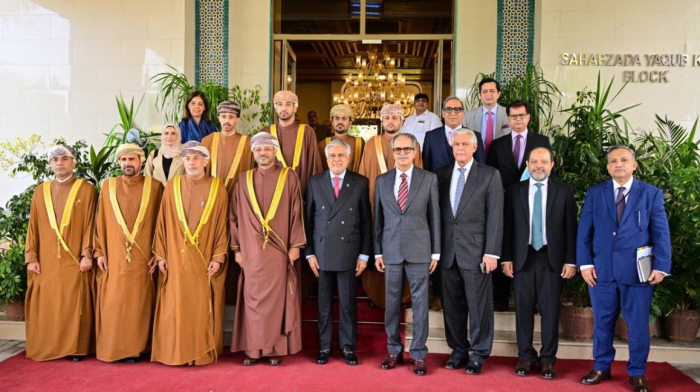
The deployment of such a missile comes as talks begin with the United States in Muscat on Friday (6 February), mediated by the Sultanate of Oman.
In a post on X, Iranian Foreign Minister Abbas Araghchi thanked Omani authorities for hosting the negotiations between Iran and the U.S., which had been stalled since the 12-day war last year.
Tehran has reportedly signalled that missile capabilities will remain off the table, focusing the discussions solely on its nuclear programme.









What is your opinion on this topic?
Leave the first comment