The Turkish Defence Ministry has called for the Syrian Democratic Forces (SDF)’s “unconditional compliance” with the 18 January ceasefire agreement between the Kurdish-led militant group and Damascus.
The deal calls for the SDF to disarm and integrate its fighters into Syria’s state military apparatus. It also calls for SDF-held areas in northern Syria to be brought under the control of Syria’s central government.
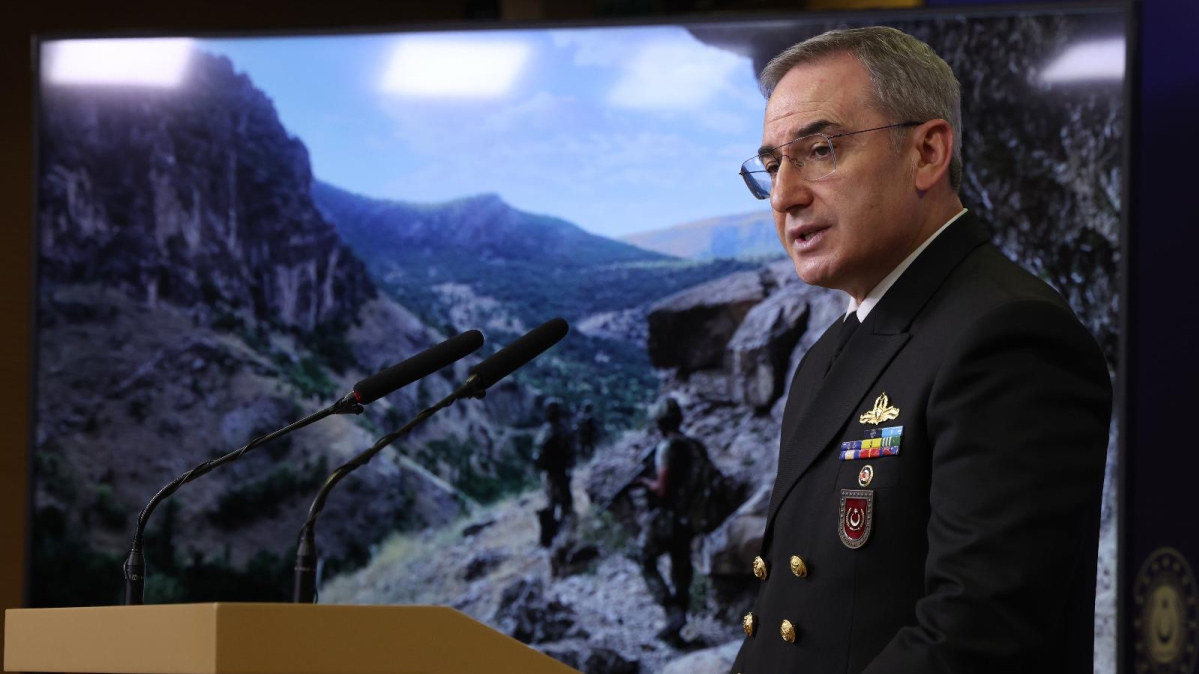
Speaking at a Thursday press briefing (23 January), Turkish Defence Ministry spokesman Zeki Aktürk also noted that several kilometres of underground tunnels - allegedly used by the SDF - had been destroyed in northern Syria over the past week.
He went on to assert that approximately 93% of the SDF’s total tunnel network in the region had been “successfully destroyed.”
Although it is backed by the United States, Ankara views the SDF as a terrorist group due to its close ties to the Kurdistan Workers’ Party (PKK), which for decades waged a violent insurgency against the Turkish state.
On Thursday, U.S. Ambassador to Türkiye Tom Barrack met with SDF leaders Mazloum Abdi and Ilham Ahmed.
At the meeting, Barrack conveyed Washington’s commitment to “advancing the integration process” in line with the 18 January agreement between the SDF and Damascus.
“All parties agreed that the essential first step is the full upholding of the current ceasefire,” Barrack, who also serves as Washington’s special envoy for Syria, said in a social-media post.
He also called for the implementation of “confidence-building measures on all sides to foster trust and lasting stability.”
In a related development, The Wall Street Journal, citing U.S. officials, reported on Thursday that Washington was mulling a “complete withdrawal” of its troops from Syria after a decade-long military deployment in the country’s northeast.
If carried out, a U.S. withdrawal from northeastern Syria would further isolate the SDF, depriving the Kurdish-led militant group of its most powerful regional ally.
In a Tuesday social-media post, Barrack said the U.S. military presence in northeastern Syria - and its alliance with the SDF - had been “justified primarily as a counter-ISIS partnership.”
“Today, the situation has fundamentally changed,” he added.
“Syria now has an acknowledged central government that has joined the Global Coalition to Defeat ISIS … signalling a westward pivot and cooperation with the U.S. on counterterrorism,” Barrack said.











What is your opinion on this topic?
Leave the first comment