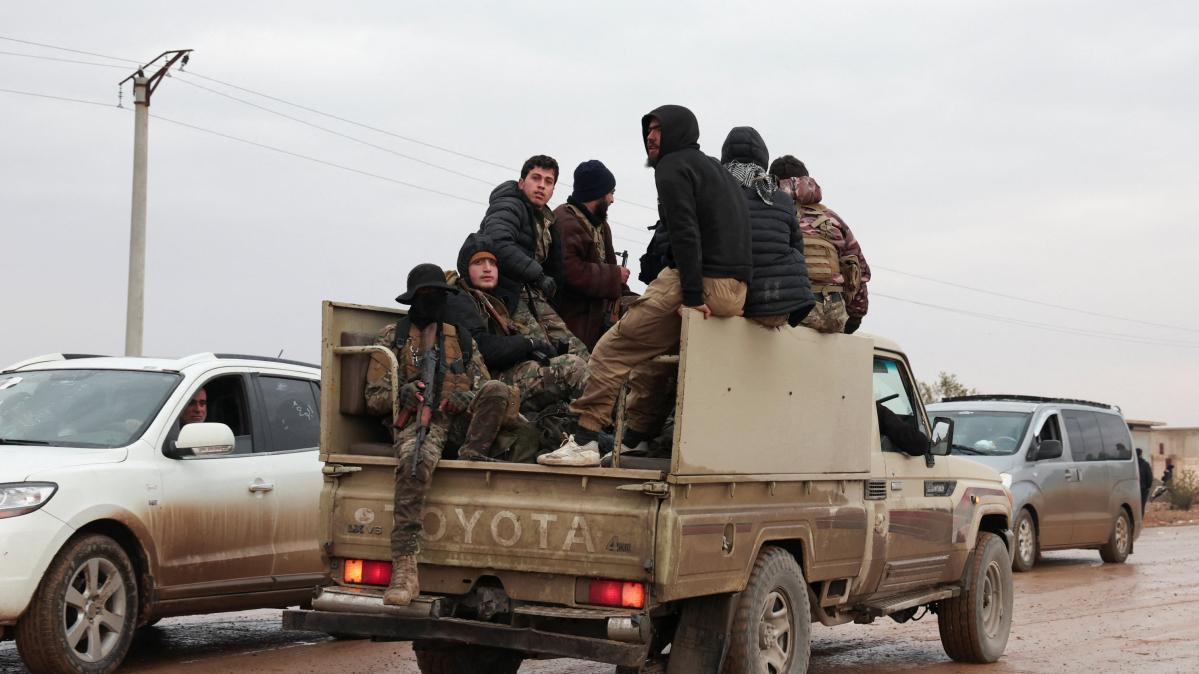
Syrian troops swept through dozens of towns and villages in the country's north on Saturday after Kurdish fighters withdrew under an agreement that aimed to avoid a bloody showdown between the rival forces.
For days, Syrian troops had amassed around a cluster of villages that lie just west of the winding Euphrates River and had called on the Kurdish-led Syrian Democratic Forces stationed there to redeploy their forces on the opposite bank of the river.
Overnight, SDF head Mazloum Abdi said his forces would withdraw early on Saturday morning to territory east of the Euphrates River as a gesture of goodwill, leaving the river as a frontline between Syrian government troops to the west and Kurdish forces to the east.
Arrival of troops welcomed
By midday on Saturday, Syrian troops were in control of the main town of Deir Hafer and surrounding villages whose residents are predominantly Arab, according to statements from the military.
Some residents had left in recent days through a humanitarian corridor set up by Syria's army but those who stayed celebrated the army's arrival.
"It happened with the least amount of losses. There's been enough blood in this country, Syria. We have sacrificed and lost enough - people are tired of it," Hussein al-Khalaf, a resident, told Reuters.
SDF forces had withdrawn east, some on foot, towards the flashpoint town of Tabqa- downstream but still on the western side of the river, according to a Reuters reporter in the area.
Syria's army announced it was aiming to capture Tabqa next. Some SDF forces regrouped in Tabqa and headed back west to defend some of their positions, the Reuters reporter said.
Clashes broke out in some towns as the SDF and Syria's army accused each other of violating the withdrawal agreement.
In a bid to calm tensions, U.S. envoy Tom Barrack travelled to Erbil in northern Iraq on Saturday to meet with both Abdi and Iraqi Kurdish leader Masoud Barzani, according to two Kurdish sources. There was no immediate comment from Barrack's spokesperson.
The two sides engaged in months of talks last year to integrate Kurdish-run military and civilian bodies into Syrian state institutions by the end of 2025, insisting repeatedly that they wanted to resolve disputes diplomatically.
But after the deadline passed with little progress, clashes broke out last week in the northern city of Aleppo and ended with a withdrawal of Kurdish fighters.
Syrian troops then amassed around towns in the north and east earlier this week to pressure Kurdish authorities into making concessions in the deadlocked talks with Damascus.













What is your opinion on this topic?
Leave the first comment