Iran’s leadership is facing its most acute challenge in years as violent unrest driven by economic hardship coincides with renewed military warnings from the United States and Israel.
The Islamic Republic is grappling with what officials privately describe as a ‘survival mode’ moment: a population pushed towards open revolt by financial collapse, and growing international pressure that raises the prospect of fresh military confrontation.
For decades, Iran’s rulers have relied on force to suppress dissent. However, analysts say the current crisis presents a dual threat that coercion alone cannot resolve-deepening economic misery at home and escalating geopolitical risks abroad.
Protests and pressure
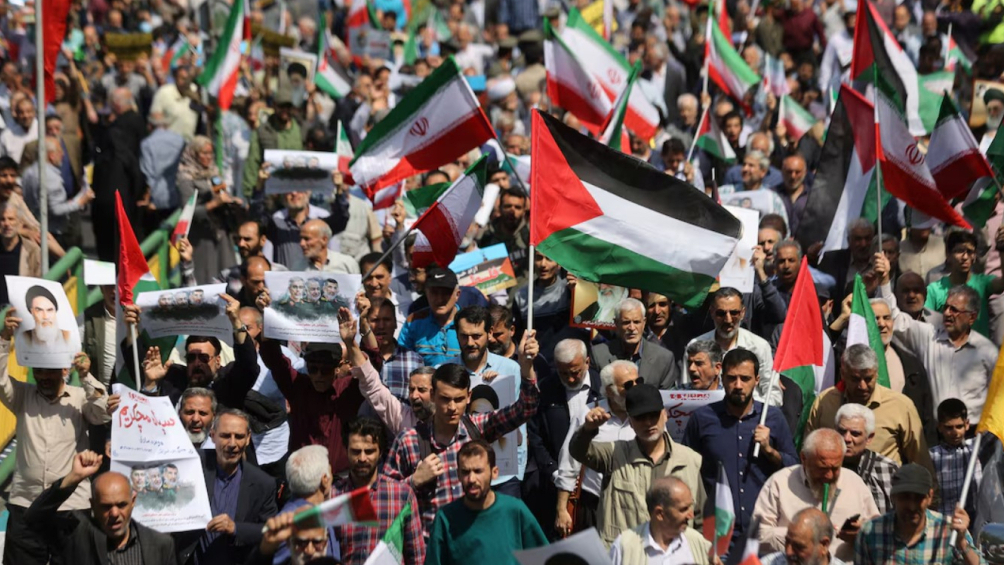
The latest wave of protests has convulsed the country for more than a week.
While smaller than the 2022 "Woman, Life, Freedom" uprising or the nationwide fuel price protests of 2019, the violence and its timing have unsettled the clerical establishment.
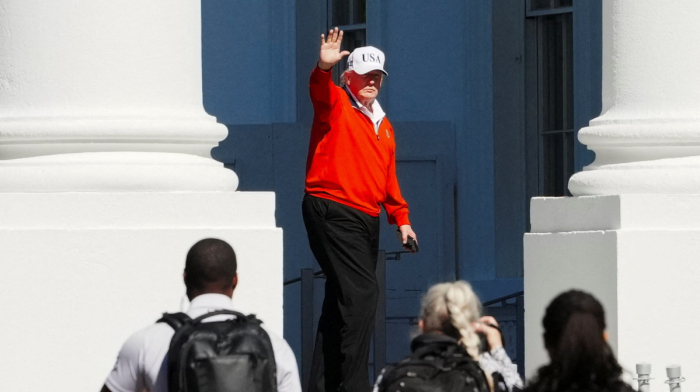
Tensions intensified on Friday when U.S. President Donald Trump warned of direct intervention if Iranian authorities killed ‘peaceful protesters’.
"We are locked and loaded and ready to go," he wrote in a social media post.
Israel has also voiced public support for demonstrators. Gila Gamliel, Israel’s minister of innovation, science and technology, said in a video message: "Israel is with you, and we support you in every way possible."
Shock from Venezuela
Iranian officials were further rattled by events in Venezuela, where the U.S. military launched an intervention that resulted in the capture of President Nicolás Maduro, a close ally of Tehran.
At a subsequent press conference, President Trump said Washington would oversee Venezuela’s political transition, while U.S. Secretary of State Marco Rubio warned other adversarial states to ‘take note’.
Ali Gholhaki, a hard-line political commentator in Iran, said the collapse of allied governments offered a stark warning.
"The lesson for Iran is that we must be extremely careful that the same scenario does not happen here," he said. "When security forces and the military struggle to survive economically, the defence lines collapse."
Emergency talks in Tehran
Following the U.S. warnings, Iran’s Supreme National Security Council held an emergency late-night meeting, according to officials familiar with the discussions.
They said the council debated how to contain unrest using limited force to avoid provoking a U.S. response, while also preparing for possible air strikes.
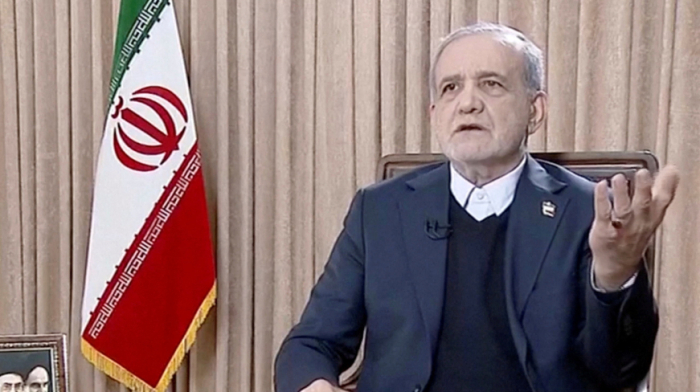
President Masoud Pezeshkian has acknowledged the scale of the challenge. In his first address since the unrest began, he said: "Any policy in society that is unjust is doomed to fail. We must listen to the people."
Efforts to stabilise the economy, including replacing the central bank governor, have failed to halt the collapse of the national currency. Analysts say only the revival of the nuclear deal and the lifting of sanctions could ease the crisis, a move strongly opposed by hardliners within the establishment.
Fears of renewed conflict
Iran’s economy has been under severe strain since the U.S. withdrawal from the nuclear agreement in 2018. Conditions worsened further after the reimposition of UN ‘snapback’ sanctions in September.
The risk of renewed conflict with Israel remains high.
Officials fear domestic instability could present an opportunity for further strikes, following Israeli attacks in June 2025 that triggered a brief regional conflict and damaged Iran’s nuclear infrastructure.
Clashes and division
Supreme Leader Ali Khamenei has taken a defiant tone, declaring that "rioters must be put in their place" while blaming foreign powers for the currency crisis. He acknowledged, however, that bazaar merchants had legitimate grievances over rising prices.
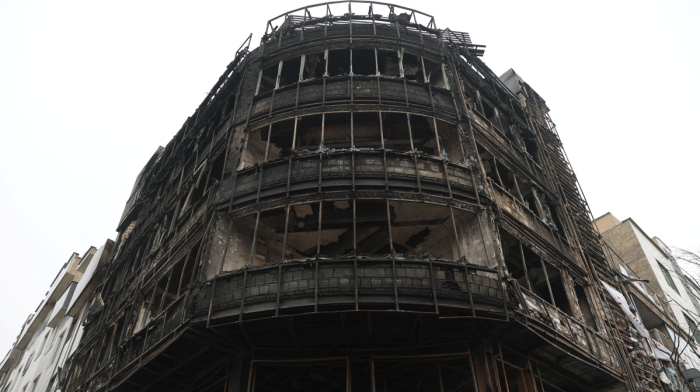
Protests that began with shop closures have escalated into clashes in several provinces. State-affiliated Fars News Agency reported what it described as "organised cells" using heavy weapons in western regions, including Ilam.
Videos circulating online show masked demonstrators firing weapons into the air and chanting slogans against the leadership.
In Tehran, participation remains uneven. While the central bazaar and university campuses have seen unrest, wealthier northern districts have continued largely unaffected.
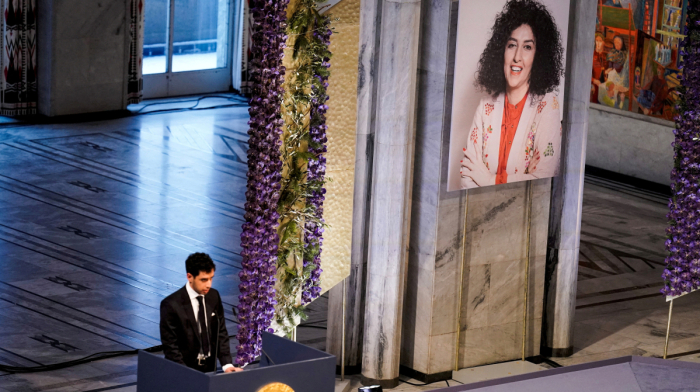
A joint statement from 17 pro-democracy activists, including Nobel Peace Prize laureate Narges Mohammadi, urged security forces to stand aside.
‘"The only path to saving Iran is a transition away from the Islamic Republic," it said. "This demand is neither temporary nor suppressible."










What is your opinion on this topic?
Leave the first comment