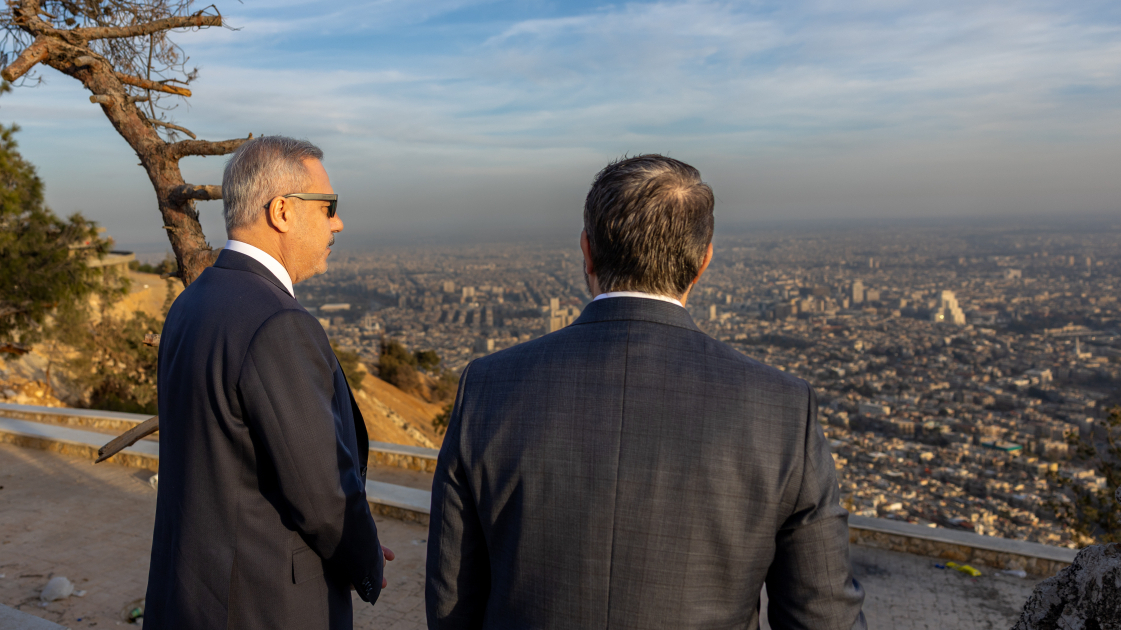
Senior Turkish officials have met with their Syrian counterparts in Damascus on Monday ahead of a deadline for Kurdish-led forces in the Country's northeast to be integrated into the Syrian Armed forces.
The high-level visit underlines Ankara’s firm focus on defending Syria’s territorial integrity and political unity, according to a regional expert.
Speaking to AnewZ from Ankara, Bekir Ilhan of the Türkiye Research Foundation said the inclusion of the Minister of Foreign Affairs, Minister of Defence and the head of intelligence demonstrated Türkiye’s determined diplomatic push on Syria.
"Türkiye, once again, clearly signalled its determination regarding the territorial integrity and political unity of Syria, I would say,” Ilhan said.
He also referenced the March 10, 2025 agreement between the Syrian interim government and the Kurdish-led Syrian Democratic Forces (SDF), which envisaged integrating the SDF into Syrian state structures. The pact was aimed at reinforcing national unity and ending years of fragmentation.
“So far… SDF has not taken any steps further to honour this agreement,” Ilhan continued, “and right now, Türkiye is just clearly signalling that it will do everything to ensure the territorial integrity and political unity of Syria.”
Mr Ilhan concluded that the high-level visit and accompanying talks demonstrate Türkiye’s sustained diplomatic engagement and strategic commitment to a unified Syria, combining foreign policy pressure with security cooperation and regional dialogue.
Turkey has conducted cross-border military operations against the SDF in the past.
High-level meeting
The Turkish delegation included Foreign Minister Hakan Fidan, Defense Minister Yaşar Güler, and the head of Türkiye’s National Intelligence Organization, İbrahim Kalın.
They met with President of Syria Ahmed Al-Sharaa at the People’s Palace in Damascus.
Discussions during the meeting ranged from bilateral relations, regional security developments to ongoing initiatives for northeastern Syria.
They also, reportedly, touched on expanding intelligence and military coordination, as well as addressing the return of Syrian refugees.
Foreign Affairs and Expatriates Minister Asaad al-Shaibani, Defence Minister Murhaf Abu Qasra, and Syria’s General Intelligence chief, Hussein al-Salama were present during the dialogue.
Al-Shaibani also echoed concerns about delays in implementing the March agreement, stating that the SDF had shown “no willingness” to integrate into the central administration, despite the pact’s explicit call for unifying Syria’s territory through dialogue and peaceful means.
“Unfortunately, we have not seen any willingness from the SDF,” he said.
Fidan emphasised that Ankara expects swift implementation to secure long-term stability.
"The SDF has no real intention of making significant progress in the negotiations on integration with the Damascus administration,” he noted and warned that coordination with Israel complicates the process.
Officials also discussed broader regional security issues, including counter-terrorism cooperation, threats posed by the Islamic State group (IS), and interconnected security interests between Türkiye and Syria, according to Syrian media outlets.
Context and Broader Developments
The March 10 agreement, widely reported as pledging integration of SDF civil and military institutions into the Syrian state and affirming national sovereignty, has faced delays, with Kurdish forces accused by both Türkiye and Damascus of dragging their feet on implementation.
This has coincided with renewed tension on the ground.
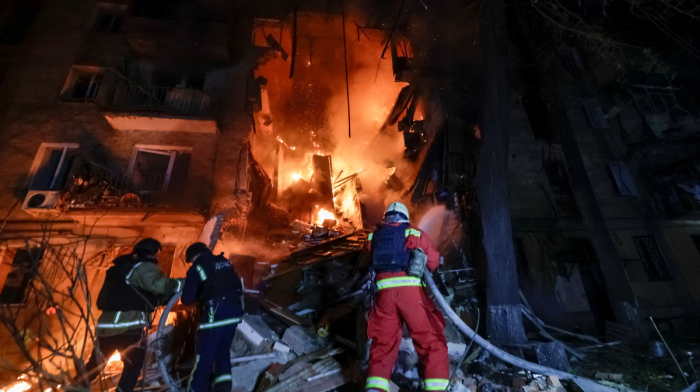
Clashes recently erupted between Syrian government forces and the SDF in Aleppo’s northeastern neighbourhoods has led to the deaths of 2 civillians, injuring 15 others and displacing hundreds.
Türkiye has reiterated long-standing policy goals emphasising “one state, one army” in Syria, pushing for the SDF’s integration into national security structures as part of stabilisation efforts.









What is your opinion on this topic?
Leave the first comment