Azerbaijan agrees to join Trump's 'Board of Peace' for Gaza
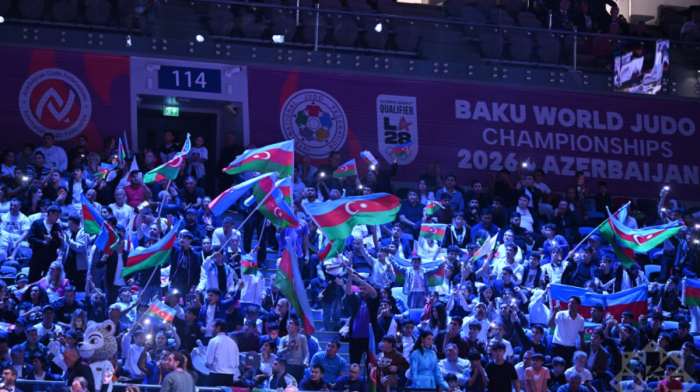
Azerbaijan said on Wednesday that it had accepted an invitation from U.S. President Donald Trump to join his 'Board of Peace' for Gaza....
Iran is preparing to host a multilateral regional meeting next week in a bid to mediate between Afghanistan and Pakistan.
The forum which will be held in Tehran also hopes to de-escalate armed tension between its two neighbouring countries.
According to the Islamabad post newspaper, the multilateral meeting which will be held on December 16-17 is viewed as a “fresh diplomatic push to break the deadlock between Kabul and Islamabad”.
Iranian authorities are yet to make an official statement about the upcoming meeting which will be the latest following rounds of talks in Doha, Istanbul and Jeddah, none of which led to a permanent ceasefire.
Since October, Islamabad and the Taliban-led interim government in Kabul have clashed over militant groups with Pakistan accusing Afghanistan of harbouring terrorists who carry out attacks in Pakistan.
In the meantime, Iran has stepped up its efforts to help resolve tensions between Afghanistan and Pakistan.
The issue was raised during the visit by Ali Larijani Secretary of Supreme National Security Council to Pakistan last November.
“Iran is extremely concerned over ongoing conflict between Afghanistan and Pakistan and is ready to contribute to settlement of their differences and deescalation of tension,” Foreign Ministry Spokesman Esmaeil Baghaei said Sunday.
The Islamabad daily also said the upcoming Tehran talks are significant because of the expected participation of China and Russia.
Beijing and Moscow’s likely support of Tehran talks is interpreted as a sign that major powers see the escalating Pakistan-Afghan tension as a threat to regional stability, the report added.
It said Pakistan has agreed to take part in the next week’s talks, and special envoy for Afghanistan Muhammad Sadiq will represent Islamabad in Tehran.
“Iran is a brotherly and friendly country,” A spokesperson of Pakistan's foreign office Tahir Hussain Andrabi said, adding that the country "would not shy away from” Iran’s mediatory role, he added.

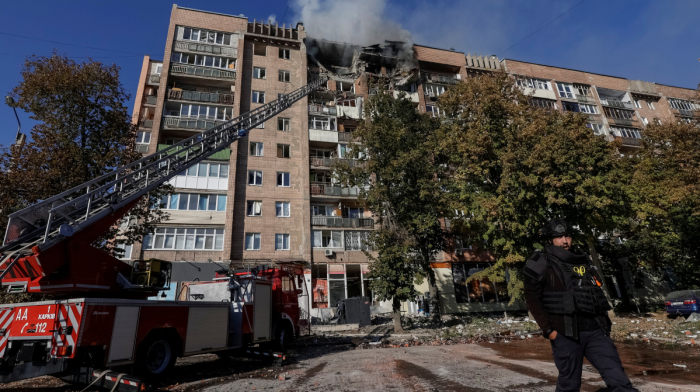
More than 100 vehicles were involved in a massive pileup on Interstate 96 in western Michigan on Monday (19 January), forcing the highway to shut in both directions amid severe winter weather.
Several locally-developed instant messaging applications were reportedly restored in Iran on Tuesday (20 January), partially easing communications restrictions imposed after recent unrest.
There was a common theme in speeches at the World Economic Forum on Tuesday (20 January). China’s Vice-Premier, He Lifeng, warned that "tariffs and trade wars have no winners," while France's Emmanuel Macron, labelled "endless accumulation of new tariffs" from the U.S. "fundamentally unacceptable."
Dozens of beaches along Australia's east coast, including in Sydney, closed on Tuesday (20 January) after four shark attacks in two days, as heavy rains left waters murky and more likely to attract the animals.
U.S. President Donald Trump said Washington would “work something out” with NATO allies on Tuesday, defending his approach to the alliance while renewing his push for U.S. control of Greenland amid rising tensions with Europe.
Armenia and Azerbaijan will interconnect their energy systems, enabling mutual electricity imports and exports as part of a wider regional transit initiative, Armenian Prime Minister Nikol Pashinyan said.
Mine-clearing machines produced in Azerbaijan by ImProtex are being used to support demining operations across the country, as efforts continue to address landmine contamination left by past conflicts.
As part of the Frontline episodes, this AnewZ documentary investigates Libya fifteen years after the revolution and the fall of Gaddafi — a state caught between militias, foreign powers, energy interests and diplomatic manoeuvring.
Armenia's Prime Minister, Nikol Pashinyan, wants former Armenian ambassador to the U.S., Lilit Makunts, to become the next Speaker of the National Assembly.
Türkiye and Uzbekistan have established a new institutional framework for security and foreign policy coordination. Held in Ankara on Tuesday (20 January), the first meeting in the “4+4” format assembled the Turkish and Uzbek ministers for foreign affairs, defense, the interior, and intelligence.
You can download the AnewZ application from Play Store and the App Store.
What is your opinion on this topic?
Leave the first comment